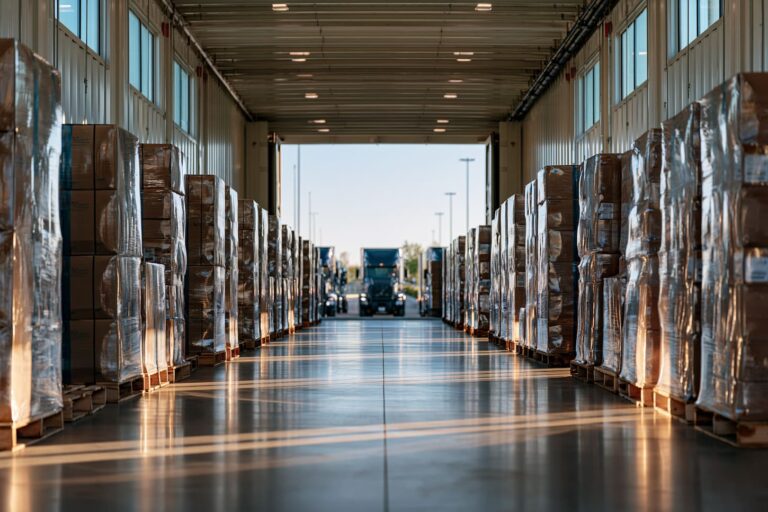

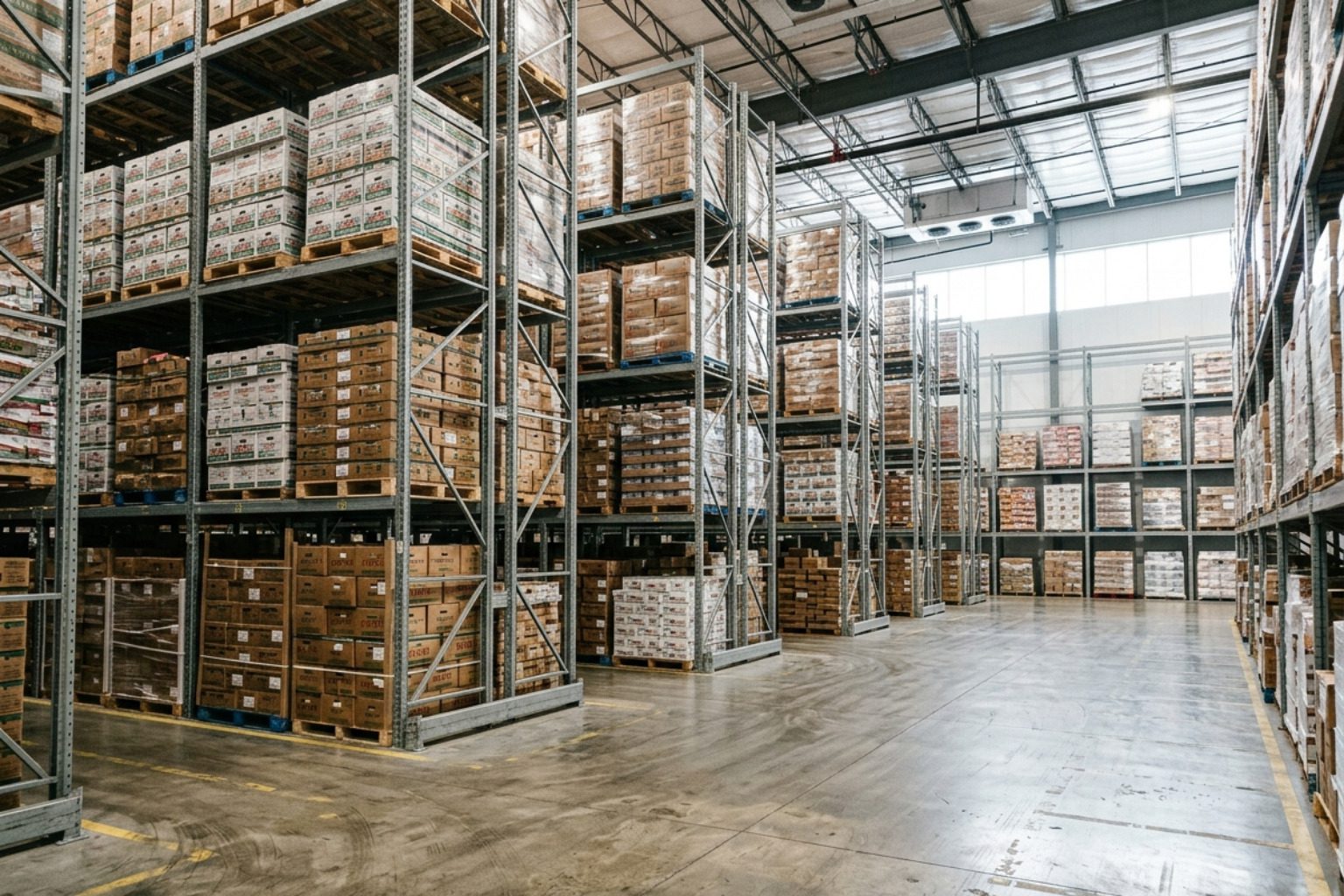
The right cold storage facility protects inventory from farm to final destination
A cold storage facility is a temperature-controlled warehouse that keeps perishable goods safe between production and delivery. If you need a quick way to evaluate one, focus on these basics:
- Temperature range should cover frozen, refrigerated, and controlled-environment needs, typically from -10°F to 35°F
- Certifications like SQF, FDA, GFSI, USDA, and Organic show the operation meets food safety requirements
- Location near major interstates or ports cuts transit time and helps product move faster
- Services should include more than storage, such as blast freezing, cross-docking, order fulfillment, and inventory visibility
- Technology should support reliable monitoring, efficient storage, and clear inventory status
Up to 40% of the U.S. food supply is lost or wasted on its way from farms to homes. A reliable cold storage partner helps prevent avoidable loss before it turns into product claims, delays, or damaged customer relationships.
The right facility is not just about square footage. It is about matching your product requirements to the right infrastructure, certifications, and location. This guide breaks down the key factors that matter most.
My name is Cole Russell. I grew up around the logistics industry and have spent the last five years helping businesses find cold storage facility solutions that fit the way they actually operate. Let’s get into it.
Temperature control protects inventory and brand trust
When we talk about a cold storage facility, we mean more than a large refrigerated room. These warehouses hold the cold chain together. Without them, the trip from farm to shelf leads to more spoilage, more waste, and more risk.
This matters because product integrity is a safety issue. If a shipment of vaccines or fresh seafood moves outside its required range for even a short period, the load may no longer be usable. That is why climate control, clear operating procedures, and the right storage layout matter. Good cold storage extends shelf life, reduces waste, and helps protect your reputation. If the warehouse cannot hold temperature during peak summer conditions, your business absorbs the consequences.
Strategic location helps products move faster across the U.S.
Location drives transit time. In Indianapolis, that is obvious every day. A central U.S. position lets goods reach a large share of the country within a day’s drive. If your cold storage facility is hard to reach or far from core lanes, you add time and handling risk. For a deeper look at the basics, check out Logistics 101 What Is A Cold Storage Facility And How Does It Work.
Access to major highways improves distribution speed
The strongest facilities sit near major interstates like I-65 and I-70. Those routes keep freight moving. Good access means drivers can get in, load, and get back on the road without wasting time in congested areas. That speed matters for frozen foods, produce, dairy, and any product with a narrow delivery window.
National warehouse networks support growth across the U.S.
If your business is expanding, one site may not be enough. A national network gives you more pallet positions and more regional coverage. That lets you place inventory closer to customers, shorten shipping distances, and handle seasonal swings with less strain.
Port-adjacent facilities protect product during import and export moves
If you import seafood or export agricultural products, port access matters. Facilities near the Port of New York and New Jersey and major U.S. West Coast ports allow product to move into temperature-controlled space quickly after arrival. That reduces dock exposure and helps keep the cold chain intact from the container to outbound delivery.
Specialized storage conditions protect each product category
Different products need different conditions. Ice cream needs to stay near -10°F. Some produce needs light refrigeration closer to 55°F. A capable cold storage facility should support multiple temperature zones, often from -10°F to 35°F or higher depending on the product. Understanding those requirements is key to From Freshness To Safety Understanding The Significance And Benefits Of Cold Storage In Logistics.
Regional providers can adapt faster for local distribution needs
National operators have scale. Regional providers often offer more flexibility. In a market like Indianapolis, that can mean faster adjustments for specific storage profiles, smaller order volumes, or value-added handling that larger operators may not prioritize.
Pharmaceutical standards protect product quality and patient safety
The requirements get stricter in life sciences. Pharmaceutical storage often requires compliance with FDA cGMP and may also require VAWD licensing. These standards exist to protect vaccines, clinical materials, and medications from temperature-related loss. If you want more detail, read Why Cold Storage Matters In Pharmaceutical Logistics.
Product-specific temperature ranges reduce spoilage risk
| Product Category | Ideal Storage Temperature | Why It Matters |
|---|---|---|
| Frozen Proteins | -10°F to 0°F | Helps prevent bacterial growth and freezer burn |
| Dairy Products | 34°F to 38°F | Maintains freshness without freezing liquids |
| Fresh Produce | 35°F to 55°F | Slows ripening and reduces wilting |
| Pharmaceuticals | 36°F to 46°F | Supports chemical stability and product efficacy |
Better technology gives you clearer inventory control
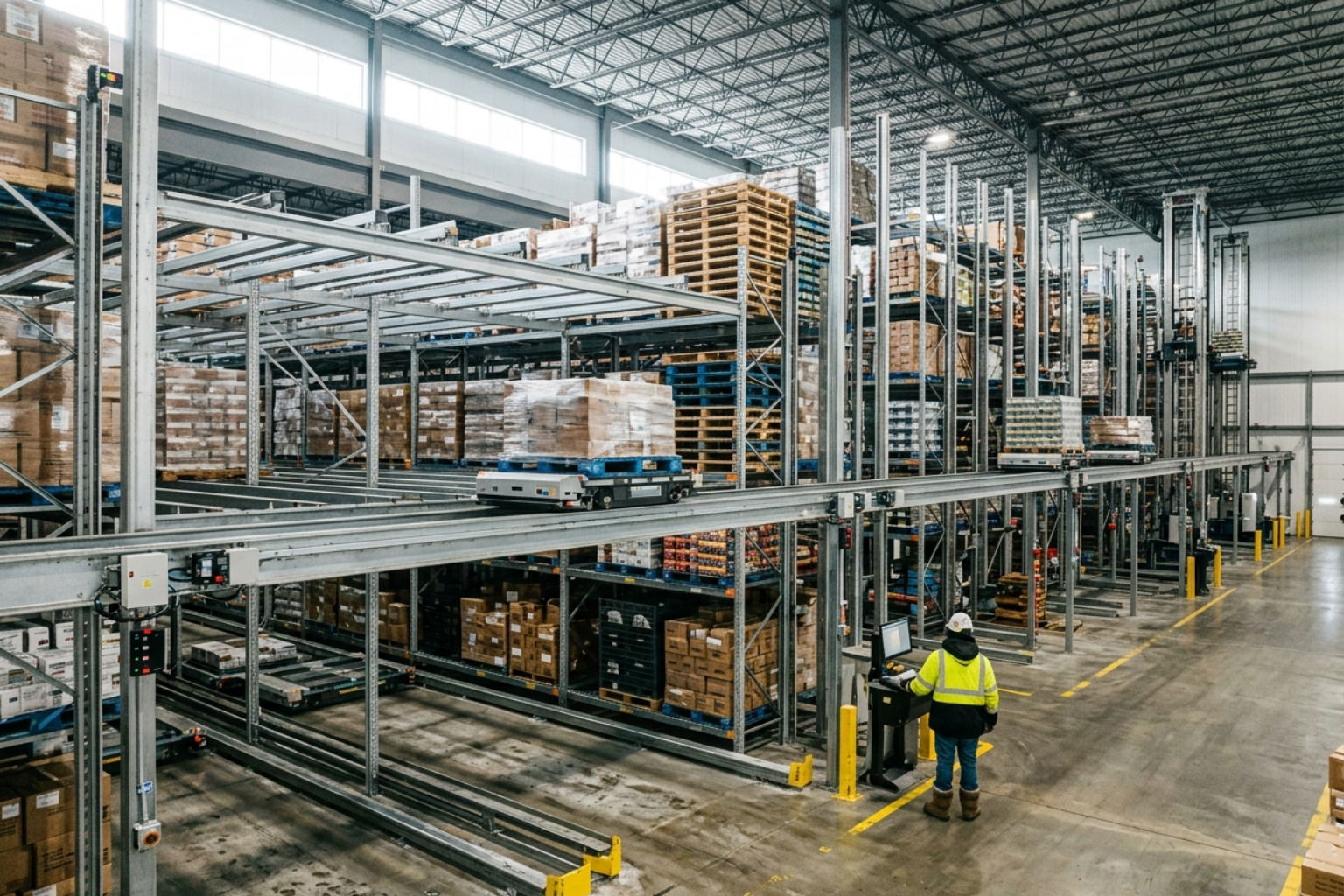
Modern cold storage runs on tighter controls and better monitoring. Many operators are moving toward CO2-based refrigeration systems that improve efficiency and reduce environmental impact compared with older systems. Some facilities also use backup power strategies to stay reliable during outages. That matters because uptime protects product. You can learn more in How Your Storage Keeps It Cool During Summer Heatwaves.
Automation improves storage density and inventory accuracy
Automation helps solve a basic problem. Freezer environments are hard on labor and slow manual handling. Automated shuttle systems and high-density racking improve throughput and support better inventory rotation such as First-In, First-Out. When those systems are paired with real-time inventory visibility, you spend less time tracking pallets and more time making shipping decisions.
Efficient refrigeration supports sustainability goals
Cold storage operators are also reducing energy waste. That includes lower-emission refrigeration systems, smarter facility design, and shorter transport routes through better warehouse placement. For many shippers, that supports sustainability goals without compromising product protection.
Integrated services reduce handoffs across the cold chain
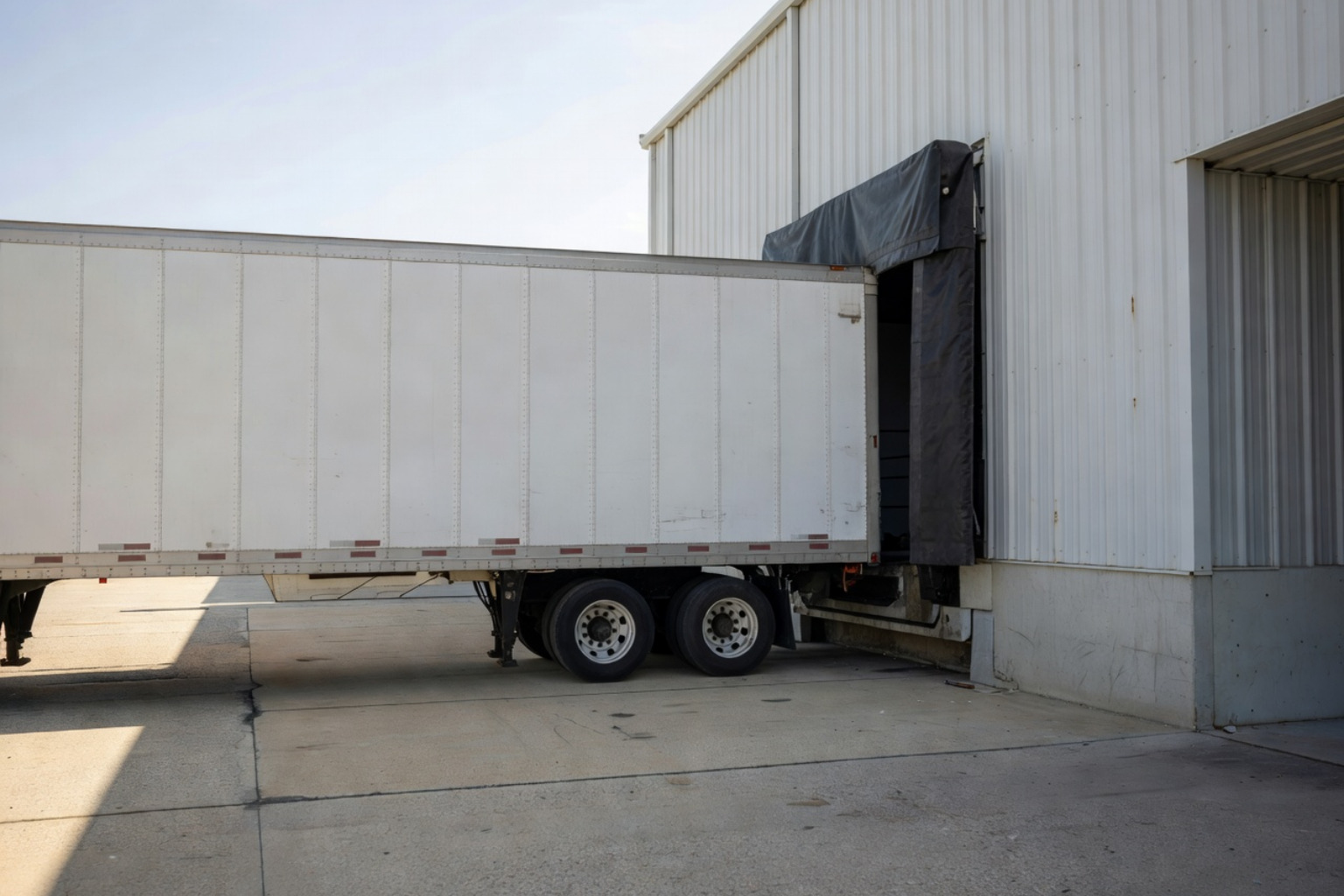
A cold storage facility works best when it handles more than storage alone. If product has to move between separate providers for storage, kitting, and shipping, you add more touches and more temperature risk. Integrated services like cross-docking and order fulfillment keep the process tighter. For a broader look, see Cold Storage.
Compliance certifications confirm food and drug safety standards
Certifications matter because they verify operating discipline.
- SQF (Safe Quality Food) is a recognized food safety program used by major retailers
- FDA and USDA oversight is essential for facilities handling food or medical products
- GFSI (Global Food Safety Initiative) standards are widely used across food supply chains. The GFSI framework is a key benchmark
- DSCSA (Drug Supply Chain Security Act) supports pharmaceutical traceability and security
Managing those requirements is a major part of How Do 3Pls Navigate The Complexities Of Pharmaceutical Logistics.
Value-added handling keeps product moving without extra delays
Strong providers offer services that remove friction from the cold chain.
- Tempering brings frozen goods to the right temperature for processing
- Recall Management helps isolate affected batches quickly
- Labeling and Secondary Packaging prepares product for retail or promotion without breaking temperature control
- Kitting combines multiple items into one outbound unit for e-commerce or retail programs
Clear cold storage options help you choose the right operating model
The main cold storage types solve different problems
There are several common cold storage formats.
- Bulk Storage handles pallets of the same product in larger storage zones
- Blast Freezers use high-velocity cold air to freeze products quickly
- Controlled Atmosphere storage adjusts oxygen and CO2 levels to extend the life of certain produce
- Refrigerated Containers or reefers support transit moves or temporary overflow
SQF certification gives food shippers stronger compliance confidence
SQF certification shows that a facility follows documented food safety practices and can stand up to regular audits. For shippers, that means better process control and fewer questions from customers or retail partners.
Cross-docking shortens dwell time in temperature-sensitive operations
Cross-docking is built for speed. Instead of moving product into long-term storage, the warehouse transfers it from receiving to outbound shipping as quickly as possible. In a cold storage facility, that process happens in a refrigerated environment so product stays within range while it moves through the building.
Hanzo Logistics supports cold-chain operations with precision and visibility
At Hanzo Logistics, we work with companies that cannot afford loose process control. From our Indianapolis operations, we support industries like Life Sciences and Automotive with specialized infrastructure and tailored fulfillment support.
Our focus is visibility and execution. We give customers real-time data and direct communication so they can make decisions without guessing what is happening inside the warehouse. Whether you are managing regulated products or scaling a fast-moving distribution program, we provide the operational support and availability needed to keep freight moving.
If you need more than basic warehouse space, we can help. More info about cold storage services is just a click away.