
Outsourcing Packaging Protects Your Brand and Your Bottom Line
Pharma contract packaging companies are third-party specialists that handle the packaging of pharmaceutical products on behalf of drug manufacturers, biotech firms, and health brands.
Here is a quick breakdown of what they do and who they serve:
| Service Type | Examples |
|---|---|
| Primary Packaging | Blister packs, bottle filling, vials, syringes, unit-dose sachets |
| Regulatory Compliance | FDA 21 CFR, cGMP, DEA, ISO 13485 |
| Sectors Served | Pharma, biotech, medical devices, nutraceuticals, OTC, biologics |
Pharmaceutical manufacturers outsource packaging for three core reasons: cost control, regulatory complexity, and speed. Building and maintaining an in-house packaging operation with certified cleanrooms, serialization systems, and FDA-compliant equipment is expensive. Partnering with a contract packager lets you access that infrastructure without owning it.
The stakes are high in pharma packaging. A temperature deviation, a labeling error, or a compliance gap does not just cost money. It can pull a product off the market entirely.
That is why choosing the right partner matters more here than in almost any other industry.
My name is Cole Russell, and I have spent years working in the logistics industry helping companies find packaging and supply chain solutions that actually protect their products and their reputations. In this guide, I will walk you through what the best pharma contract packaging companies offer, what compliance standards to look for, and how to find the right fit for your operation.
Outsourcing reduces operational risk and overhead costs
When you move your packaging operations to a trusted partner, you are doing more than just hiring a pair of hands. You are buying into an established system designed to mitigate risk. Many pharmaceutical leaders find that their core competency is in the lab or the boardroom, not on the warehouse floor managing high-speed bottling lines.
Cost savings are the most immediate benefit. Setting up a cGMP-compliant facility is a massive capital investment. Leading providers often operate facilities ranging from 60,000 square feet to over 100,000 square feet, filled with automated and semi-automated equipment. By outsourcing, you avoid the overhead of maintaining these spaces and the specialized staff required to run them.
Scalability is another factor. Your demand might fluctuate based on the season or a new product launch. A contract partner can ramp up production across dozens of lines to meet a surge, then scale back when things quiet down. This flexibility prevents you from paying for idle machines and empty floor space.
Speed-to-market is where the real competitive advantage lies. In one documented case, a pharmaceutical company was able to reduce cycle times from 21 days down to daily production by consolidating their packaging and distribution under one roof. This kind of efficiency saved them over $350,000 annually. When you eliminate the need to truck products between multiple vendors, you reduce the risk of weather exposure and transport delays.
Risk mitigation is the invisible benefit. The best pharma contract packaging companies have decades of experience navigating FDA audits and maintaining strict quality standards. They treat your product as if it were their own, ensuring every bottle and blister pack meets the exact specifications required by law. This protects your brand from the devastating fallout of a product recall.
For more insights on how these services can change your trajectory, check out the unexpected ways contract packaging can boost your business.
Get the Specialized Packaging Services Your Products Demand
Pharmaceutical products are not one-size-fits-all. A liquid antibiotic requires a completely different setup than a medical device or a solid oral dose. The best pharma contract packaging companies offer turnkey solutions that cover the entire product lifecycle, from design and material selection to final assembly.
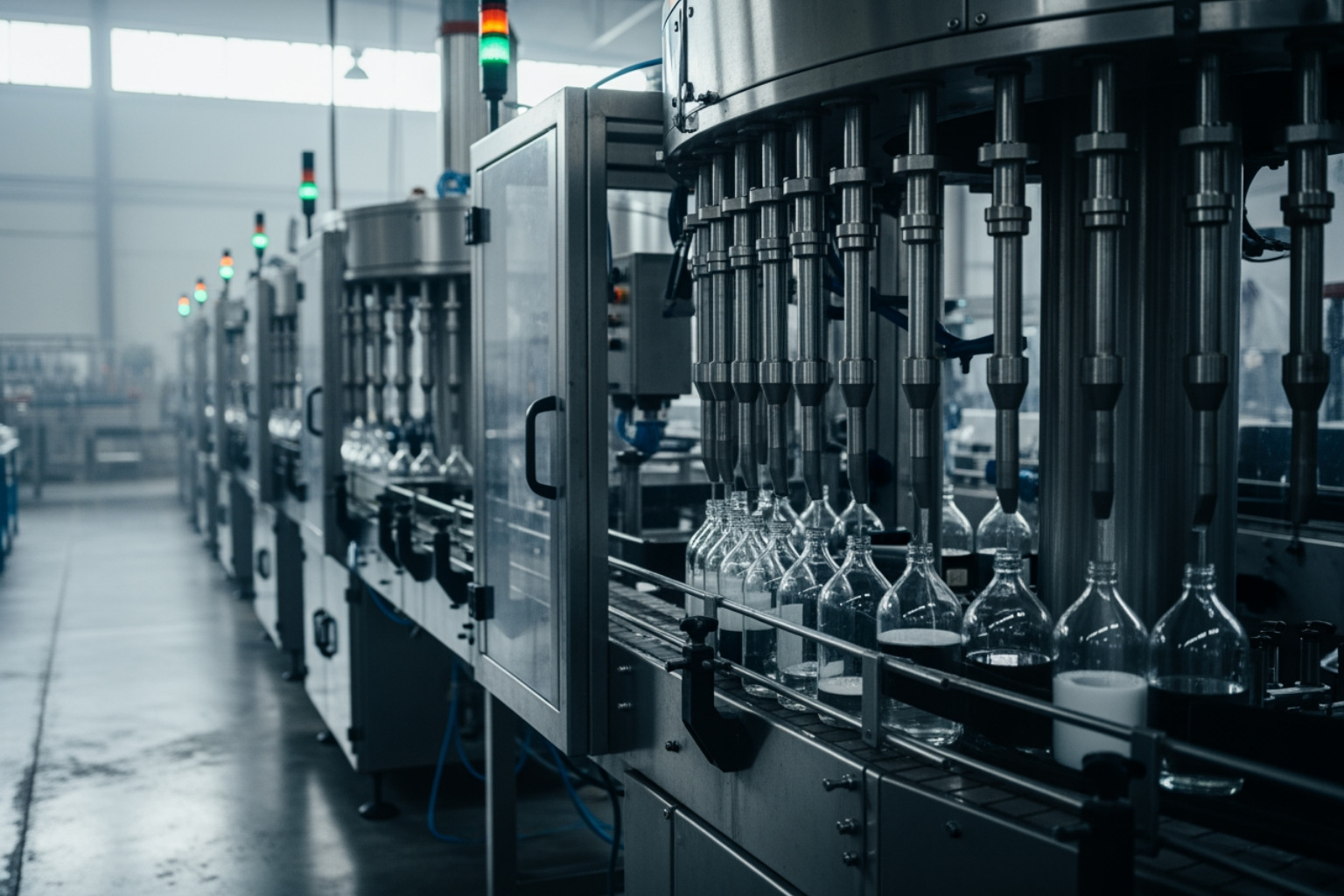
We see a wide range of industries utilizing these services. This includes prescription pharmaceuticals, over-the-counter (OTC) drugs, dietary supplements, and animal health products. Even specialized fields like diagnostics and biologics require the precision that only a dedicated packaging partner can provide.
Primary Packaging Keeps Your Products Safe and Compliant
Primary packaging is the material that comes into direct contact with the drug. This is the first line of defense against contamination and degradation. Because of this, it is subject to the strictest regulatory oversight.
Common primary packaging services include:
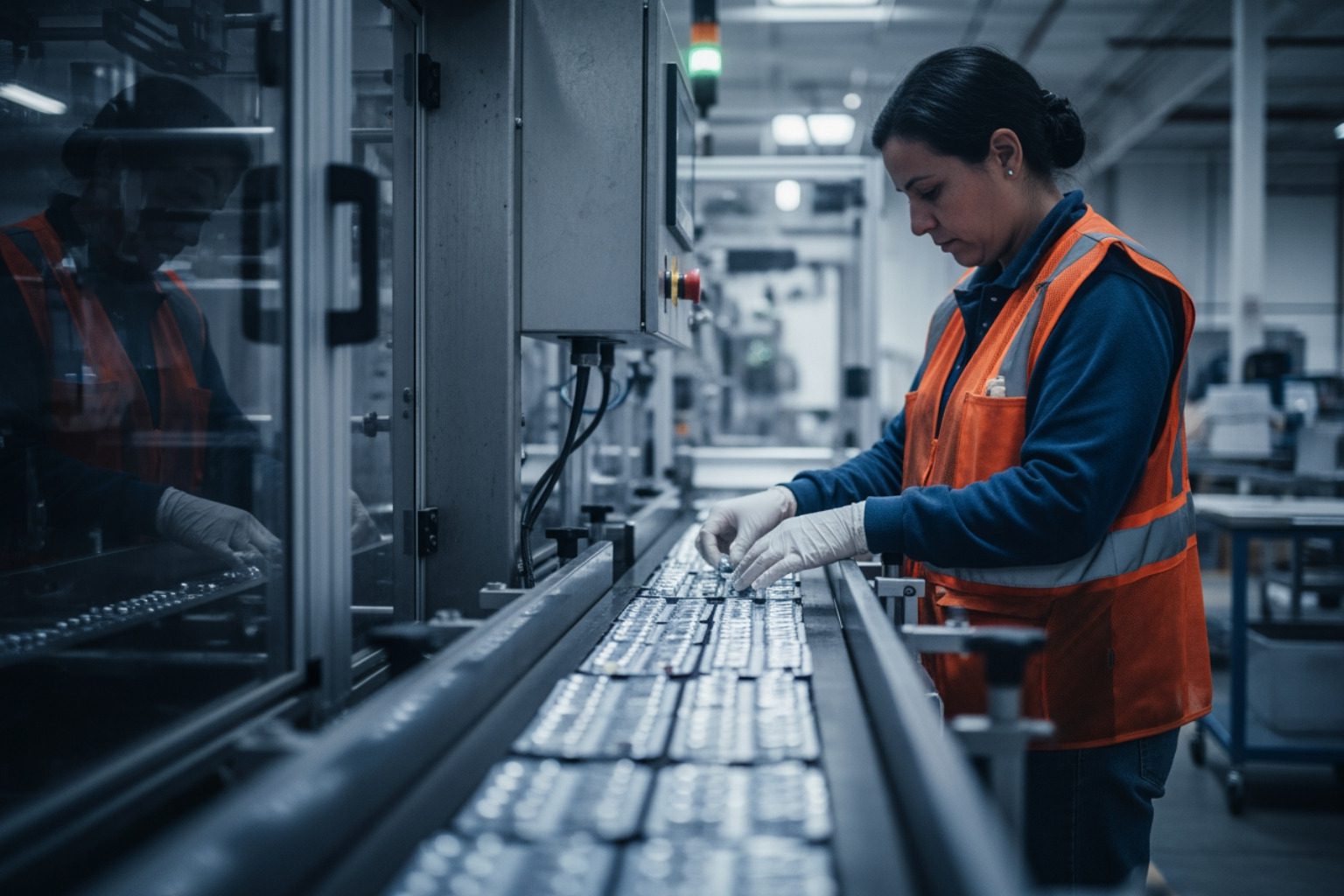
- Blister Packaging: Both thermoform and cold-form options for solid oral doses. These are essential for maintaining unit-dose integrity and improving patient compliance.
- Bottle Filling: Filling glass, HDPE, or PET bottles with precision. This often includes induction sealing and child-resistant capping.
- Vial and Ampoule Labeling: High-precision labeling for injectable drugs that requires careful handling and often temperature-controlled environments.
- Liquid and Gel Filling: Specialized lines for unit-dose cups, syringes, tubes, and sachets.
- Specialty Formats: This includes micro-dose pens, vapor inhalers, and saturated towelettes.
Beyond Primary Packaging. We Handle the Rest
Secondary packaging is what the consumer or the pharmacist sees. It provides the necessary branding, regulatory information, and physical protection for the primary package. This is where kitting and assembly expertise become vital.
Secondary services often include:
- Cartoning and Leaflet Insertion: Placing blister packs or bottles into cartons with the required patient inserts.
- Serialization: This is a non-negotiable requirement for modern pharma. It involves applying unique identifiers to every level of packaging to ensure track-and-trace capabilities throughout the supply chain.
- Kitting: Assembling complex medical kits that may include a combination of drugs, syringes, and instructions. For more on this, see our page on kitting assembly.
- Heat-Seal and Stretch-Film Carding: Often used for retail displays or compliance packaging to ensure products remain secure and tamper-evident.
- Display Assembly: Building PDQ displays for retail environments like pharmacies or grocery stores.
Compliance and Quality Standards Are Non-Negotiable in Life Sciences
In life sciences, “good enough” does not exist. Every process must be documented, every environment must be monitored, and every employee must be trained to the highest standards. The regulatory landscape is a complex web of FDA, DEA, and ISO requirements.
The best pharma contract packaging companies maintain facilities that are FDA-registered and compliant with cGMP standards, specifically 21 CFR parts 210 and 211. These regulations cover everything from the cleanliness of the floors to the calibration of the scales. If you want to sanity check the requirements, start with the FDA page on Current Good Manufacturing Practice.
| Requirement | Primary Packaging | Secondary Packaging |
|---|---|---|
| Direct Product Contact | Yes | No |
| Cleanroom Environment | Often ISO Class 7 or 8 | Controlled Environment |
| Serialization | At the unit level | At the case and pallet level |
| Stability Testing | Required for shelf-life | Required for protective integrity |
| Regulatory Focus | Contamination and Safety | Track-and-Trace and Labeling |
Cleanrooms are a major differentiator. Some specialized packagers operate ISO Class 7 cleanrooms (approximately 1,600 square feet or more) to handle sensitive assembly and packing tasks. These environments use HEPA filtration to control temperature, humidity, and particulate matter, ensuring that solid oral doses or medical devices remain sterile and stable.
Quality assurance is not a final step. It is a continuous process. This includes everything from extractables and leachables (E&L) testing to container closure integrity (CCI) testing. We believe that quality assurance is the backbone of a successful partnership. Without it, you are just moving boxes.
If you are dealing with controlled substances, the requirements get even tighter. You need a partner with DEA registration capable of handling schedules C-II through C-V. This requires specialized storage, strict access controls, and meticulous record-keeping.
Strategic Locations and Logistics Improve Your Speed to Market
Geography is a massive factor in pharmaceutical logistics. If your packaging partner is on one coast and your customers are on the other, you are losing time and money on every shipment.
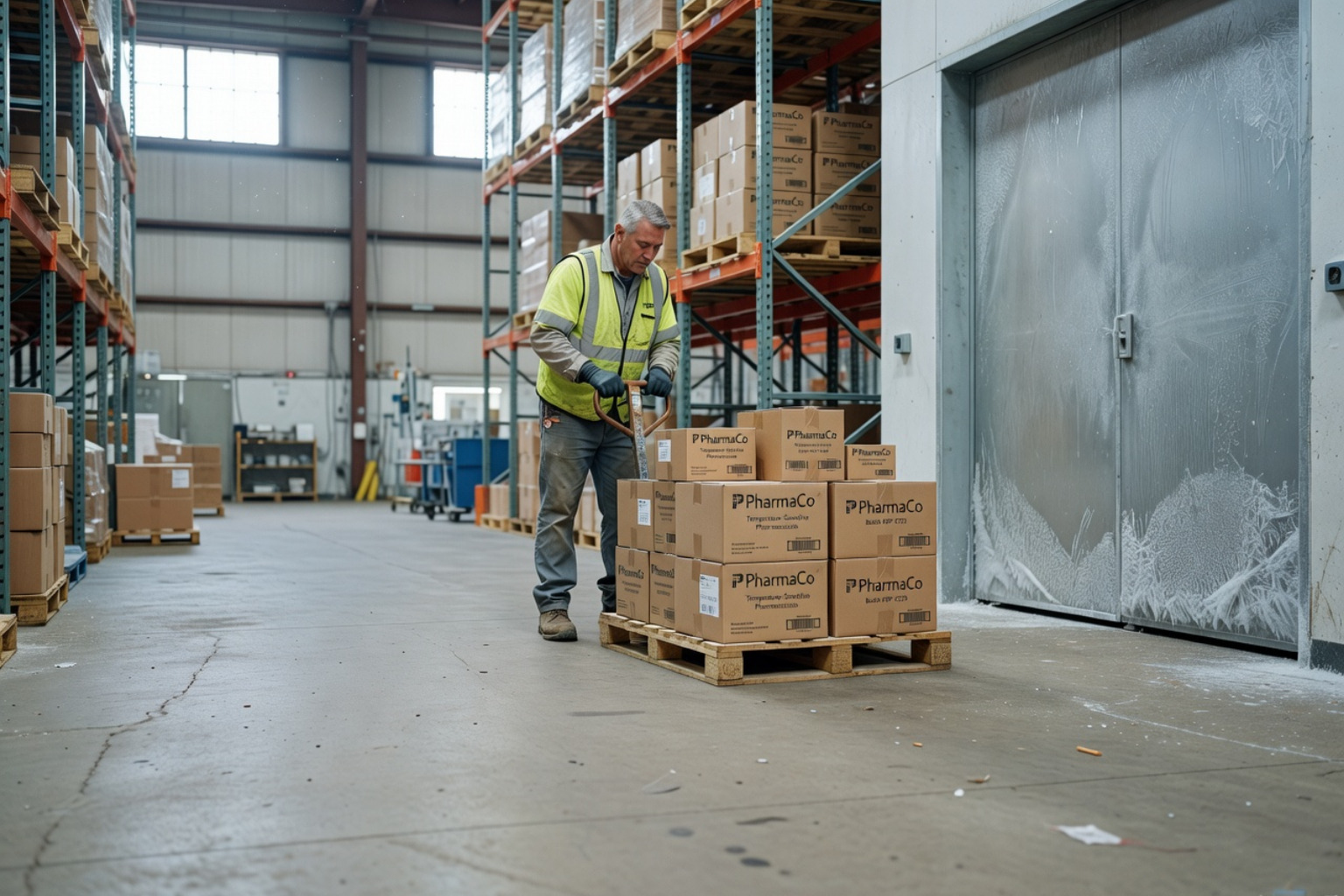
Indianapolis has become a premier hub for life sciences logistics for a reason. Its central location allows companies to reach over 80% of the U.S. population within a single day’s drive. This proximity to major international airports and highway intersections simplifies the entire supply chain. When your packaging facility is located near a major logistics hub, you can move from production to the patient’s bedside much faster.
Cold chain capabilities are often the deciding factor for many biotech and pharma brands. Many life-saving drugs, such as insulin or biologics, must be kept within a strict temperature range (typically 2 to 8 degrees Celsius). A logistics partner that offers temperature-controlled storage and packaging ensures that these sensitive products never break the cold chain.
Maintaining a “just-in-time” procurement model is only possible when your logistics and packaging are tightly integrated. By using a local 3PL that handles both storage and repackaging, you can reduce inventory levels and eliminate the risks associated with long-haul trucking. You can learn more about why cold storage matters in pharmaceutical logistics to see how it impacts your bottom line.
Selecting the Right Partner for Your Pharmaceutical Packaging Needs
Choosing from the many pharma contract packaging companies available is a high-stakes decision. You are essentially trusting another company with your brand’s reputation and your customers’ safety.
When vetting a potential partner, look beyond their marketing materials. Start with their audit history. A reputable company should be open about their FDA inspections and ISO certifications. They should have a dedicated Quality Control (QC) director who oversees every procedure.
Financial stability is also key. You need a partner who will be around for the long haul, especially if you are entering into a multi-year agreement. Look for companies with decades of experience; some of the leaders in this space have been operating since the 1980s or earlier.
Technology integration is the final piece of the puzzle. Does their warehouse management system (WMS) talk to your ERP? Can you get real-time data on your inventory levels and production status? In an industry where tracking every component is mandatory, visibility is everything. You can read more about how 3PLs navigate the complexities of pharmaceutical logistics to see what a modern partnership looks like.
Clear Answers to Your Pharma Packaging Questions
What is the difference between primary and secondary packaging?
Primary packaging is the material that touches the product itself, like a blister pack or a glass vial. Its main job is to protect the drug from air, moisture, and contamination. Secondary packaging is the outer layer, like a cardboard carton or a shipping case. It holds the primary packages together and contains important information like dosages, expiration dates, and barcodes for tracking.
Why is serialization important for pharmaceutical products?
Serialization is a regulatory requirement designed to stop counterfeit drugs from entering the supply chain. It involves assigning a unique serial number to every individual unit of a drug. This allows the product to be tracked from the manufacturer all the way to the pharmacy. If there is a recall, serialization makes it much easier to identify exactly which packages are affected.
How does location impact pharmaceutical distribution costs?
Location impacts everything from fuel costs to product safety. If your packaging partner is centrally located, like in an Indianapolis hub, you spend less on long-distance trucking. Shorter transit times also mean less time that temperature-sensitive products are sitting in a trailer, which reduces the risk of the product going out of spec.
Hanzo Logistics Provides the Precision Your Pharmaceutical Supply Chain Requires
At Hanzo Logistics, we understand that in the pharmaceutical world, there is no room for error. Based in the heart of the Indianapolis logistics hub, we provide the specialized infrastructure and strategic expertise that life sciences leaders need to grow.
We don’t just move inventory; we protect your brand reputation. With 2 million square feet of specialized space and a focus on precision, we handle the high-stakes challenges of pharmaceutical life science logistics. Our team provides the 24/7 availability and proactive problem-solving that allows you to scale without your operations breaking under the pressure.
Whether you need help with contract packaging, kitting, or cold storage, we are here to ensure your products reach the people who need them, on time and in perfect condition. When precision is non-negotiable, Hanzo Logistics is the partner you can count on.