
Outsource your production to scale without the overhead
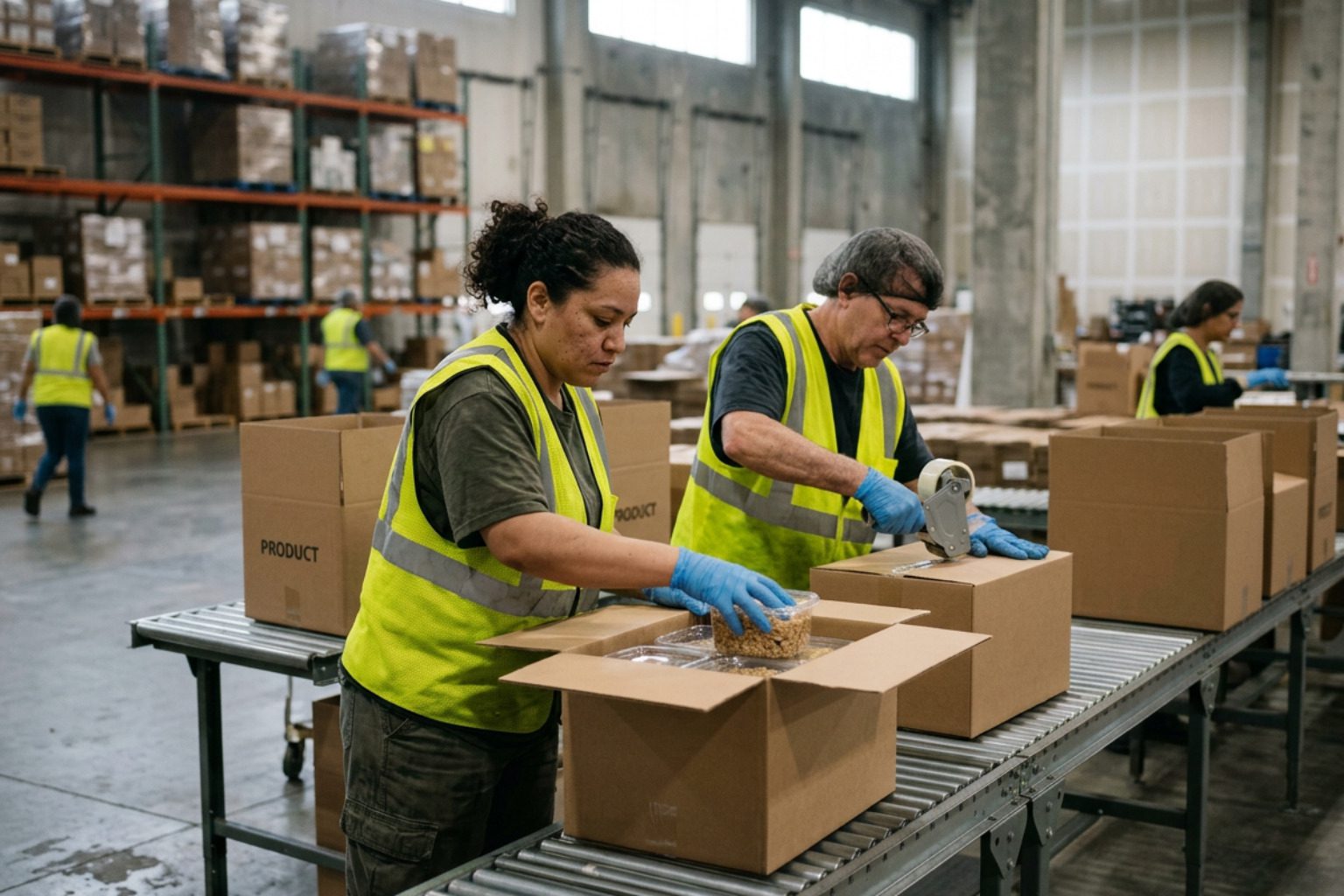
Food contract packing is when a brand outsources the physical packaging of its products to a third-party facility equipped with the machinery, labor, and certifications to do it at scale.
Here is a quick breakdown of what that means in practice:
| Term | What It Means |
|---|---|
| Co-packer | A third-party facility that packages your product for a fee |
| Contract packing | The broader agreement covering filling, labeling, assembly, and more |
| Primary packaging | The direct container your product goes into (bag, pouch, bottle) |
| Secondary packaging | Outer packaging like cartons, display cases, or variety packs |
| Co-manufacturing | Includes actual production of the food product, not just packing |
The core idea is simple. Instead of building your own production line, you pay a specialist to handle it. They bring the equipment, the floor space, and the food safety certifications. You bring the product and the brand.
This model works for a wide range of businesses, from restaurants looking to sell a retail product to growing ecommerce brands hitting the ceiling of what their current setup can handle. The barrier is almost always the same. You need more capacity than you can justify building yourself.
That is exactly the problem food contract packing solves.
I’m Cole Russell, and I’ve spent years working inside the logistics industry helping brands figure out where their supply chain is costing them more than it should, including when and how to use food contract packing to scale without blowing the budget on infrastructure they don’t need. The sections below walk through everything you need to make a smart decision about outsourcing your packaging operations.
Scaling a food brand often hits a wall when the physical labor of packing outstrips your available space. Whether you are a local restaurant trying to get your sauce into grocery stores or a mid-sized snack company launching a new product line, the infrastructure barriers are significant. You need a facility that meets strict health codes, a trained workforce, and expensive machinery.
Partnering with an external production partner allows you to bypass these hurdles. Food contract packing provides immediate access to large-scale sourcing and high-volume production capacity. Instead of spending months finding a warehouse and hiring a team, you can move to market in a fraction of the time.
There is a distinct difference between contract food manufacturing and simple packing. In a manufacturing arrangement, the partner might actually cook or blend the product. In a packing arrangement, we take the finished product and handle the filling, sealing, and labeling. This allows you to focus on the recipe and the marketing while we handle the logistical heavy lifting of getting the product into its final retail form.
Select a partner with the right food safety certifications
In the food industry, a single mistake in safety or labeling can damage a brand fast. That is why certifications come first. When you evaluate a partner for food contract packing, look for standards that protect your product and your reputation.
The gold standard in our industry is SQF Level 3 certification. This shows a facility has met food safety requirements and put formal quality systems in place. Beyond SQF, look for GFSI standards and BRC certification. These frameworks help ensure every step, from receiving materials to shipping finished goods, follows strict controls. You can review broader federal food safety requirements through the U.S. Food and Drug Administration.
For brands with specific dietary or lifestyle claims, specialized certifications are not optional. If you want to label your product as organic, every stage of production and handling must be Organic Certified under U.S. standards. That includes the packing facility. We also manage compliance with 21 CFR guidelines and maintain allergen control programs to reduce cross-contact risk.
Effective Managing the strict standards for food grade products also requires robust lot code tracking. If a recall becomes necessary, every unit should be traceable back to its production batch. That level of control is what separates a professional operation from a simple warehouse.
Streamline operations with diverse food contract packing services
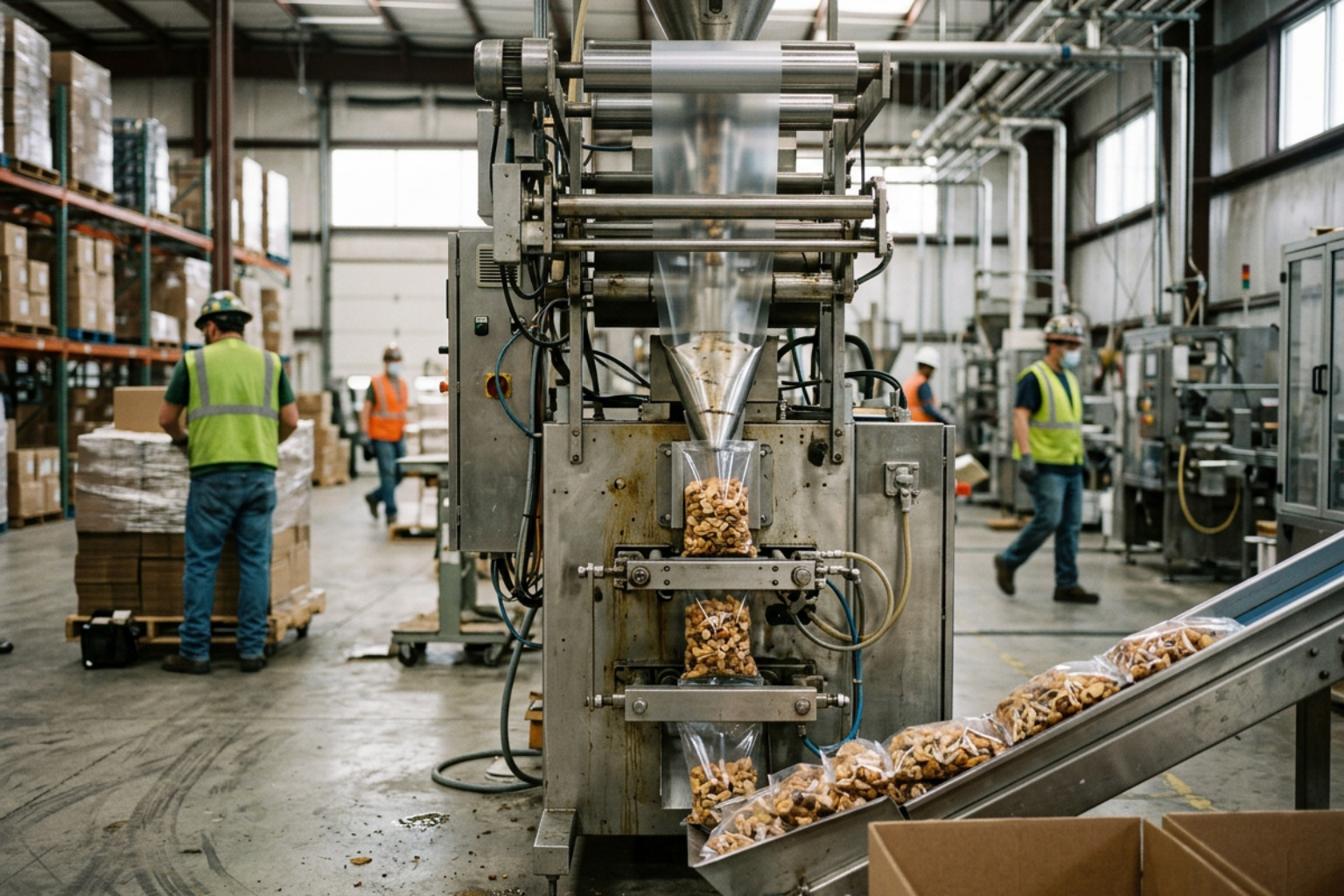
The needs of a dry food brand are vastly different from those of a liquid beverage brand. A versatile partner should offer a range of primary and secondary packaging options. Primary packaging involves the material that touches the food directly, such as contract bagging or pouch filling. Secondary packaging focuses on the outer layers that protect the product during shipping and attract customers on the shelf.
We handle a wide variety of product types, including:
- Dry foods like pretzels, pasta, cereal, and snacks.
- Grains, rice, and dry beans.
- Powders, seasonings, and vitamins.
- Liquids requiring specialized bottling or pouching.
By utilizing a professional contract-packaging service, you gain access to formats like stand-up pouches, bag-in-box, and form-fill-seal bagging that might be too costly to implement in-house.
Maximize efficiency with automated food contract packing lines
Automation is the key to maintaining competitive prices at high volumes. Specialized facilities often feature high-speed lines, such as a registered shrink film pack line capable of producing 40 packs per minute. This level of speed is impossible to achieve with manual labor alone.
Beyond speed, automated lines ensure precision. We use Video Jet coding technology to print accurate lot codes, expiration dates, and batch numbers directly onto the packaging. This ensures every item is compliant and easy to track. Other automated services include:
- Automatic cartoning for consistent box assembly.
- Blister packing for portioned items or vitamins.
- Contract filling services using auger or volume fillers.
- Overwrapping and bundle wrapping for multi-packs.
Build retail ready displays through food contract packing expertise
Getting your product into a big-box store often requires more than just a single unit. Retailers frequently demand secondary food carton kitting or specialized pallet displays. These displays must be assembled, loaded, and wrapped according to the retailer’s exact specifications.
We specialize in creating variety packs and rainbow packs that combine different flavors or products into a single SKU. This requires a high degree of coordination through kitting-assembly processes. Whether it is a seasonal promotion or a permanent club pack for a warehouse store, we ensure the big box pallet display assembly is sturdy and retail-ready when it leaves our dock.
Reduce capital expenditure by utilizing shared infrastructure
The most compelling reason to use food contract packing is the return on investment. Building a facility with 240,000 square feet of production space and over 200 different packaging machines requires millions of dollars in capital. For most brands, that money is better spent on marketing, product development, and sales.
By using a shared infrastructure, you only pay for the capacity you use. This model provides several The unexpected ways contract packaging can boost your business, including:
- Scalability: We can ramp up production for seasonal peaks and scale back during slower months without you having to manage a fluctuating workforce.
- Maintenance: We handle the upkeep and repair of the machinery, so you never have to worry about a broken belt stopping your sales.
- Labor Management: We employ hundreds of trained workers, taking the burden of hiring, training, and payroll off your plate.
- Trial Runs: We can perform full-service trial runs to test new packaging designs before committing to a massive production order.
Many partners offer fixed-price quotes for projects, allowing you to predict your margins with total accuracy. This removes the hidden costs of in-house production, like utility spikes, waste, and equipment depreciation.
Integrate logistics and fulfillment for a complete supply chain
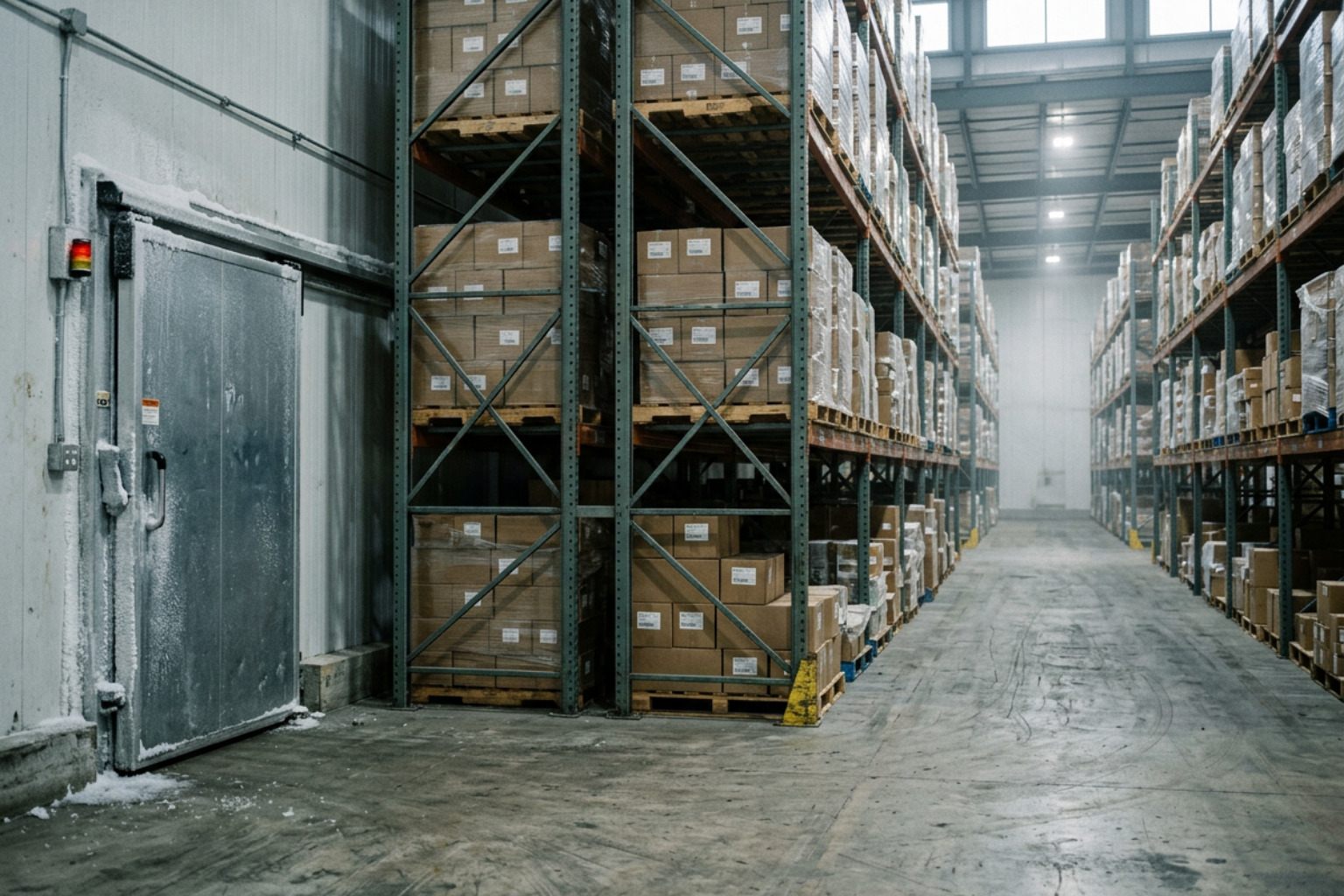
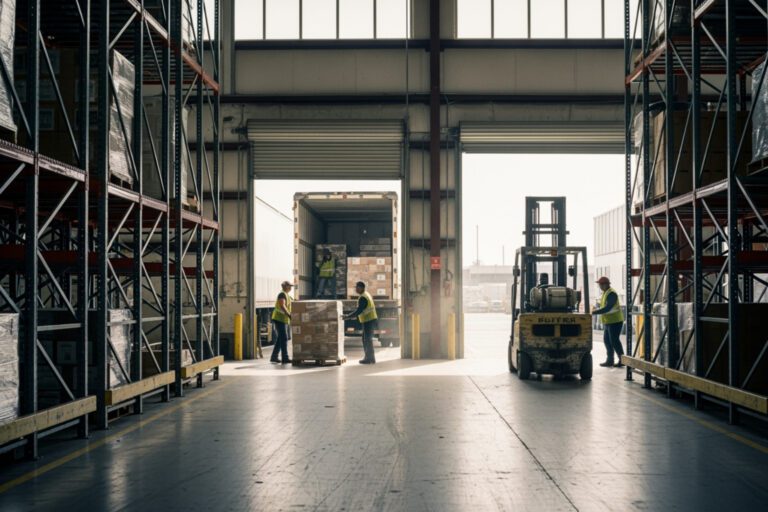
Packaging is only half the battle. Once the product is in the bag or box, it needs to be stored and shipped. This is where the advantage of a 3PL partner becomes clear. By integrating food contract packing with warehousing and fulfillment, you create a seamless supply chain that reduces touches and lowers costs.
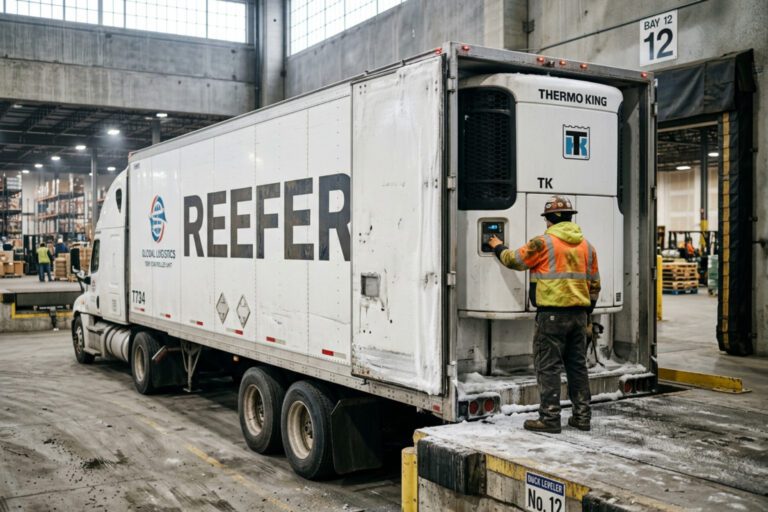
In a facility like ours in Indianapolis, we provide multi-temp storage zones to handle diverse needs. This includes ambient storage for shelf-stable dry goods, cooler zones for products that require specific temperature ranges, and frozen storage for long-term preservation.
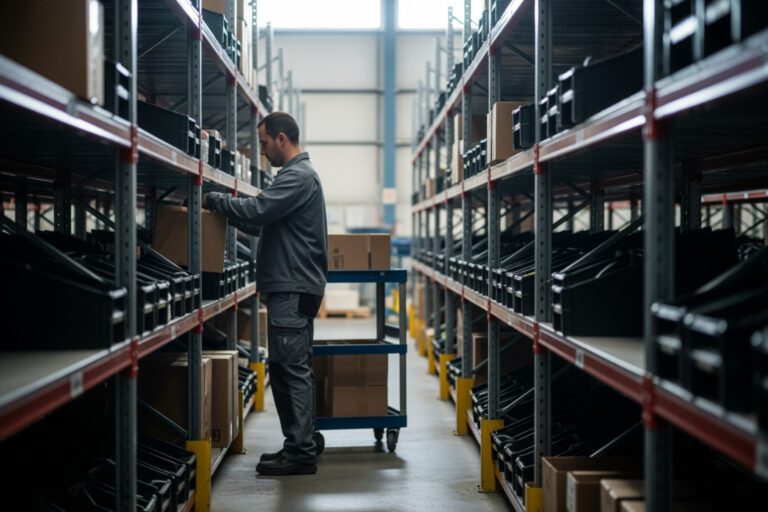
Managing this inventory requires a sophisticated system that provides real-time visibility. We use data-driven inventory management to track every pallet, ensuring that your from-components-to-complete-products-what-is-kitting-and-assembly process is always fed with the right materials.
Navigate multi-channel requirements with precision
Every sales channel has its own set of rules. Fulfilling an order for a local grocery chain is different from preparing a shipment for Amazon FBA. If you don’t follow these rules, you face rejected loads and extra fees.
A professional partner understands these nuances. We provide snack food pouch and bag packaging that meets retail standards and handle the specific labeling required for ecommerce. Our expertise includes:
- Amazon FBA Prep: Ensuring every unit is barcoded and packed according to strict requirements.
- Retail Labeling: Applying store-specific labels or price tags during the packing process.
- LTL and FTL Shipping: Coordinating freight to move large volumes efficiently.
- Ecommerce Integration: Directly connecting with your storefront to fulfill individual parcel orders.
By following a-3pls-guide-to-expert-kitting-for-personalized-products, we can even help you how-to-create-memorable-subscription-box-experiences-with-contract-packaging by combining packing and kitting into a single, efficient step.
Frequently Asked Questions about food co-packing
What is the difference between a co-packer and a traditional manufacturer?
A traditional manufacturer usually owns the recipe and the product, selling it to retailers under their own brand. A co-packer is a service provider. You own the brand, the recipe, and the product; the co-packer simply provides the facility, equipment, and labor to package it for you. Some partners offer both services, known as co-manufacturing, where they also handle the cooking or blending of ingredients.
How do co-packers ensure food safety and regulatory compliance?
Top-tier co-packers maintain rigorous certifications like SQF Level 3, BRC, or GFSI. They employ dedicated quality assurance teams that monitor every production run. This includes checking for proper seals, verifying lot codes, conducting allergen testing, and maintaining temperature logs. They also stay up to date on U.S. government standards for labeling, such as organic or non-GMO requirements, to ensure your product is fully compliant.
What are the main cost advantages of outsourcing food packaging?
Outsourcing eliminates the need for massive upfront capital investment in specialized machinery and warehouse space. It also converts fixed costs into variable costs; you only pay for what you produce. You benefit from the co-packer’s economies of scale in labor and material sourcing. Additionally, you avoid the costs associated with equipment maintenance, safety audits, and workforce management.
Secure your brand reputation with a strategic 3PL partner
At Hanzo Logistics, we understand that precision is non-negotiable in the food industry. We serve as a strategic 3PL partner from our Indianapolis logistics hub, providing the specialized infrastructure needed to handle high-stakes supply chain challenges. With 2 million square feet of space and a custom-tailored fulfillment engine, we are built to protect your brand reputation through every seasonal peak and regulatory audit.
Our approach is built on transparency. We replace the traditional lack of visibility with real-time data and proactive problem-solving. We don’t just move inventory; we provide the strategic expertise that allows scaling ecommerce brands to grow without their operations breaking under the pressure. Whether you are dealing with dry goods or complex multi-component kits, we have the 24/7 availability and technical capability to keep your products moving.
If you are ready to scale your production without the overhead of building your own facility, explore our contract-packaging services. We have the experience and the Indianapolis-based infrastructure to help you reach two-thirds of the U.S. population quickly and safely. Let us handle the complexities of the warehouse floor so you can focus on growing your brand.