
Moving beyond the garage to professional logistics
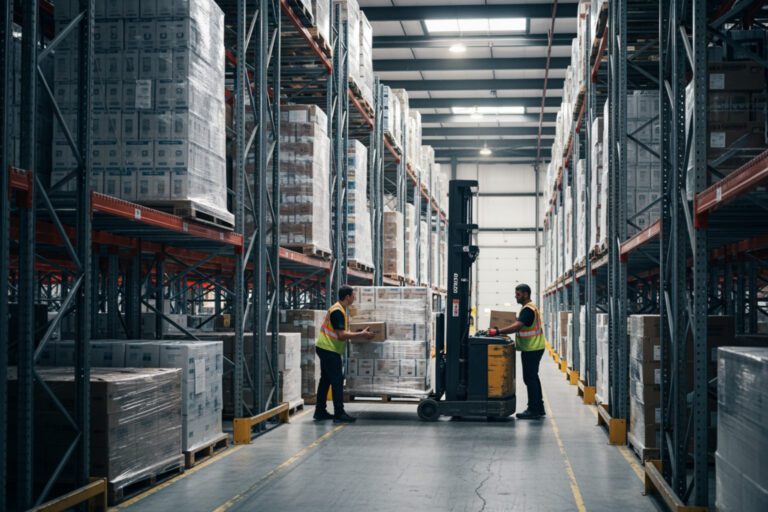
Outsourcing order fulfillment means hiring a third-party logistics provider (3PL) to handle the storage, picking, packing, and shipping of your products so you can stop running a warehouse and start running your business.
Here is a quick breakdown of what that looks like in practice:
| What You Hand Off | What You Keep |
|---|---|
| Warehouse space and staffing | Product development |
| Picking, packing, and shipping | Marketing and sales |
| Inventory tracking and returns | Customer relationships |
| Carrier rate negotiation | Brand strategy |
The numbers tell a clear story. In 2022, online order volumes jumped 59%, and 51% of eCommerce businesses reported that their fulfillment costs went up right alongside them. That pressure is exactly why 57% of eCommerce companies now outsource some or all of their fulfillment, up from just 29% in 2020.
If you are still taping boxes in a back room or paying for warehouse space you can barely fill, that gap is worth paying attention to.
My name is Cole Russell. I grew up inside the logistics industry and have spent the last five years helping businesses make smarter decisions around outsourcing order fulfillment, and this guide covers everything you need to know to do it without making costly mistakes. Let’s get into it.
Most businesses start with “self-fulfillment.” It usually involves a garage, a spare office, or a small rented unit. At first, it feels like the only way to maintain control. But as you grow, the math changes. When your order volume spikes, your fulfillment costs often spiral because you lack the infrastructure to handle the load efficiently.
A third-party logistics provider (3PL) is a company that specializes in supply chain management. We provide the warehouse space, the technology, and the people to move your products. Instead of you managing a lease and a packing crew, we act as an extension of your team. This shift allows you to move from a reactive “put out the fire” mindset to a proactive growth strategy.
Why outsourcing order fulfillment saves your margins and your sanity
The shift toward 57% of eCommerce companies outsourcing their operations is not just a trend. It is a survival tactic. When you manage your own warehouse, your costs are mostly fixed. You pay for the rent and the lights whether you ship one box or ten thousand.
When you choose outsourcing order fulfillment, those fixed costs become variable. You pay for the space you use and the orders we ship. This flexibility is vital for businesses with seasonal peaks or rapid growth. Furthermore, 3PLs provide access to deep carrier discounts that small to mid-sized businesses (SMBs) cannot get on their own. We aggregate the volume of all our clients to negotiate lower rates with major carriers, passing those savings directly to your bottom line.
Converting fixed warehouse overhead into flexible expenses
Leasing your own space is a long-term commitment that requires significant resources. Logistics warehouse tenants saw a 10% rate hike starting in 2021 due to high demand for warehouse expansion. Beyond the rent, you have to worry about equipment, insurance, software, and the constant headache of labor management.
By outsourcing to a 3PL vs managing your own warehouse, you eliminate the need for massive upfront capital. You do not have to buy forklifts or worry about staffing a warehouse during a labor shortage. We handle the operational responsibilities so you can reinvest that capital into product development or marketing.
Meeting the 2-day shipping standard without the headache
Customer expectations have shifted permanently. Most shoppers now expect their orders to arrive within 1-2 days. If you are shipping everything from a single location in a garage, reaching a customer across the country in two days is either impossible or incredibly expensive.
Professional fulfillment centers are strategically located to reduce transit times. By placing your inventory in a hub like Indianapolis, you can reach a massive percentage of the U.S. population within a short window. This reduces the number of shipping zones your packages cross, which lowers your costs and helps reduce cart abandonment caused by slow delivery estimates.

How the outsourced fulfillment process works from dock to doorstep
The process begins with receiving. You send your inventory to our warehouse following a warehouse receiving order (WRO) process. We count it, inspect it for damage, and enter it into our system.
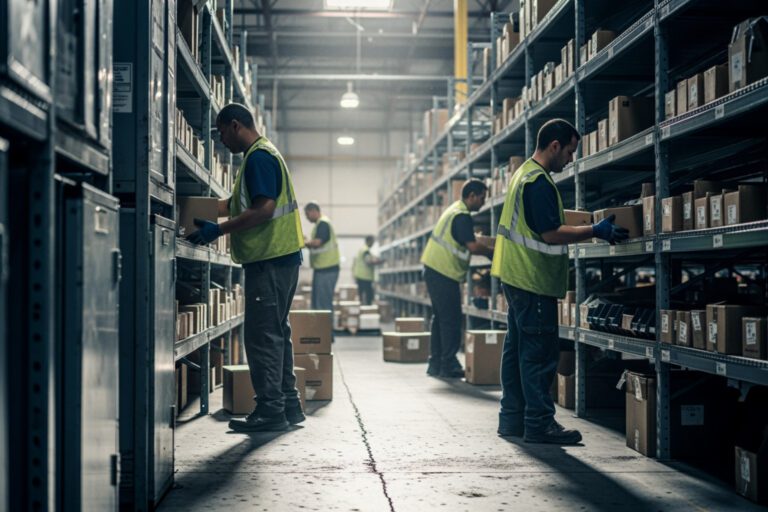
Once your products are on the shelves, your online store integrates with our technology. When a customer buys something, the order automatically flows to our team. We then begin the pick and pack process. A warehouse staff member finds the items, chooses the right packaging, and prepares the shipment. Finally, we hand it off to the carrier and send tracking information back to your customer.
Managing inventory and returns through an outsourcing order fulfillment system
Modern fulfillment relies on a Warehouse Management System (WMS) to provide real-time tracking. You should always know exactly how much stock you have left and when you need to reorder. This prevents stockouts that kill your sales momentum.
Reverse logistics, or returns, is another area where outsourcing order fulfillment shines. Handling returns in-house is often messy and slow. A 3PL can process returns quickly, inspecting the items to see if they can be restocked or if they are damaged. We even work with tools like Happy Returns to make the process seamless for your customers, which builds long-term loyalty.
Selecting a partner that protects your brand reputation
Your fulfillment partner is the last person to touch your product before your customer does. That is a high-stakes responsibility. When choosing a 3PL provider, you need to look for a partner with a proven track record in your specific industry.
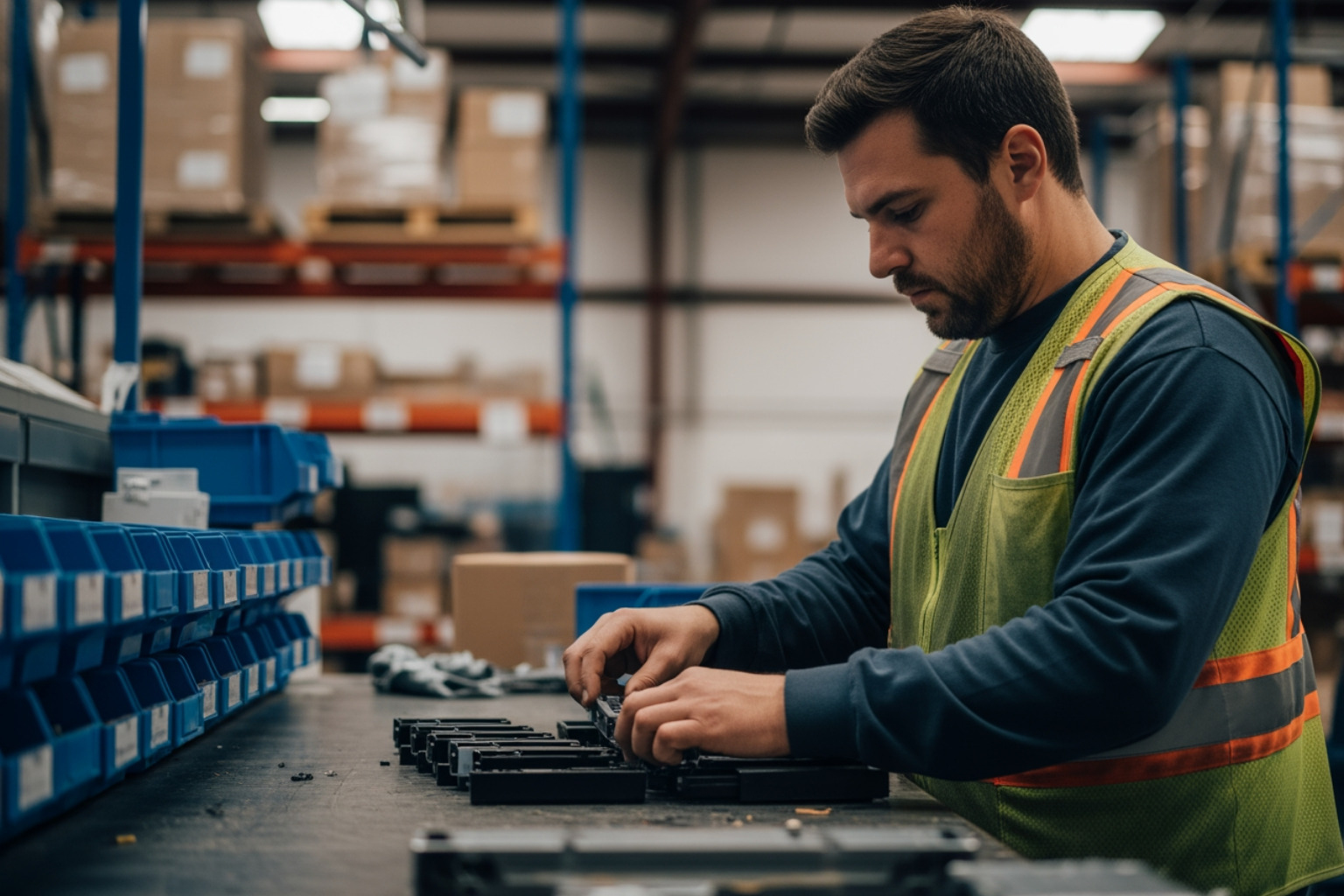
At Hanzo Logistics, we operate out of the Indianapolis logistics hub. This location is not just a dot on a map; it is a strategic advantage. We specialize in industries where precision is non-negotiable, such as Automotive and Life Sciences. Our 2 million square feet of specialized infrastructure is designed to protect your brand reputation through every seasonal peak and regulatory audit.
Choosing the right time to hand over the keys
The right time to outsource is usually just before your current system breaks. If you find that 45% of your team’s time is spent on logistics instead of growing the business, you have reached a trigger point. Other signs include running out of storage space, seeing an increase in shipping errors, or struggling to keep up with a 59% increase in online order volume.
When to keep your outsourcing order fulfillment operations in-house
Outsourcing is not for everyone. If your order volume is very low, the monthly minimum fees of a 3PL might outweigh the benefits. You should also consider keeping things in-house if your products require extreme levels of customization, such as hand-written notes in every box or complex gift wrapping that a standard warehouse cannot replicate.
Some brands choose the in-house model because they have already invested heavily in their own facilities and staff. If your current operation is meeting the 2-day shipping standard and your margins are healthy, you may not need to make the switch yet.
Comparing the mechanics of in-house vs outsourced fulfillment
The decision often comes down to a comparison of resources and control.
| Feature | In-House Fulfillment | Outsourced (3PL) |
|---|---|---|
| Storage Costs | Fixed (Lease/Utilities) | Variable (Pay-per-use) |
| Labor | You hire, train, and manage | Handled by the 3PL |
| Shipping Rates | Standard retail/small biz rates | Deeply discounted volume rates |
| Technology | You buy and maintain WMS | Included in the service |
| Scalability | Limited by your four walls | Unlimited across multiple centers |
| Management | High daily involvement | Oversight of KPIs only |
Frequently Asked Questions about outsourcing order fulfillment
What is the difference between a 3PL and a 4PL?
A 3PL (Third-Party Logistics) provider handles the physical acts of warehousing and shipping. A 4PL (Fourth-Party Logistics) acts as a higher-level manager that often oversees multiple 3PLs and the entire supply chain. For most eCommerce brands, a 3PL provides the best balance of cost and direct service.
How much does it cost to outsource fulfillment?
Costs are generally broken down into receiving fees (getting your stock into the warehouse), storage fees (charged per pallet, shelf, or bin), and fulfillment fees (the cost to pick, pack, and ship an order). While it adds a line item to your expenses, it often reduces your total cost per order by lowering shipping rates and eliminating warehouse overhead.
Can I still use my own custom packaging?
Yes. Most professional 3PLs allow you to use custom boxes or branded dunnage. This allows you to maintain the “unboxing experience” that is so important for modern brands while still benefiting from professional logistics.
Scaling your business with a strategic logistics partner
Outsourcing order fulfillment is about more than just moving boxes. It is about finding a partner that provides the strategic expertise and 24/7 availability you need to grow. At Hanzo Logistics, we replace the traditional lack of visibility with real-time data and proactive problem-solving.
Whether you are a scaling eCommerce brand or a leader in the pharmaceutical industry, your operations should not break under pressure. By partnering with us, you gain access to a fulfillment engine that is built for precision. We handle the high-stakes challenges of the supply chain so you can focus on what you do best: building your brand.