
Unified Inventory is the Backbone of Modern Retail Growth
3PL omnichannel fulfillment is the process of managing inventory and shipping orders across all your sales channels including ecommerce, wholesale, retail, and marketplaces from one unified system handled by a third-party logistics provider.
Here is what that means in practice
| What It Does | Why It Matters |
|---|---|
| Centralizes inventory across all channels | Prevents overselling and stockouts |
| Syncs orders from Shopify, Amazon, Walmart, and more | Eliminates manual errors between platforms |
| Fulfills both B2B and DTC orders from one network | Reduces operating complexity and cost |
| Provides real-time data and tracking | Gives you visibility instead of guesswork |
| Scales with demand spikes | Keeps service consistent during peak seasons |
Customers today expect fast, accurate delivery no matter where they buy. 44% of consumers expect two-day delivery, and 77% say convenience and free shipping are their top reasons to shop online according to Statista. If your fulfillment operation is fragmented across multiple providers or spreadsheets, you will struggle to meet those expectations consistently.
The brands that are growing are the ones that treat fulfillment as a system, not an afterthought.
I’m Cole Russell, and I grew up around the logistics industry before spending the last five years helping brands build smarter supply chains through 3PL omnichannel fulfillment. In this guide, I’ll walk you through exactly how to sync your sales channels with a fulfillment operation that keeps up with your growth.
Related 3PL omnichannel fulfillment articles:
Moving from multichannel silos to 3PL omnichannel fulfillment
Many businesses start with a multichannel approach. You sell on Shopify, you have a presence on Amazon, and maybe you ship pallets to a few retail partners. In a multichannel setup, these channels often act like islands. You might have one pile of inventory reserved for ecommerce and another for wholesale.
This siloed approach is a recipe for headaches. When one channel sells out while the other has plenty of stock, you lose money. Even worse, you risk overselling a product you don’t actually have, which leads to unhappy customers and marketplace penalties. Research from Forbes shows that 82% of ecommerce businesses have increased their sales specifically by moving toward an omnichannel model.
By transitioning to 3PL omnichannel fulfillment, you collapse those silos. You maintain one pool of inventory that serves every channel. Whether an order comes from a TikTok shop or a big box retailer, the system knows exactly what is available in real-time. This level of integration is the only way to effectively expand your sales channels with multichannel fulfillment without losing control of your operations. When you master the secret to managing multichannel supply chains, you stop reacting to problems and start planning for growth.
Why 3PL omnichannel fulfillment is essential in 2026
As we move through 2026, the retail landscape has become more volatile. Between shifting trade policies and 2025 tariffs that impacted import costs, businesses need to be agile. You cannot afford to have capital tied up in the wrong warehouse or the wrong inventory bucket.
Strategic agility is now a requirement. 3PLs that offer omnichannel services were found to be over 270% more likely to enjoy revenue growth compared to those stuck in traditional models. This is because a unified system allows for better inventory planning. If a tariff hike makes importing certain goods more expensive, you need to know exactly where every unit is located to maximize its value. 3PL omnichannel fulfillment provides the data necessary to pivot your strategy the moment the market shifts.
Real-time data prevents stockouts and protects brand reputation
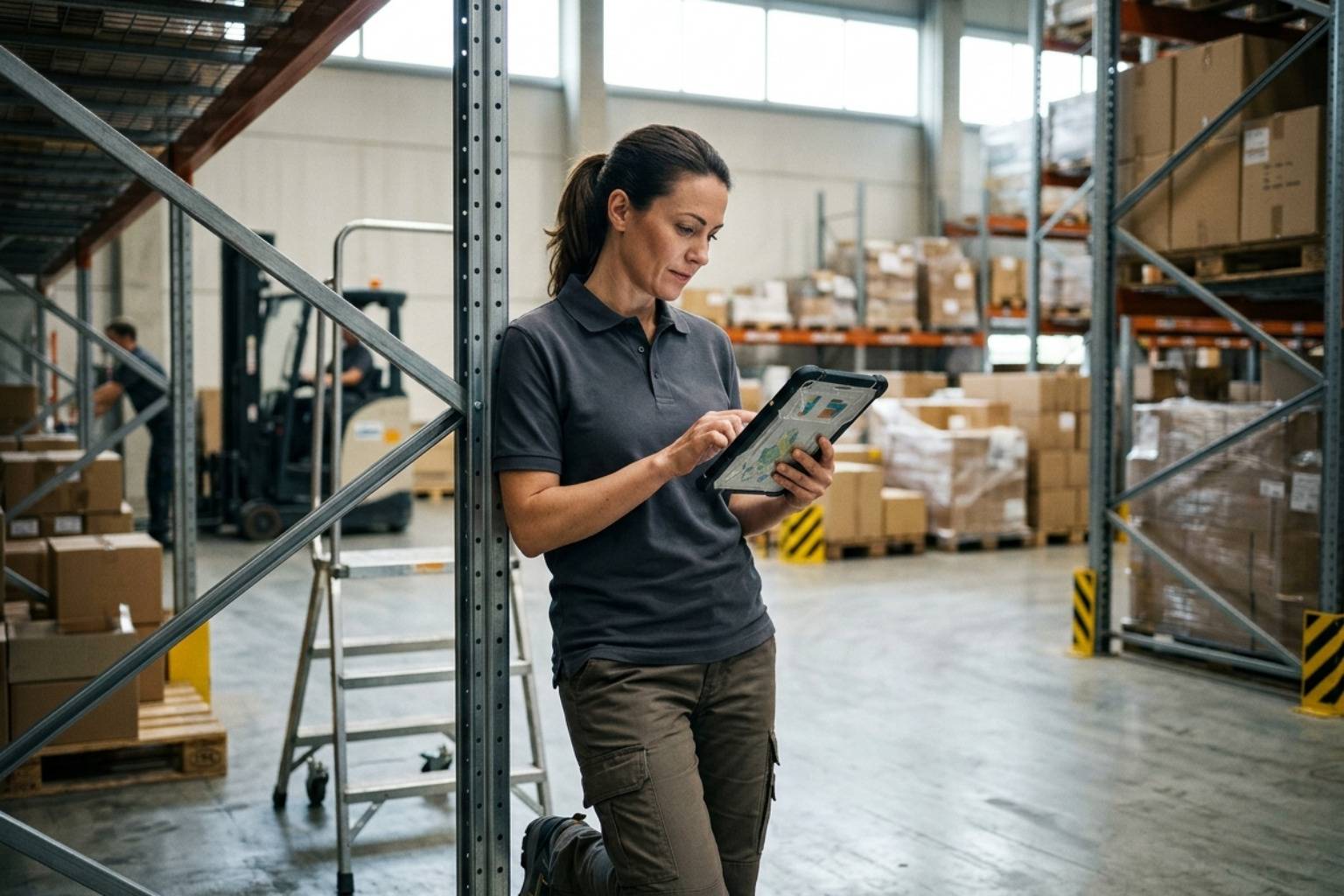
Visibility is the difference between a smooth peak season and a logistics nightmare. In an omnichannel environment, data must move faster than the packages. This is made possible through robust API integrations and EDI compliance.
Top-tier 3PL platforms connect directly to your storefronts such as Shopify, Amazon, Walmart, or Target. When a customer clicks “buy,” the order is sent to the warehouse immediately. Simultaneously, the inventory count drops across every other platform you sell on. This prevents the “out-of-stock” email that kills brand loyalty. At Hanzo Logistics, we focus on fulfillment distribution that prioritizes this real-time flow. If you can’t see your inventory, you can’t manage your business.
Technical precision in 3pl omnichannel fulfillment
Fulfilling a Shopify order is straightforward. Fulfilling an order for a major retailer like Walmart or Target is a different game entirely. These retailers have strict routing guides which are detailed rules on how boxes must be labeled, how pallets must be stacked, and exactly when the truck must arrive.
If you miss a detail, you get hit with a chargeback. These fees eat your margins quickly. A professional 3PL partner manages these complexities for you. They ensure EDI (Electronic Data Interchange) messages are sent correctly and that every shipment meets the retailer’s specific requirements. This technical precision includes
- Inventory sync involves keeping your digital storefronts aligned with physical shelf counts.
- Automated reordering triggers alerts when stock hits a certain level so you never go dark.
- Chargeback prevention means following routing guides to the letter to avoid unnecessary fees.
Strategic warehouse locations reduce last-mile delivery costs
Geography is one of the few things in logistics you cannot optimize with software alone. You have to be physically close to your customers. Last-mile logistics accounts for 41% of the total costs in the supply chain fulfillment process. If you are shipping everything from a single corner of the country, you are overpaying for shipping and making your customers wait too long.
Operating out of an Indianapolis hub provides a massive advantage. From central Indiana, we can reach 96% of the U.S. population within two days via ground shipping. This location allows you to meet the 44% of consumers who expect two-day delivery without paying for expensive air freight. By positioning inventory in the Midwest, you slash the distance a package travels, which directly lowers your shipping rates and carbon footprint. You can explore our full range of services to see how this geographic advantage fits into your broader strategy.
Advanced automation and reverse logistics drive long-term efficiency
The “back end” of the warehouse is where the most significant efficiency gains happen. Modern 3PLs use Autonomous Mobile Robots (AMRs) to handle the repetitive tasks of moving goods across 2 million square feet of space. This doesn’t just speed things up; it reduces human error in the picking and packing process. When accuracy improves, your returns rate drops.
However, returns are an inevitable part of modern commerce. Worldwide, shoppers return an estimated $642.6 billion in goods each year according to the National Retail Federation. In an omnichannel world, the return process is just as important as the delivery. 75% of retailers now allow in-store returns of online merchandise (BORIS), and 76% use store inventory to fulfill online orders. This creates a complex loop of inventory moving in both directions.
Managing the complexity of reverse logistics
A “hassle-heavy” return process turns off 80% of shoppers. If a customer has a bad experience returning an item, they likely won’t buy from you again. 3PL omnichannel fulfillment streamlines this by integrating reverse logistics into the main supply chain.
When a return arrives at the warehouse, it needs to be inspected, refurbished if necessary, and put back into the “available” inventory pool as quickly as possible. This keeps your capital moving. Whether you are managing how omnichannel fulfillment keeps holiday shoppers happy or handling standard year-round returns, the goal is to make the process invisible to the customer and efficient for your bottom line.
Frequently asked questions about 3PL omnichannel fulfillment
What is the main difference between multichannel and omnichannel fulfillment?
Multichannel fulfillment treats each sales channel as a separate entity with its own inventory and processes. Omnichannel fulfillment unifies all channels into a single system with a shared inventory pool. Omnichannel is more efficient because it prevents stockouts in one channel while inventory sits idle in another. It provides a consistent experience for the customer, regardless of where they shop.
How do 3PLs handle sudden spikes in order volume?
Professional 3PLs use a combination of scalable labor, automation, and advanced forecasting. During peak seasons, we can ramp up staffing and utilize AMRs to maintain high throughput. Because an omnichannel system provides real-time data, we can often see a spike coming before it hits the packing station, allowing us to adjust resources proactively.
Which sales platforms can integrate with a 3PL system?
Most top-tier 3PL systems support hundreds of integrations. This includes ecommerce platforms like Shopify, BigCommerce, and Magento; marketplaces like Amazon, Walmart, and eBay; and retail EDI connections for big-box stores. The goal is to have a “plug and play” setup where order data flows seamlessly from your sales platform to our warehouse floor.
Partner with a logistics expert to scale your operations
Scaling a brand is hard enough without worrying about whether your warehouse can keep up. If you are in an industry where precision is non-negotiable, such as Automotive, Life Sciences, or Industrial Products, the stakes are even higher. A single shipping error or a regulatory slip-up can damage a reputation you’ve spent years building.
At Hanzo Logistics, we act as a strategic partner rather than just a service provider. We provide 2 million square feet of specialized infrastructure and a fulfillment engine tailored to your specific needs. We replace the traditional lack of visibility with real-time data and a proactive team that stays available 24/7.
Understanding what sets a high performing 3pl apart from the rest is the first step in future-proofing your business. When you are ready to stop managing spreadsheets and start managing growth, we are here to help. You can learn more about how to choose a 3pl provider and find the perfect logistics partner by evaluating their technology, their location, and their ability to handle the complexity of your specific industry.
Fulfillment should be the engine of your growth, not the brake. By syncing your sales with 3pl omnichannel fulfillment, you give your business the freedom to sell anywhere with the confidence that every order will arrive on time and as promised. Explore our services today to see how we can streamline your supply chain from our Indianapolis hub.