Summary: Pallet flow racking automates FIFO rotation through gravity, but that automation depends on precise alignment of lane pitch, brake calibration, pallet quality, and load weight consistency. Non-standard pallets and weight variability are the primary causes of lane jams, which require manual forklift extraction and block adjacent lanes during clearing. Maintenance demands exceed static racking significantly because brakes, wheel bearings, and roller surfaces all degrade under continuous use, and a single failed brake can cascade damage across an entire lane. Lane depth decisions lock in long-term trade-offs between density and flexibility, with mismatches between SKU velocity and lane capacity trapping dead stock or defeating FIFO compliance for date-sensitive products. Before committing capital or selecting a 3PL with pallet flow infrastructure, evaluate pallet quality standards, maintenance cadence, and the match between your inventory profile and the system’s operational requirements.
Gravity is a reliable engine, but it requires constant calibration to keep it from becoming destructive.
A warehouse tour guide can explain pallet flow racking in thirty seconds, and the logic seems self-evident. No forklift shuffling or manual rotation. First-in, first-out happens automatically.
We operate these systems daily and can confirm that the simplicity is real, albeit incomplete.
Pallet flow racking delivers on its promise when a precise set of mechanical, environmental, and product conditions align. When any one element fails, lanes stall, product sustains damage, and the automated rotation that justified the investment becomes a source of manual intervention and operational drag.
If you are evaluating a 3PL partner for their warehousing and distribution infrastructure or weighing capital investment in high-density storage, understanding what actually happens inside these systems will shape whether that investment performs.
Gravity-Fed Lane Queuing Creates Automatic Stock Rotation Without Forklift Involvement
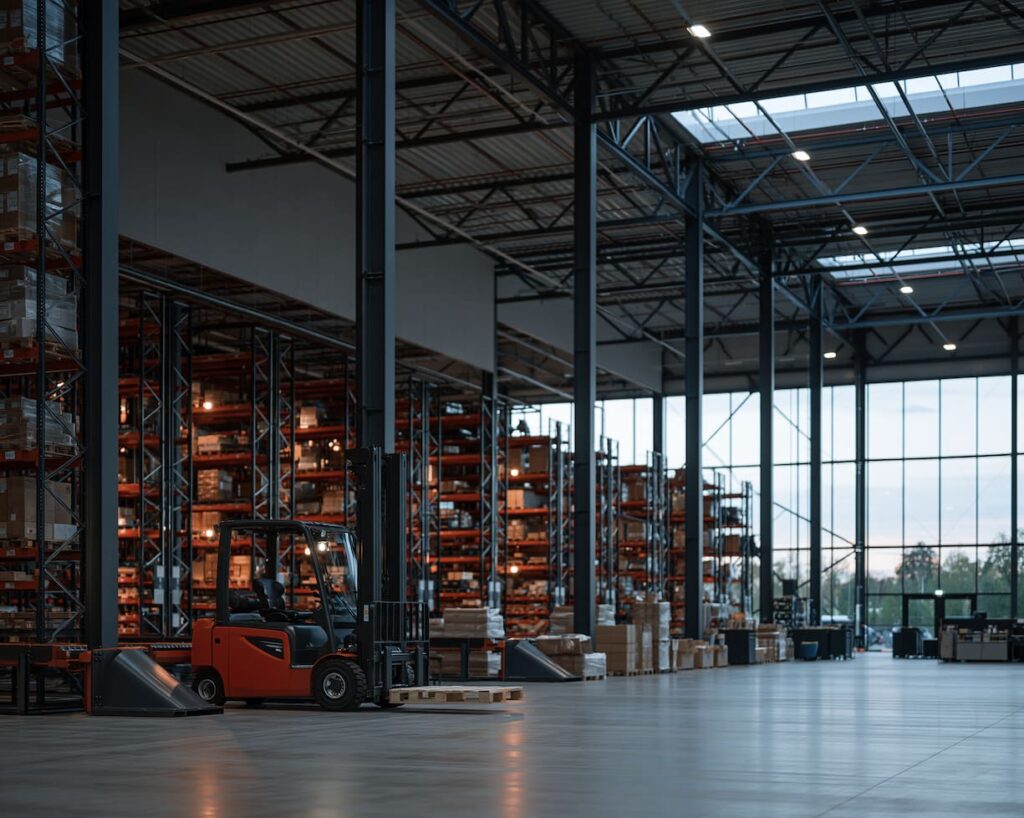
Pallet flow racking is a deep-lane, high-density storage system designed around automatic stock rotation.
Pallets enter from a loading aisle at the back, travel down an inclined lane of rollers or wheels, and queue at the pick face in the front aisle. When a picker removes the forward pallet, the next one rolls into position without any forklift involvement inside the rack structure.
The core value proposition is FIFO compliance without labor.
Operations handling date-sensitive inventory, regulated products with lot-control requirements, or raw materials that degrade over time often deploy pallet flow for exactly this reason. Food and beverage distributors, pharmaceutical logistics providers, and chemical manufacturers represent typical adopters.
Pallet Flow Is the Primary High-Density Option That Delivers True FIFO
Selective racking offers direct access to every pallet but consumes floor space in aisles. Upgrading to high-density systems like pallet flow can increase storage capacity by 60-80% compared to selective racking within the same footprint.
Drive-in racking achieves high density but operates as last-in, first-out, requiring forklift entry into the rack structure. Push-back systems also follow LIFO logic.
Pallet flow is the primary high-density option that delivers true FIFO without manual intervention. That automatic rotation, however, depends on components that move, wear, and require calibration.
Every other racking type mentioned involves static steel. Pallet flow introduces wheels, bearings, brakes, and inclines.
What Is the Difference Between Pallet Flow and Push-Back Racking?
Pallet flow and push-back racking both achieve high-density storage, but they serve opposite inventory rotation needs.
Pallet flow uses gravity to move pallets from the load end to the pick face, creating first-in, first-out rotation where the oldest inventory is always picked first. Push-back racking uses a cart-and-rail system where each new pallet pushes the previous one back, creating last-in, first-out rotation where the newest inventory is picked first.
We recommend pallet flow for date-sensitive products, lot-controlled inventory, and perishables. Push-back works well for non-perishable goods where picking the newest stock first has no operational consequence.
Lane Pitch Calibration Prevents Pallet Acceleration Damage
Gravity is the engine, but the system’s behavior depends on how that force is channeled and controlled.
Pallet flow lanes are pitched at a slight incline, typically between 3-5%. Steeper angles generate more speed, which sounds efficient until pallets accelerate beyond control, slam into the pick face, and damage both product and the pallets waiting ahead of them. We calibrate pitch to move loads reliably without building destructive momentum.
Wheel Bed Construction Determines Load Distribution and Jam Risk
The lane bed itself is constructed from either full-width rollers or tracks of individual wheels.
Wheel-based systems are more common for heavy loads because they distribute weight across more contact points and offer easier replacement of individual components. Roller systems can handle lighter loads efficiently but present different wear patterns. Both designs must account for the gap between pallet bottom boards. If wheel spacing exceeds that gap, pallet boards drop between wheels and the lane jams.
Centrifugal Brakes Are the Primary Wear Component
Speed control is the critical engineering challenge. Centrifugal brakes embedded in the lane engage as pallet velocity increases, applying resistance proportional to speed. Some systems use mechanical governors with different engagement thresholds.
Without these controls, a 2,000-pound pallet on a 40-foot lane becomes a projectile. The brakes make the system viable, and they are also the component we replace with the highest frequency.
Entry Guides and Pallet Separators Prevent Lane Surges
At the load end, entry guides center pallets into the lane and prevent skewed entry that would cause binding. Pallet separators at the pick face hold back the queue when the forward pallet is removed, preventing the entire lane from surging forward during extraction.
These components seem minor until one fails and a forklift operator watches six pallets cascade into the pick aisle.
Non-Standard Pallets Create Lane Jams Requiring Manual Forklift Extraction

Reliability depends on a variable that receives little attention until problems emerge. Pallet quality.
Pallet flow lanes are engineered around assumptions about the objects traveling through them. Standard GMA pallets with intact bottom boards, consistent dimensions, and flat profiles will flow as designed. Industry tracking shows that these standard units account for approximately 30% of market share for all pallets in circulation. Pallets with warped decks, missing bottom boards, or non-standard footprints will not flow reliably.
How Pallet Defects Cause Lane Failures
- A warped pallet catches on wheel tracks and stops mid-lane
- A stringer that protrudes below the deck snags on brakes
- A pallet with bottom boards spaced wider than the wheel pitch drops into gaps
- Each condition creates a jam that requires forklift intervention to clear
Mixed Pallet Populations Increase Jam Frequency Substantially
In facilities with tight pallet-quality control, jams are infrequent maintenance events. In operations receiving pallets from multiple sources, using recycled pallet pools, or operating across clients with different pallet standards, jam frequency increases substantially.
We see this challenge acutely in multi-client 3PL environments. The physical system works perfectly with quality inputs and struggles with variability.
Clearing a Jammed Lane Blocks Adjacent Lanes and Halts Replenishment
Clearing a jammed lane is not a simple task. A forklift must enter the rack structure from the load end, extract the problem pallet, and often remove pallets stacked behind it to access the jam point.
While that lane is being serviced, replenishment into adjacent lanes may be blocked, and pick-face availability drops. The labor cost of a single jam extends well beyond the minutes spent on extraction.
Lanes Tuned for One Weight Range Will Malfunction Outside That Range
Pallet flow lanes are tuned to move loads within a specific weight range. The brakes, pitch, and wheel resistance all calibrate to an expected load mass. When actual loads fall outside that range, the system misbehaves in predictable ways.
Underweight Pallets Stall and Overweight Pallets Overwhelm Brakes
Pallets that are too light may not generate enough force to overcome wheel resistance and brake engagement. They stall mid-lane or fail to advance when the forward pallet is removed.
Pallets that are too heavy overwhelm brake capacity and accelerate beyond safe speeds. The damage this causes compounds quickly, affecting both product integrity and downstream brake components that were not designed for repeated high-impact stops.
Variable-Weight SKUs Force a Choice Between Dedicated Lanes and Higher Jam Risk
Operations handling consistent, high-volume SKUs with stable unit weights can tune lanes precisely and expect reliable performance. Operations handling variable-weight SKUs face harder choices.
Seasonal pack-size changes, promotional bundle configurations, and raw material shipments that fluctuate with supplier variability all create weight variance that the physical system must absorb.
Facilities managing this variance either dedicate specific lanes to defined weight classes, accepting reduced flexibility, or operate flexible lanes at higher jam risk and increased maintenance cycles. Neither option is cost-free, and the choice often surfaces only after initial deployment reveals the mismatch.
Brake Wear Scales with Load Weight and Throughput Volume
Heavier pallets demand more brake engagement on every trip down the lane. A system running at the upper end of its weight tolerance will require brake service more frequently than one running lighter loads.
Maintenance intervals are not fixed specifications. They are functions of actual operating conditions.
Deferred Maintenance Creates Compound Failures Across Entire Lanes
The notion that pallet flow is a passive system, set at installation and left to operate, does not survive contact with actual use. Every component that makes gravity feed work is also a component that wears.
Components That Require Ongoing Inspection and Replacement
- Wheel bearings degrade under continuous load
- Brake pads thin with each engagement
- Roller surfaces accumulate debris and develop flat spots
- Guide rails shift under repeated pallet impact
None of these failures are catastrophic in isolation, but deferred maintenance allows small issues to compound into lane-wide failures.
A Single Failed Brake Can Cascade Damage Across an Entire Lane
A failed brake changes the physics of the entire lane. The pallet passing that point accelerates, hits the next brake at higher speed, accelerates again, and reaches the pick face with destructive force.
The cascade damages product, pallets, and the brakes that could not arrest the runaway. One skipped inspection can create repair costs that exceed months of preventive maintenance.
Pallet Flow Requires More Rigorous Inspection Cadence Than Static Racking
Inspection cadence for pallet flow systems must be more rigorous than for static racking.
Visual lane checks identify debris accumulation and obvious damage. Load-test protocols verify brake engagement and flow speed. Brake response verification catches degradation before failure.
We inspect high-value and fragile inventory lanes daily. Lower-throughput lanes may operate on weekly cycles, but extending beyond that invites compound failures.
Selective racking involves no moving parts and requires only periodic structural inspection. Pallet flow carries a meaningfully higher maintenance burden by comparison. The labor savings from automatic rotation must be weighed against the labor investment in keeping the system functional.
How Often Should Pallet Flow Racking Be Inspected?
We recommend daily visual inspections for pallet flow lanes handling high-value, fragile, or date-sensitive inventory. These checks should identify debris accumulation, visible damage, and pallets that have stalled mid-lane.
Weekly inspections are acceptable for lower-throughput lanes, but should include load-test protocols that verify brake engagement and flow speed.
Full brake response verification and mechanical component assessment should occur monthly or based on throughput volume, with heavier loads requiring more frequent service intervals. Any lane experiencing repeated jams should be taken offline for immediate inspection regardless of the scheduled cadence.
Low Temperatures Alter Lubrication Behavior and Brake Response

Facility environment and product characteristics introduce additional variables that affect system performance.
Freezing Conditions Make Wood Pallets Brittle and Change Wheel-Contact Dynamics
In cold storage environments, wheel lubrication behaves differently at low temperatures. Brakes can become sluggish or overly aggressive depending on material composition and thermal contraction.
Pallets themselves change. Wood pallets exposed to freezing conditions become brittle and more prone to breakage. Plastic pallets may perform more consistently, but they introduce different wheel-contact characteristics.
Product Packaging Must Withstand Stop-and-Go Lane Impacts
Product packaging affects flow behavior. Cases stacked on pallets must maintain integrity during the trip down the lane, including the stop-and-go impacts at the pick face each time forward pallets are removed.
Shrink wrap tension needs to secure the load without creating instability. Loose wrapping allows cases to shift during flow, changing the load’s center of gravity and potentially causing tip-overs. Overly tight wrapping on unstable configurations can still fail when the pallet jolts to a stop.
Food-Grade and Pharmaceutical Environments Require Wheel Bed Cleaning Protocols
In food-grade and pharmaceutical environments, hygiene requirements add another layer.
Wheel beds accumulate dust, debris, and product residue. Roller tracks can harbor contaminants. Cleaning protocols must address these components without damaging bearings or brakes. Washdown procedures that work for static racking may not be compatible with the mechanical systems inside pallet flow lanes.
Lane Depth Must Match SKU Velocity to Prevent Dead Stock and Replenishment Bottlenecks
The physical configuration of pallet flow lanes locks in operational trade-offs that persist for the life of the installation.
Deeper Lanes Increase Density but Require Precise Demand Forecasting
Lane depth is the most significant decision. Deeper lanes store more pallets per SKU and maximize cubic density, which is the reason for choosing pallet flow in the first place.
But deeper lanes also require precise demand forecasting. If pick velocity does not match lane capacity, pallets at the load end sit for extended periods. For date-sensitive inventory, that defeats the FIFO purpose. For any inventory, it represents capital tied up in stock that cannot be accessed until everything ahead of it sells through.
Shallow Lanes Offer Flexibility but Sacrifice the Density Advantage
Shallow lanes offer more flexibility and accommodate SKUs with lower velocity without trapping dead stock. But they sacrifice the density advantage.
A facility with many shallow lanes may not achieve better cube utilization than selective racking while carrying all the maintenance complexity of pallet flow.
How to Match Lane Depth to SKU Velocity
- Fast movers belong in deep lanes where high replenishment frequency keeps the queue moving
- Slow movers need shallow lanes or should not be in pallet flow at all
- Getting this wrong at installation is expensive to fix
Replenishment Must Be Coordinated with Pick Rate to Prevent Aisle Congestion
Replenishment timing adds another dimension. The pick face can only be serviced from one direction, and the load end from the other.
If pickers clear lanes faster than replenishment crews can reload, pick-face availability drops and pickers wait. If replenishment outpaces picking, the load aisle becomes congested with staged pallets waiting for lane space. Coordinating these two workflows requires either careful scheduling or real-time communication systems that add operational overhead.
The Two-Aisle Design Separates Traffic but Concentrates Replenishment Labor
Pallet flow changes how material handling equipment moves through the facility.
Loading and Picking Happen in Separate Aisles with Different Equipment Requirements
The two-aisle design, loading from the back and picking from the front, creates inherently separate traffic patterns. Standard counterbalance forklifts typically service the load aisle, staging pallets from receiving or reserve storage and placing them into lane entries.
The pick aisle may use different equipment depending on configuration, potentially including order pickers, reach trucks, or standard forklifts depending on pick-face height and order profiles.
Pickers Never Enter the Rack Structure, Reducing Collision and Falling Product Risk
This separation has safety advantages. Pickers are never inside the rack structure where they could be struck by moving forklifts or falling product. The pick face presents a stable wall of pallets rather than a deep tunnel requiring forklift entry.
Drive-in racking requires forklifts to travel inside multi-deep lanes with limited visibility and substantial collision risk. Pallet flow keeps people and equipment in more controlled positions.
All Replenishment Forklift Travel Concentrates at the Load Aisle
The trade-off is that all replenishment labor concentrates at the load aisle. In drive-in systems, put-away and retrieval happen from the same aisle. Pallet flow requires forklift travel to a separate zone, increasing travel time for replenishment tasks.
Facilities must account for this in layout planning, ensuring the load aisle is accessible from receiving without crossing pick-area traffic.
Jam-Clearing Requires Trained Operators with Specific Extraction Skills
When lanes malfunction, trained operators must intervene with equipment. This is not general forklift work. It requires understanding how to safely extract pallets from mid-lane positions without damaging the rack structure or creating secondary jams.
Ideal Pallet Flow Candidates Have High Volume, Consistent Weights, and Strict FIFO Requirements
The conditions for successful pallet flow deployment are specific. The system excels when inventory characteristics, facility capabilities, and operational discipline align with its requirements.
Conditions That Support Successful Pallet Flow Deployment
- High-volume SKUs with consistent load weights
- Products that move fast enough to cycle through deep lanes before date codes become problematic
- Pallets that meet quality standards reliably
- Maintenance teams with the capacity and training to sustain inspection schedules
- Operations where strict FIFO compliance carries regulatory, quality, or customer-service consequences that justify the infrastructure investment
Conditions That Indicate Poor Fit for Pallet Flow
- Highly variable SKU velocity that makes lane-depth optimization impossible
- Mixed pallet populations that cannot be standardized without upstream process changes
- Limited maintenance resources that will defer inspections until failures occur
- Low throughput that does not generate enough rotation to justify density investment over simpler selective racking
Hybrid Zoning Captures Pallet Flow Benefits for Specific SKU Segments
Hybrid approaches are common in practice. Facilities deploy pallet flow zones for specific SKU segments with high velocity and FIFO requirements, while using selective or push-back racking for inventory with different profiles.
This zoning strategy captures pallet flow benefits where they apply without forcing all inventory through a system that may not suit it.
Questions to Ask When Evaluating Pallet Flow Infrastructure
When all of the elements hold, the system delivers exactly what it promises. When any element fails, the automatic rotation stops being automatic.
Due Diligence Questions for Evaluating a 3PL’s Pallet Flow Capabilities
- What pallet quality standards does the facility enforce?
- What is the maintenance cadence for flow lanes?
- How are lane depths matched to SKU velocity?
- What happens when jams occur, and how often do they occur?
- What training do operators receive for jam extraction?
Capital Investment Considerations Beyond Rack Cost and Cube Density
- Ongoing maintenance labor requirements
- Pallet quality control program costs
- Match between current inventory profiles and system requirements
- Flexibility cost if product mix changes over the installation’s lifespan
We see operators commit to pallet flow based on density projections without accounting for these variables.
The complexity is not a reason to avoid the system. It is the reality that shapes whether the system runs reliably or becomes a recurring source of operational friction. Understanding the mechanics behind the gravity feed separates informed infrastructure decisions from assumptions that only reveal themselves after installation.