

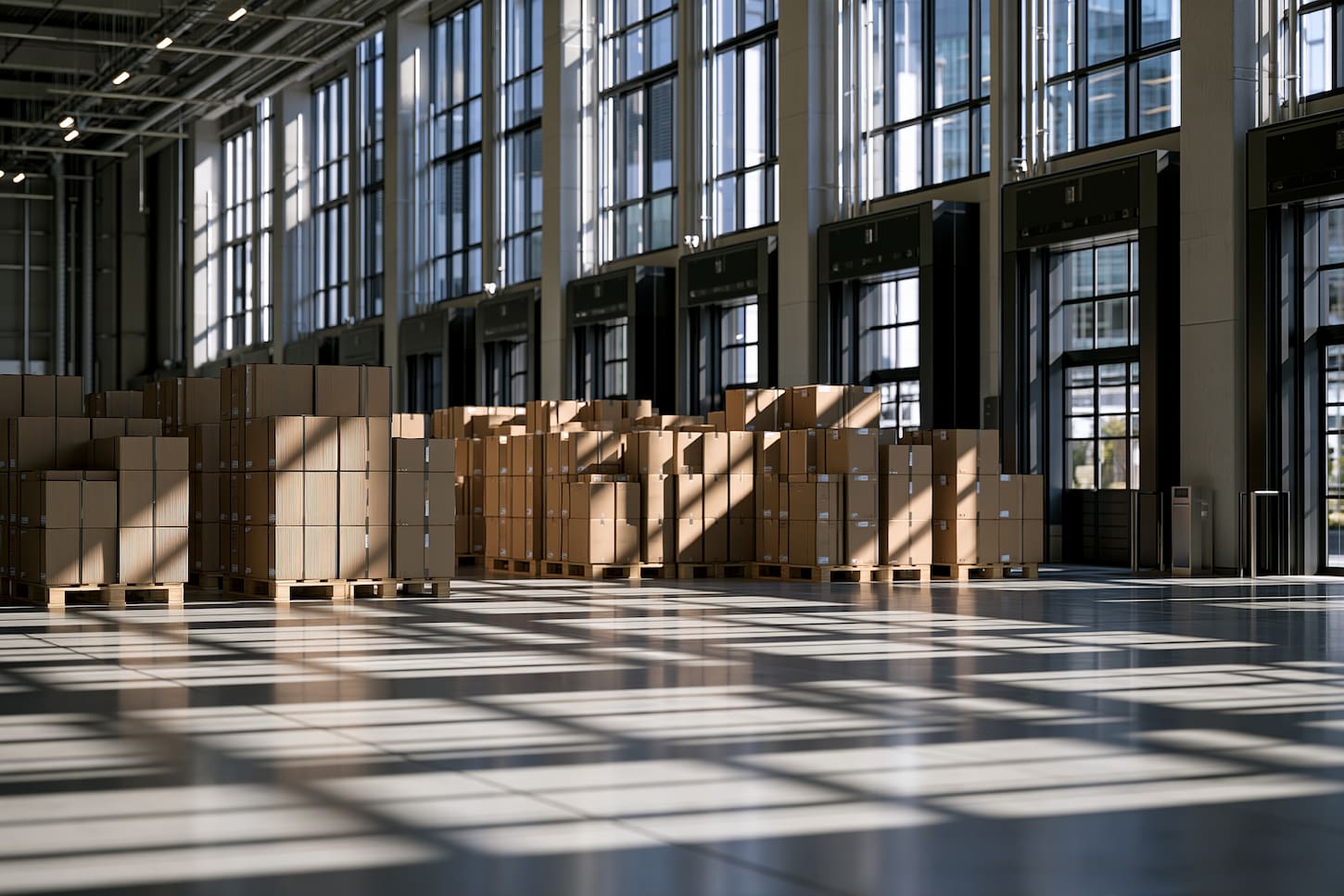
Returned goods that flow into the same lanes as inbound freight create immediate problems.
Product gets misidentified, inspection steps get skipped, and items that should be back in active inventory within two days sit in a staging area for two weeks instead.
A dedicated return receiving path solves this by giving reverse logistics its own physical space, its own workflow triggers, and its own performance benchmarks separate from your primary receiving operation.
The operational payoff is measurable.
Warehouses that separate return flow from inbound freight report faster grading turnaround, lower misrouting errors, and better recovery rates on resalable product.
Why a Mixed Receiving Floor Fails Reverse Logistics
When returns share dock doors, staging lanes, and scanner queues with standard inbound shipments, the faster-moving inbound freight almost always wins the floor crew’s attention.
Returns pile up. Grading decisions get rushed or deferred entirely.
Items that needed refurbishment get accidentally mixed into clean inventory, which creates downstream quality complaints.
The fundamental issue is that inbound freight follows a predictable rhythm. Returns do not. A dedicated path accounts for that variability by building inspection, grading, and routing logic directly into the physical layout rather than leaving it to individual crew judgment.
Mapping the Physical Layout Before You Build the Path
Start with a floor audit before relocating any shelving or reassigning any dock doors. Walk your current return flow from the moment a carrier arrives to the moment a product reaches a disposition decision. Time every handoff. Note where items stop moving and why.
Key questions to answer during your audit include the following.
- Which dock doors are closest to your grading station and sorting area
- How much linear floor space do you need to hold one full day of expected return volume
- Where does foot traffic from your outbound operation cross your current return staging zone
- Do your existing scanner networks and labeling stations reach the proposed dedicated area
Most mid-size warehouse floors can carve out a dedicated return path without a major renovation. Repositioning one or two dock door assignments and creating a clearly marked floor lane with painted lines or barriers is often enough to establish the physical separation that makes the workflow function properly.
Designing the Five Zones Inside Your Return Path
A functional return receiving path is not a single room. It is a sequence of five connected zones that move product through a defined decision tree without backtracking.
Zone 1, the Carrier Intake Point
This is where the driver interaction ends and warehouse responsibility begins. Verify carrier credentials, log the return manifest digitally, and assign a unique return authorization number before anything is unloaded. A well-run intake point captures the weight, piece count, and origin data that your grading team needs before they ever open a box.
Zone 2, the Physical Sorting Area
Returned units move directly from the dock into a sorting area where they are separated by product category and initial condition class. Do not allow product to skip this zone and go straight to a shelf. Sorting at this stage prevents mixed-condition units from contaminating each other and gives your grading team a clean, organized workload.
Zone 3, the Inspection and Grading Station
This is the highest-value zone in your entire return path. Trained crew members open, assess, and grade each item against your pre-approved grading rules. The most common disposition categories cover perfect condition units ready for immediate restocking, units with minor cosmetic flaws that qualify for refurbishment, and units that are unsellable and need to route to recycling or disposal partners.
Document every grading decision with photos and written notes tied to the return authorization number. That documentation protects you in vendor disputes and gives your operations team data to identify which suppliers or sales channels are generating the most damaged returns.
Zone 4, the Disposition Routing Lane
Once graded, product follows a physical lane to one of three destinations. Perfect units move toward your active inventory restocking line. Refurbishment candidates move to a repair and cleaning station. Unsellable units move to a designated recycling or liquidation staging area. Each lane should be labeled, mapped on your warehouse floor plan, and understood by every crew member working the return path.
Zone 5, the Documentation Closeout Station
Before a return file closes, a final scan confirms that every item on the original manifest reached a disposition decision. Unresolved items get flagged for supervisor review rather than quietly shelved. This closeout step is what separates a return path that generates reliable recovery data from one that produces vague weekly estimates.
Staffing the Return Path Correctly
A dedicated path without dedicated staffing is just painted lines on the floor. Assign a return receiving lead who owns the zone and is accountable for daily throughput, grading accuracy, and disposition routing. That person should not be pulled to cover outbound packing or inbound unloading during peak periods.
Cross-train at least two additional crew members on grading standards so the path can continue operating when the primary lead is unavailable. Grading is a skill that takes time to develop. The Warehouse Education and Research Council publishes benchmarks on return processing accuracy rates that can help you set realistic internal targets as your team builds proficiency.
Setting Performance Benchmarks for Your Return Path
Without benchmarks, you cannot tell whether your dedicated path is actually outperforming your previous mixed approach. Track the following metrics from the first week of operation.
- Average time from carrier arrival to disposition decision per unit
- Percentage of returned units graded as resalable within 24 to 48 hours
- Misrouting rate, meaning units that reached the wrong disposition destination
- Recovery rate, meaning the dollar value of returned inventory that re-enters active stock
Review these numbers weekly for the first 90 days. Return path performance typically improves significantly in the first 30 days as crew members internalize the grading standards and the physical layout becomes familiar.
Connecting Your Return Path to Inventory Replenishment
The return path should not operate as a closed loop that sits outside your main inventory system. Once a unit passes inspection and receives a resalable grade, it should trigger an inventory update that makes it visible and available for order fulfillment as quickly as possible.
A 24 to 48 hour restocking window for perfect condition returns is achievable when your grading station has a direct digital connection to your warehouse management system. That connection turns your return path from a cost center into a legitimate inventory recovery engine, which has real financial impact on your cost per unit and your overall fill rate.
Common Setup Mistakes to Avoid
Even well-planned return paths run into avoidable problems in the first few months of operation.
Undersizing the sorting area is the most frequent error. Teams estimate return volume based on average weeks and then face a backlog during high-volume return periods following major sales events.
Skipping photo documentation at the grading station is the second common mistake. Written grades without visual evidence leave you without support when a vendor questions your disposition decision.
Failing to enforce the dedicated path boundary is the third. When floor supervisors allow inbound freight to temporarily stage inside the return path during a busy receiving day, the physical and operational separation breaks down quickly and is difficult to reestablish.
Building a return receiving path that functions as a true operational system rather than a reactive overflow area takes planning, staffing commitment, and consistent measurement.
The floor layout is only the starting point.
The grading standards, documentation practices, and inventory integration are what determine whether the path actually recovers value or simply moves problem product from one part of the warehouse to another.