
How Efficient 3PL Warehouse Operations Protect Your Business Reputation
3PL warehouse operations are the end-to-end logistics processes a third-party provider runs on your behalf, covering everything from receiving inventory to shipping orders and handling returns.
Here is what that covers at a glance:
| Function | What It Means for Your Business |
|---|---|
| Receiving and putaway | Your inventory is checked in, verified, and stored accurately |
| Inventory management | Stock levels are tracked in real time across all your SKUs |
| Order fulfillment | Orders are picked, packed, and shipped to your customers |
| Transportation coordination | Carriers are managed and routes are optimized on your behalf |
| Returns processing | Returned items are inspected, sorted, and restocked or disposed of |
The global logistics market was valued at $8.4 trillion in 2020 and is projected to reach $13 trillion by 2027. That growth is being driven, in large part, by businesses outsourcing their warehousing and fulfillment to 3PL providers rather than establishing their own facilities. And it makes sense. Most Fortune 500 companies already use a 3PL.
The reason is straightforward. Running a warehouse is highly complex and easy to get wrong. A good 3PL partner handles that complexity so you can stay focused on growing your business.
My name is Cole Russell. I grew up around the logistics industry and have spent the last five years applying that hands-on experience to help businesses tighten their 3PL warehouse operations and protect their reputation through reliable, transparent fulfillment partnerships. In this guide, I will walk you through everything you need to know, from how 3PL warehouses actually work to the technology behind them and how to get the most out of the relationship.
Handy 3pl warehouse operations terms:
How 3PL warehouse operations keep supply chains moving
At its core, a third-party logistics provider acts as the physical link between your production line and your customer. When your sales volume grows, managing a physical space, hiring warehouse staff, and coordinating carrier schedules can quickly consume your calendar. The same pressure shows up across U.S. freight networks, where the Bureau of Transportation Statistics tracks freight movement as a core part of the national transportation system.
Outsourcing these tasks allows you to scale your operational footprint dynamically. Instead of managing a massive empty facility during your slow season, you adjust your utilized shelf space and labor based on actual demand. To understand whether this model fits your current business stage, it helps to review the core trade-offs of Outsourcing to a 3PL vs. Managing Your Own Warehouse.
Defining the core responsibilities of third-party logistics
A full-service 3PL does not just store boxes. We manage a complex series of daily tasks to keep your supply chain running smoothly. These core responsibilities include:
- Inbound Receiving: Unloading pallets, verifying item counts against packing slips, and inspecting goods for damage.
- Inventory Storage: Placing products in optimal locations based on how quickly they sell. You can learn more about these foundational processes in our guide to Warehouse Management 101.
- Order Fulfillment: Picking the correct items from the shelves, packing them securely, and preparing shipping labels.
- Value-Added Services: Performing specialized tasks like kitting, product assembly, and custom retail packaging before shipment.
- Transportation Management: Coordinating with regional and national carriers to ensure orders leave the dock on time.
How shared warehousing models maximize flexibility for growing brands
Most businesses do not need an entire dedicated warehouse. Instead, they use a shared warehousing model. In a shared facility, multiple clients store their inventory under one roof. This allows the 3PL to distribute labor and equipment resources across several accounts, keeping operations highly efficient for everyone.
Here is how shared and dedicated warehousing models compare:
| Operational Feature | Shared Warehousing Model | Dedicated Warehousing Model |
|---|---|---|
| Space Allocation | Flexible space that scales up or down based on your inventory levels | Fixed square footage committed to a single client |
| Labor Utilization | Shared warehouse staff cross-trained to handle multiple accounts | Dedicated team assigned exclusively to one operation |
| Resource Structure | Variable resource allocation based on actual storage and fulfillment activity | Fixed resource commitment regardless of transaction volume |
| Best For | High-growth brands, seasonal products, and mid-sized businesses | Enterprise companies with highly specialized, high-volume needs |
Choosing the right model depends on your growth rate and geographic needs. Many businesses look to regional hubs with excellent highway access to position their inventory closer to major population centers, making Indiana a highly strategic location for distribution.
The technology that powers modern multi-client fulfillment
A modern warehouse cannot run on paper clipboards and spreadsheets. To keep track of thousands of SKUs across multiple different client accounts, 3PLs rely on advanced digital tracking and automation platforms.
These digital tools coordinate daily warehouse workflows, ensuring high accuracy and speed. If you want to understand how these platforms streamline daily warehouse workflows, read our breakdown of digital tracking systems.
Why multi-client management requires advanced digital tracking
Managing inventory for multiple brands under one roof requires sophisticated organization. Digital tracking platforms keep client data strictly separated and secure.
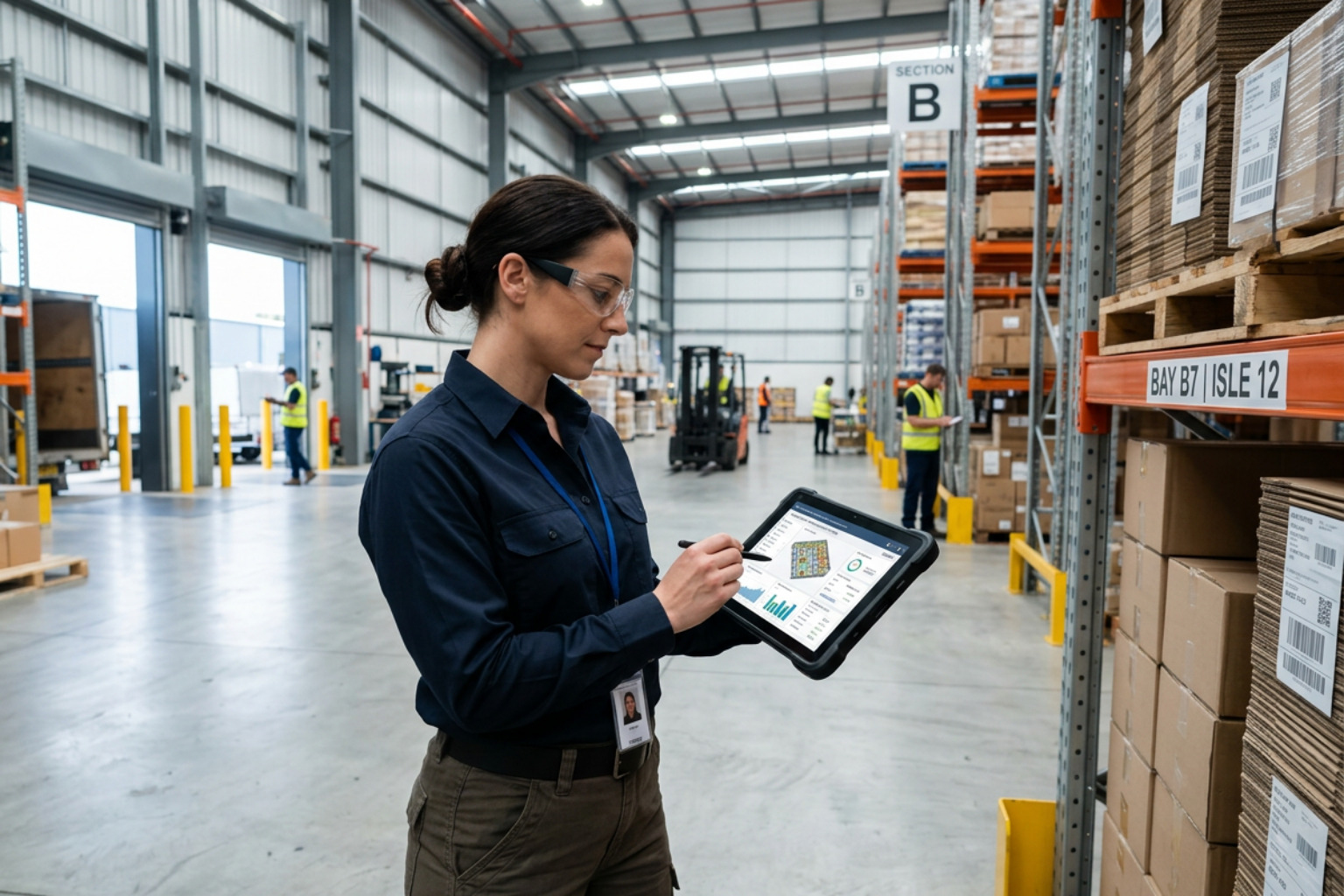
Without advanced digital tracking, a 3PL faces major operational hurdles:
- Inventory Segregation: The tracking platform must monitor identical SKUs for different clients in the same warehouse without mixing them up.
- Real-Time Visibility: Clients need to know exactly how much stock they have left. Digital tracking platforms provide live dashboards for each account to ensure constant visibility.
- Order Accuracy: Automated scanning ensures that the correct items are selected for each specific order, reducing human error.
Essential integrations for seamless 3PL warehouse operations
To keep supply chain data moving without manual entry errors, digital tracking platforms must connect directly with other business systems. These essential integrations include:
- E-Commerce Platforms: Direct connections to Shopify, Amazon, and WooCommerce so online orders import automatically the moment a customer checks out.
- Inventory Syncing: Connections that allow businesses to sync stock levels across multiple sales channels simultaneously.
- Carrier Integrations: Systems that automatically coordinate with shipping carriers to find the fastest, most efficient routes.
When these systems work together, orders flow from the online shopping cart to the warehouse floor in minutes. This level of automation is why outsourcing is so effective for businesses trying to scale. You can read more about how technology enables rapid growth in our article on Why 3PL Warehousing and Distribution Is the Secret to Scaling.
Optimizing inbound and outbound workflows for maximum efficiency
Every step in a warehouse affects the next. If the inbound receiving team makes a mistake, the outbound picking team will eventually face a shipping error. Building highly connected, repeatable workflows is the only way to maintain high accuracy at scale. For a deep look at how we handle the first half of this process, check out The Ultimate Guide to Smooth Inbound Warehouse Operations.
Streamlining dock scheduling to eliminate carrier delays
The shipping dock is often the tightest bottleneck in any warehouse. When multiple trucks arrive at the same time without warning, it creates gridlock. This leads to missed shipping windows and detention delays.
To solve this, modern 3PLs use dock scheduling software. This technology has been proven to improve truck turnaround times significantly. By requiring carriers to book specific arrival windows, we can align our warehouse staffing levels with the day’s inbound and outbound loads. This level of organization is central to our Hanzo Logistics Warehousing and Distribution Services.
Managing returns and reverse logistics to protect product value
Returns are an unavoidable part of modern commerce, especially with online purchases. A slow returns process disrupts your operations and frustrates your customers.
An efficient 3PL treats reverse logistics with the same discipline as forward fulfillment. When a return arrives, our team inspects the item, documents its condition, and follows your pre-approved disposition paths:
- Restock: Returning perfect items to active inventory within 24 to 48 hours.
- Refurbish: Repackaging or cleaning items to recover their retail value.
- Dispose: Safely recycling or discarding damaged goods according to regulatory standards.
Managing these steps quickly keeps your inventory counts accurate and protects your inventory value. To see how these daily operational details fit into the bigger global picture, read How Modern Warehouse Operations Keep the World Spinning.
Strategic advantages of outsourcing your logistics
Partnering with a 3PL is a strategic decision that can transform your business operations. Instead of spending your time managing warehouse staff, dealing with facility maintenance, and troubleshooting shipping delays, you can focus on product development and sales.
The primary advantages of outsourcing your logistics include:
- Resource Optimization: You avoid the need to acquire warehouse space, purchase forklifts, and install racking yourself.
- Operational Expertise: You benefit from trained teams who understand complex compliance rules, safety standards, and efficient picking paths.
- Seamless Scalability: As your order volume grows, a 3PL can easily allocate more space and labor to your account without you needing to secure a new facility.
- Seasonal Flexibility: If your sales spike during the holidays, a 3PL handles the extra volume using their existing workforce, saving you from seasonal hiring headaches.
To learn more about how these benefits apply to growing companies, you can read our detailed guide on Exploring the Benefits of Outsourcing Warehouse Operations.
If you are looking at specific regions to base your distribution, the Midwest is a highly popular choice due to its central location, excellent highway access, and robust logistics infrastructure.
Frequently Asked Questions about third-party logistics
How do 3PL providers ensure inventory accuracy?
We ensure inventory accuracy through regular cycle counts, automated barcode scanning, and real-time digital tracking. This ensures that physical stock levels match the records in our digital tracking system at all times.
How do 3PL providers handle seasonal demand spikes?
We handle seasonal spikes through a combination of predictive analytics and flexible staffing. By analyzing historical sales data, we can forecast volume increases weeks in advance.
This allows us to scale our workforce up or down using a core team of full-time logistics professionals supported by qualified temporary staff. You can read more about how we manage these labor dynamics in The Definitive Guide to Warehouse Labor Management.
What are the key performance indicators for 3PL warehouses?
A high-performing warehouse should be measured by clear, data-driven metrics. The most important KPIs include:
- Order Accuracy Rate: The percentage of orders picked and packed without errors. Top-tier providers maintain an accuracy rate of 99.5% or higher.
- On-Time Shipping Percentage: The rate of orders leaving the facility within the agreed-upon SLA window.
- Inventory Accuracy: The agreement between physical stock counts and the numbers shown in the digital tracking system, maintained through regular cycle counts.
To understand how to evaluate these metrics when choosing a partner, read our guide on What Sets a High Performing 3PL Apart from the Rest?.
Partnering for scalable growth
At Hanzo Logistics, we act as a strategic 3PL partner based in the Indianapolis logistics hub. We solve the high-stakes supply chain challenges for industries where precision is non-negotiable, including Automotive, Life Sciences, and Industrial Products. By combining 2 million square feet of specialized infrastructure with a custom-tailored fulfillment engine, we protect our clients’ brand reputations through every seasonal peak and regulatory audit.
Our approach replaces the traditional lack of visibility with real-time data and proactive problem-solving. We don’t just move inventory. We provide the strategic expertise and 24/7 availability that allows scaling brands and industrial leaders to grow without their operations breaking under the pressure.
If you are ready to establish a more reliable, transparent supply chain, explore our Hanzo Logistics Warehousing and Distribution Services today.