

Medical device kitting streamlines complex healthcare delivery
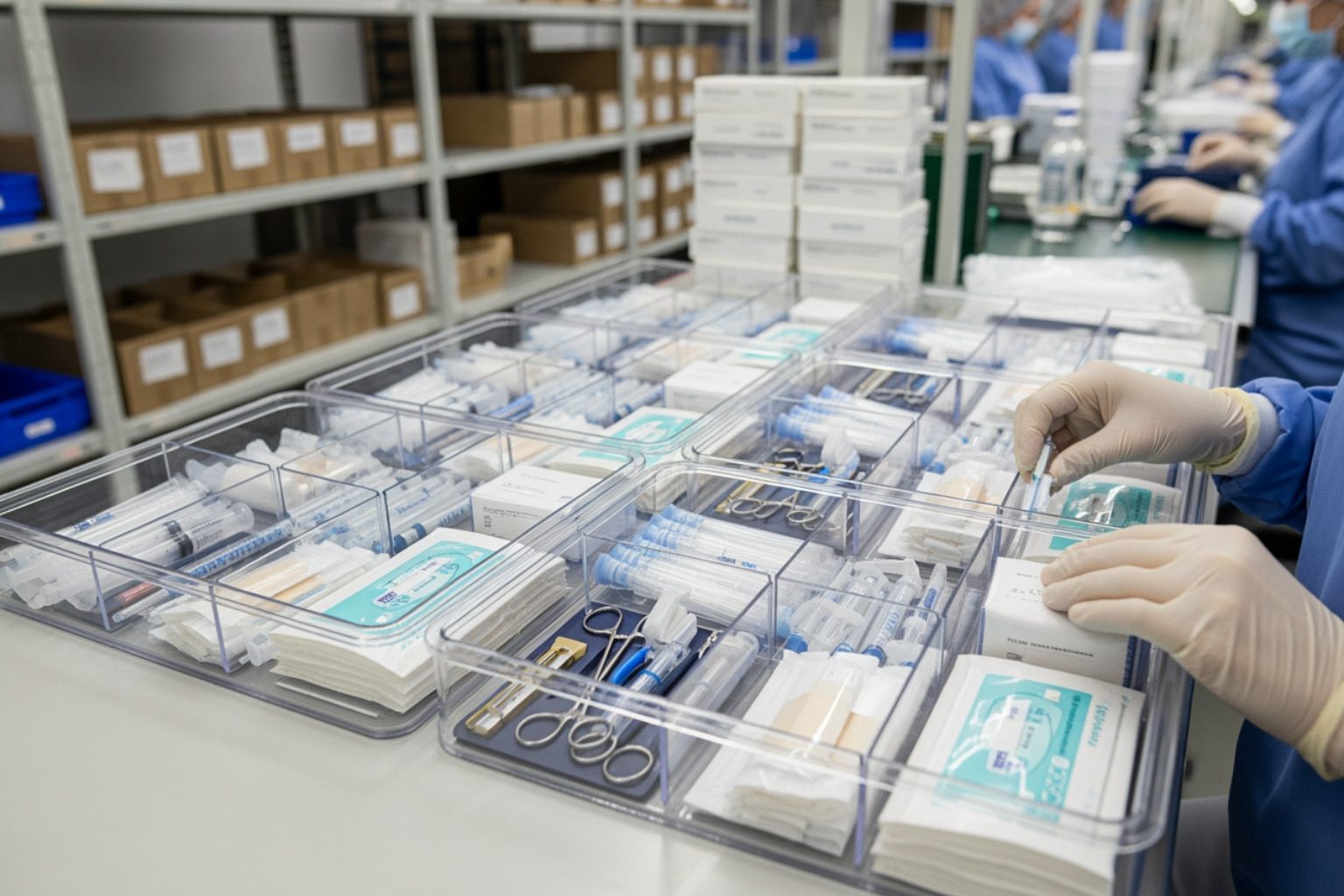
Medical device kitting is the process of assembling multiple medical components into a single, ready-to-use package. This practice simplifies the supply chain for hospitals, surgical teams, diagnostic labs, and home care programs.
| Term | Definition |
|---|---|
| Kit | A pre-assembled package of medical items grouped for a specific use |
| Kitting | The process of picking, assembling, and packaging those items together |
| End user | Hospitals, surgical teams, diagnostic labs, or home care patients |
| Common kit types | Surgical kits, diagnostic kits, PPE kits, at-home test kits, organ transport kits |
Key benefits of medical device kitting include fewer errors in the operating room, faster preparation time for procedures, and reduced labor costs through batch assembly.
Surgical teams need tools immediately. They cannot stop to search for items during a procedure. Kitting ensures every item is in the right place. That is the core problem medical device kitting solves.
The healthcare supply chain is demanding. A missing part can delay a surgery, slow a diagnostic workflow, or create waste when a sterile field has to be reset. The stakes are high, so manufacturers and distributors use structured kitting plans. A good plan creates repeatability. It also gives procurement teams and clinical staff a clearer path from receiving to final use.
My name is Cole Russell. I work in logistics where precision and accountability are required. Medical device kitting involves both. I will explain how a kitting strategy works, where it saves time, and how to stay compliant without making the process harder than it needs to be.
In the medical world, a product is rarely a single item. A surgeon may need a catheter, a sheath, tubing, connectors, prep materials, and sterile drapes. A diagnostic team may need swabs, collection tubes, instructions, labels, and protective gear. Medical device kitting is a direct solution to this complexity. Different parts are consolidated into a single SKU, which turns a long inventory list into a controlled package that can be issued quickly.
That matters upstream and downstream. Upstream, your operation gets a more stable assembly process with fewer touches. Downstream, the end user receives a kit that supports a specific procedure or workflow instead of a box of unrelated parts. The result is less confusion at receiving, less time spent staging materials, and fewer opportunities for the wrong component to reach the point of care.
We handle everything from high-volume PPE assembly to specialized organ transport kits. These transport kits are a good example of why organization matters. They may include molded baskets, tubing, surgical gloves, absorbent materials, and specialized solutions. If even one component is missing, the kit is not ready. By kitting these ahead of time, the medical team has every component prepared for immediate use.
Kitting also improves consistency across sites. When every facility receives the same validated package, training gets easier and replenishment becomes more predictable. That is especially useful for companies serving multiple hospitals or regional health systems. The kit becomes the standard unit of work. That makes planning, replenishment, and quality checks simpler for everyone involved.
Consolidate components to slash labor costs and errors
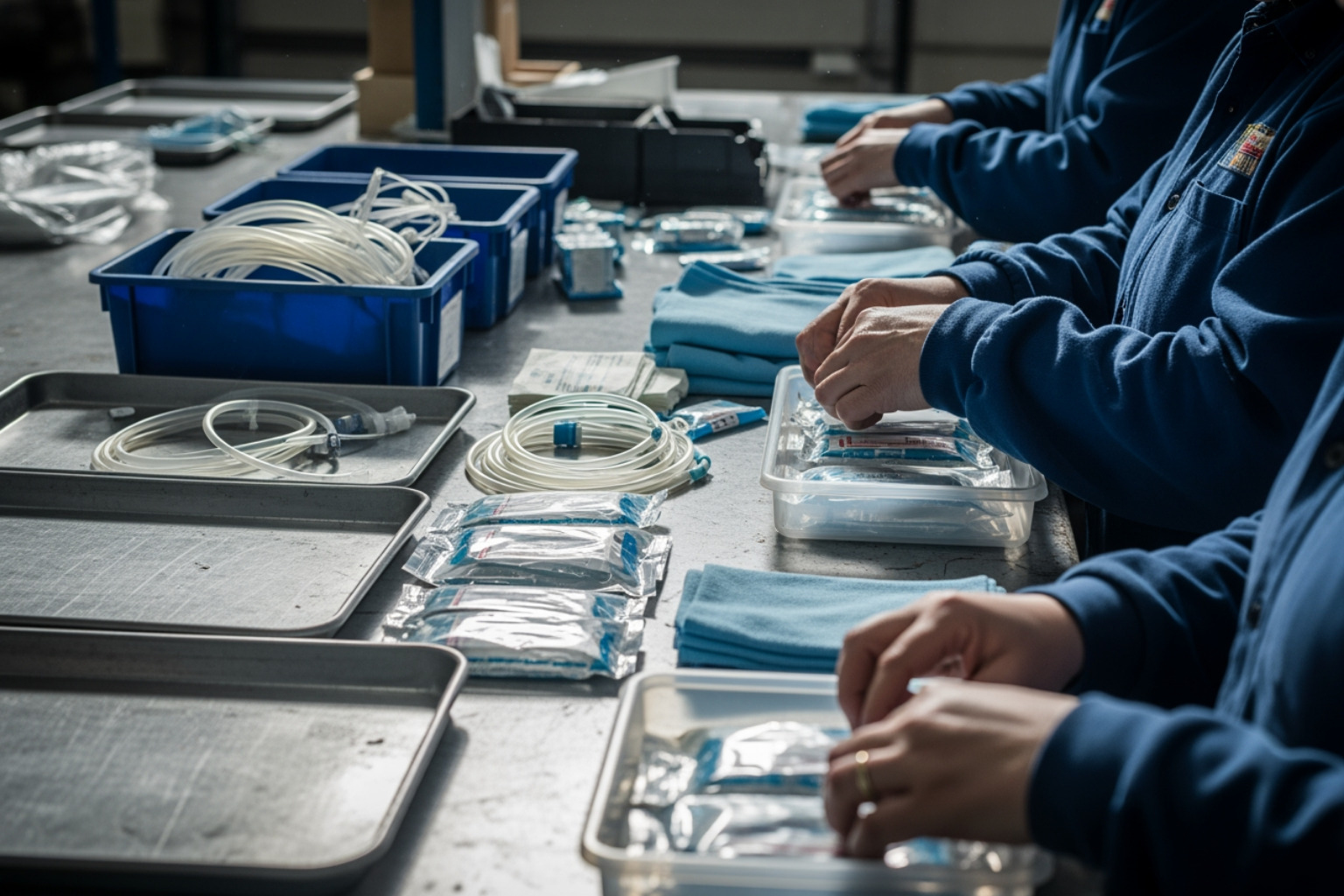
Picking individual items is a drain on resources. If a worker has to walk a warehouse for five different parts on every order, the process slows down and mistakes become more likely. In a medical environment, that extra handling creates risk you do not need.
Batch production reduces the labor required for picking and staging. Instead of building every order from scratch, components are picked in planned quantities and assembled in a controlled space. That creates a cleaner workflow. It also makes training easier because the assembly process is repeated the same way each time.
This approach simplifies inventory. A hospital tracks one SKU instead of ten. That reduces clutter and helps prevent missing parts that can stall a surgery or delay a case cart from being completed. You can read more about how kitting and assembly transform customer experience.
| Feature | Manual Individual Picking | Batch Medical Device Kitting |
|---|---|---|
| Labor Effort | High (Multiple trips per order) | Low (Bulk picking for assembly) |
| Error Rate | Higher risk of missing components | Lower (Verified at assembly) |
| Shipping Speed | Slower (On-demand prep) | Faster (Ready-to-ship kits) |
| Inventory Tracking | Complex (Multiple SKUs) | Simple (Single Kit SKU) |
There is also a clear benefit at receiving. Instead of opening several cartons and checking each line item, the customer can receive one finished kit tied to one part number. That cuts down on paperwork and reduces the time spent matching loose components to purchase orders. For regulated products, fewer touches also make it easier to maintain clean documentation.
Kitting helps with planning as well. Demand is easier to forecast when commonly used items are grouped into standard configurations. If one procedure typically uses the same family of parts, a kit gives your team a straightforward replenishment unit. You can build to forecast, hold approved inventory, and release finished kits as needed.
Another advantage is rework control. If a component changes, you can update a defined kit configuration instead of chasing the impact across many separate picks and shipments. That matters when packaging changes, instructions need revision, or a substitute component is approved. A structured kit makes the update manageable instead of chaotic.
Maintain safety with sterile environments and regulatory compliance
Cleanliness is a legal requirement in medical logistics. Kitting takes place in Class 8 cleanrooms or white rooms where filtered air, documented cleaning procedures, and controlled conditions support product integrity.
We follow ISO 13485 standards for quality management. We also maintain FDA registration. Every component needs a documented lot number and expiration date. That creates full traceability. If a part is recalled, we can identify which kits contain it and isolate affected inventory without slowing everything else down.
Labeling has to be accurate and durable. That sounds basic, but it is one of the most important controls in the process. A correct label ties the kit to its contents, lot history, and use instructions. It also helps receiving teams verify product quickly. When temperature-sensitive materials are involved, why cold storage matters in pharmaceutical logistics becomes part of the kitting plan. The move from cold storage to the assembly line has to be controlled so the product is not compromised.
Compliance also depends on documentation discipline. You need records for incoming materials, assembly steps, inspections, packaging configuration, and final release. This is what makes audits manageable. When the process is documented correctly, you are not trying to reconstruct what happened after the fact.
cGMP requirements shape how teams handle components, line clearance, and packaging verification. ISO 9001 may also apply as part of the broader quality framework, but for medical device kitting, ISO 13485 is the standard most teams focus on first. The point is simple. Compliance is not separate from operations. It is part of the daily workflow.
Sterility assurance is just as practical. Components need to be protected from mix-ups, contamination, and expiration issues while they move through storage, assembly, and shipment. A controlled kitting environment supports that by limiting unnecessary handling and building clear checks into each step. When the process is sound, quality teams, operations teams, and customers all get the same thing they want, which is confidence that the kit will perform as intended.
Accelerate throughput using automated medical device kitting
Manual assembly can slow down a growing company. It works at low volume, but it becomes harder to manage when SKU counts rise and customers expect short lead times. Automation helps by making material flow more predictable and reducing unnecessary travel inside the warehouse.
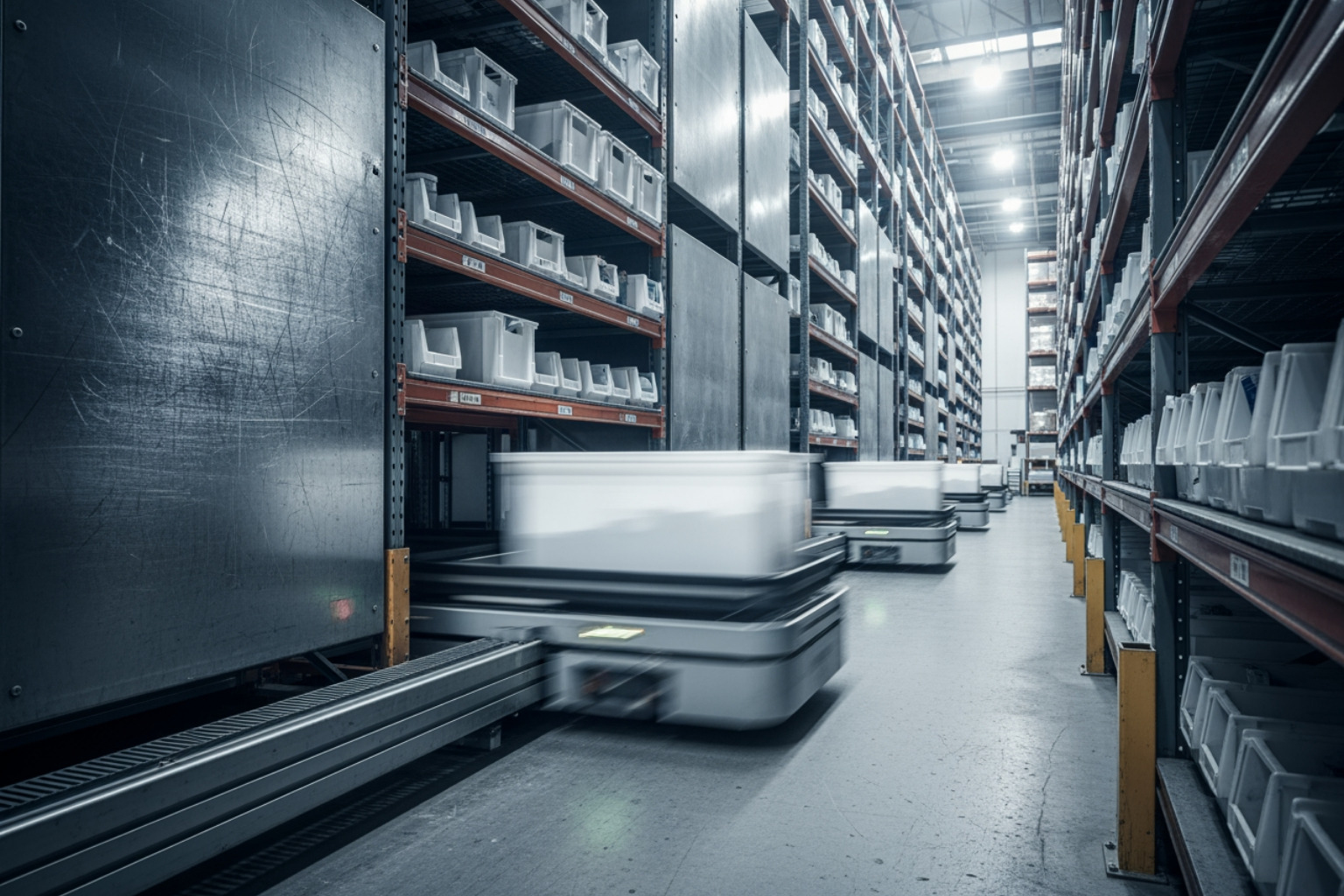
We use systems like Multishuttle technology to move components to the worker. This goods-to-person approach keeps assembly stations supplied without forcing employees to spend most of their time walking. It improves consistency, supports faster replenishment to the line, and helps prevent common picking errors.
Integrating a Warehouse Execution System with inventory data helps scale throughput and maintain control of component availability. Automation allows manufacturers and distributors to move from long assembly cycles to a much faster, more repeatable pace. That efficiency helps companies manage many finished SKUs every day. For more detail, see what is kitting and assembly.
Automation also supports better slotting and inventory access. Fast-moving components can be positioned for quicker retrieval, while slower items stay available without taking up prime assembly space. That matters when a kitting program includes both high-volume standard kits and low-volume specialty configurations.
The practical benefit is not just speed. It is control. When materials arrive at the right station in the right sequence, supervisors can balance labor more effectively and keep production moving during demand spikes. For medical device kitting, that kind of stability matters because delays often affect downstream clinical schedules, not just warehouse output.
Select the right partner for specialized medical device kitting
Choosing a kitting partner is an operational decision, not just a purchasing decision. You need a team that understands regulated handling, traceability, packaging accuracy, and the value of your brand. If a label changes or a component needs to be swapped under an approved process, your partner should be able to handle rework quickly and cleanly.
Many clients use private label kitting to improve ROI and present a consistent experience to healthcare providers. Branding the kit under your own name can strengthen the product presentation, but it only works when the assembly, packaging, and labeling are precise. That requires a partner who can handle expert kitting for personalized products with accuracy.
Scalability is the main challenge. Can your partner handle a sudden spike in demand without losing control of quality? A 3PL with enough infrastructure and trained labor can absorb that volume while keeping assembly standards intact. The hidden efficiency gains of a customized kitting strategy come from direct integration with your supply chain and a process built around your product requirements.
You should also look at communication and visibility. When a kitting partner gives clear status updates, inventory insight, and documented issue resolution, planning gets easier for your procurement, quality, and customer service teams. Problems still happen in real operations. What matters is whether the partner catches them early and responds with a controlled process.
Location matters too. A partner based in the Indianapolis logistics hub can support efficient national distribution while staying close to major transportation networks. For medical and life sciences shippers, that helps reduce transit complexity and gives more options when timing matters. The right partner should make your operation simpler, not force your team to manage around avoidable friction.
Finally, ask how the partner handles growth. A pilot program with a few kit types is one thing. A mature program with multiple configurations, lot controls, and recurring rework is another. The provider should be able to support both without rebuilding the process every time your volume changes.
Your Questions About Medical Device Kitting Answered
What products are commonly included in medical device kitting?
Common items include surgical tools, catheters, and specialized tubing. We also handle diagnostic instruments, PPE, and at-home test kits. Complex kits might include components for organ transport like sterile drapes and preservation solutions.
How does kitting improve surgical outcomes?
Kitting provides standardization. When kits are identical, the medical team knows where every tool is. This allows for a fast response and reduces mental stress on staff. It streamlines the workflow in the operating room.
What regulatory standards govern medical device kitting?
The main standards are ISO 13485 and ISO 9001. Facilities must be FDA registered and follow cGMP. These rules ensure kits are assembled in controlled environments with full documentation.
Partner with Hanzo Logistics to scale your medical operations
Hanzo Logistics understands that life sciences require precision. We are based in the Indianapolis logistics hub. We provide the infrastructure for complex medical device kitting.
We have 2 million square feet of warehouse space. We understand pharmaceutical and life science services. We act as a 3PL partner for companies that need a reliable supply chain. We combine large scale with proactive problem solving.
If your kitting process is slow or causes compliance concerns, we can help. We build systems that are efficient and ready to scale. Let us handle the kit so you can focus on the device itself.