
Returns are a reality of modern commerce
Reverse logistics fulfillment services are the systems and processes that move returned products back through your supply chain. This includes everything from the customer’s doorstep to resale, refurbishment, recycling, or disposal.
Here is a quick breakdown of what these services typically include:
| Service | What It Does |
|---|---|
| Returns processing | Receives, inspects, and sorts returned items |
| Refurbishment | Repairs or repackages items for resale |
| Value recovery | Routes products to the highest-value disposition channel |
| Recycling and disposal | Handles items that cannot be resold responsibly |
| Reporting and analytics | Tracks return trends and inventory data |
Returns are a major challenge. In 2022, U.S. retailers lost $816 billion in sales to returns according to the National Retail Federation. This represented 16.5% of total retail sales. That number was just 10.6% in 2020. Only 35% of retailers can track their returns through the process.
The math is simple. Processing a single return on a $50 item costs a retailer around $33. That is 66% of the sale price before factoring in transportation.
There is another side to that equation. 96% of shoppers say they would buy again from a brand that handled their return smoothly. A poor return experience does not just cost you one sale. It costs you the relationship.
Managing returns well is about keeping the value in your products and the trust in your brand.
I have spent five years helping brands protect their reputation through better operations. This includes building reverse logistics fulfillment services programs that work. I will explain how this process works and what to look for in a 3PL partner.
The shift to ecommerce has changed how people shop. Because customers cannot touch products before buying, they often order multiple sizes or colors with the intent of returning what does not fit. This behavior has pushed ecommerce return rates to more than double those of traditional stores, averaging around 20%.
When a return happens, it is a high-stakes moment for your brand. While $816 billion in lost sales is a staggering figure, the long-term cost of a bad return experience is even higher. Research shows that 1 in 6 consumers will leave a brand after just one bad experience. That number jumps to 86% after two poor experiences. Conversely, 95% of satisfied customers come back to shop again.
Effective Reverse logistics fulfillment services allow you to capture that loyalty. Instead of seeing a return as a lost sale, we view it as an opportunity for value recovery. Whether that means getting an item back on the shelf quickly or refurbishing it for a secondary market, the goal is to minimize the 66% loss typically associated with processing returns.
This is also where operations discipline matters. A return is not one event. It is a chain of decisions that affect freight cost, labor time, recoverable inventory, and customer retention. If the process is slow or inconsistent, margin disappears in small steps. If the process is clear and fast, more units get back into sellable channels while the customer feels taken care of. For U.S. brands with growing ecommerce volume, that difference shows up quickly in both working capital and repeat purchase behavior.
For broader retail return data, see the National Retail Federation at NRF.
Reverse logistics fulfillment services are not forward distribution
Many businesses think reverse logistics is just forward logistics in reverse. It is not. Forward logistics is a predictable flow from a central warehouse to many customers. It is organized and uniform.
Reverse logistics is different. It is inbound freight coming from thousands of locations. Each package arrives in a different condition, often with missing original packaging or manuals. This complexity requires a specialized approach. While forward logistics focuses on delivery speed, reverse logistics focuses on What is Reverse Logistics? Understanding 3PL Supply Chain Processes to recapture value.
Strategic recovery maximizes asset value
The primary goal of a reverse program is to keep products from sitting idle. Every day a returned item sits on a warehouse floor, its value drops. Strategic asset retrieval ensures items move to their next best use immediately. This might involve moving goods to liquidation, refurbishment, or back into active inventory. High inventory velocity is critical for returns.

Five stages move products from customer to final disposition
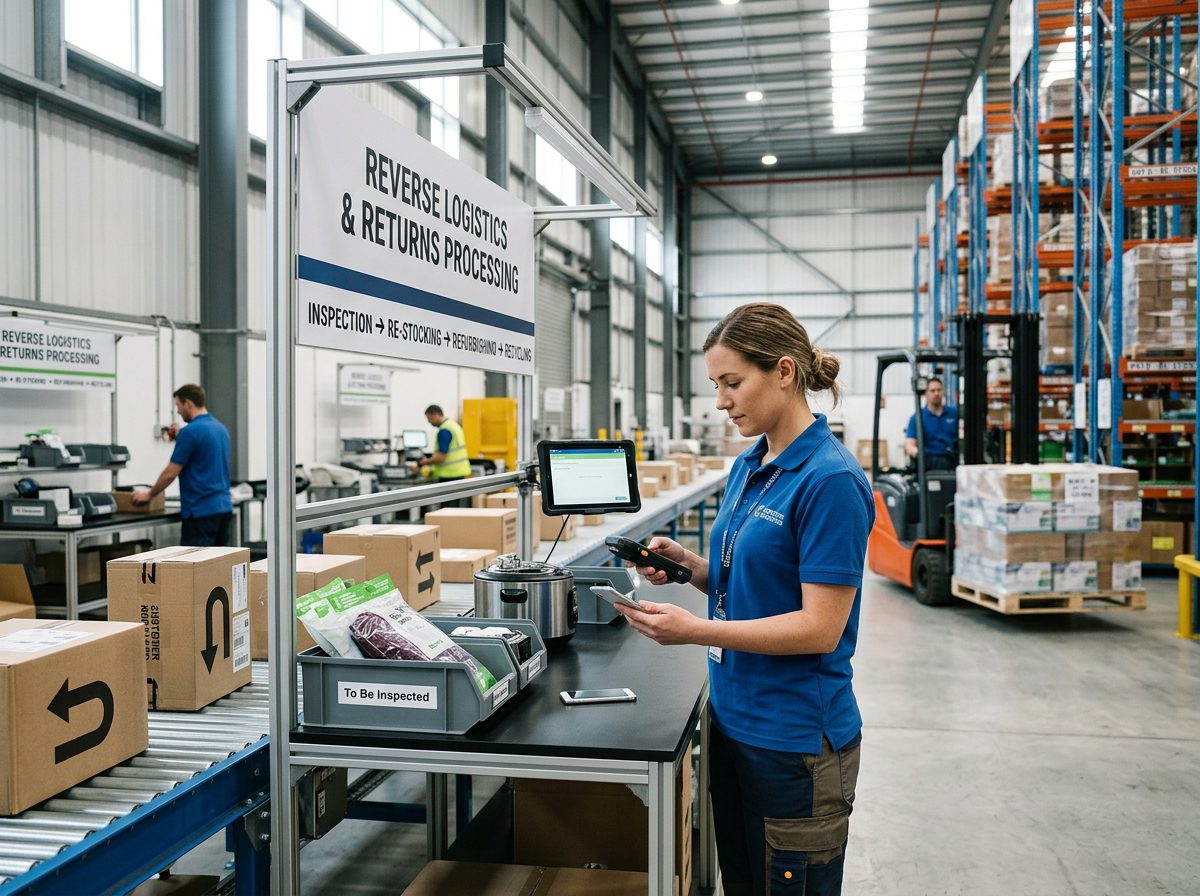
To manage returns effectively, we follow a structured five-stage process. This ensures that no item is wasted and every decision is data-driven.
- Product Collection This starts at the customer’s doorstep or a drop-off point. A smooth initiation process, like a digital portal or QR code, is the first step in protecting your brand.
- Receipt and Sortation Once the item reaches our Indianapolis facility, it is scanned and verified against the original order.
- Detailed Inspection Our teams examine the item based on your specific criteria. We look for wear, damage, or missing components.
- Grading and Disposition This is the decision point. We determine if the item can be resold as new, needs repair, or should be recycled.
- Final Processing The item is moved to its final destination, whether that is the picking shelf, a secondary market, or a responsible disposal site.
| Disposition Path | Action Taken | Result |
|---|---|---|
| Restock | Clean, repackage, and return to inventory | Full retail value recovery |
| Refurbish | Repair, update parts, or re-kit | Partial value recovery (B-Stock) |
| Recycle | Extract raw materials or dispose of responsibly | Waste reduction and compliance |
Specialized services maximize return value
Beyond simple sorting, a 3PL partner provides value-added services that help you Turning Returns into Opportunities with Smart Reverse Logistics. This includes RMA (Return Merchandise Authorization) processing to prevent unauthorized returns. We also offer kitting and repackaging. If a subscription box is returned, we can break it down, inspect the individual components, and re-kit them into new boxes to unlock hidden value.
Efficient returns management protects your bottom line and brand
A robust reverse logistics program improves your financial health. By reducing the time it takes to process a return, you lower your holding costs and increase the chances of reselling the item at a higher price point. This is critical for industries like electronics or apparel where styles and technology move fast.
Consumers also care about the environmental impact of their purchases. Supply chains account for more than 90% of a company’s greenhouse gas emissions. Implementing Sustainable Practices in Reverse Logistics That Can Green Your Supply Chain allows you to reduce waste. Instead of sending unsellable goods to a landfill, we can facilitate A 3PL’s Guide to Resale, Refurbishment, and Recycling Strategies to ensure your brand remains a leader in corporate responsibility.
A frictionless return process does more than return money. It secures the customer’s next three orders. As the research shows, Why Scaling Brands Need Dedicated Returns Management Services to Protect Margins is about long-term brand equity.
There is also a practical inventory benefit. Returns contain useful demand signals. If one SKU comes back at a higher rate because of sizing, packaging damage, or missing accessories, that pattern should feed back into purchasing and fulfillment decisions. Good reverse logistics closes that loop. It helps brands reduce avoidable returns, improve packaging standards, and make better calls on what should be restocked, repaired, liquidated, or recycled. That is how returns management stops being a cost center and starts acting like an operational control point.
Frequently asked questions about managing returns
How do returns impact profitability?
The impact is significant. Between the $33 average processing cost and the fact that transportation for returns can eat up 10% to 16% of the item’s cost, returns create margin pressure. A specialized 3PL can mitigate this by optimizing transportation routes and accelerating the time to stock. Recovered value from reselling returned goods can turn a total loss into a break-even transaction.
What is the difference between returns management and reverse logistics?
Returns management is the front end. Reverse logistics is the back end. Returns management focuses on policies, the customer experience, and the internal operations needed to authorize a return. Reverse logistics is the physical movement and processing of those goods through the supply chain. Both must work in harmony to protect your margins and customer loyalty.
How does a 3PL handle fraudulent returns?
Fraud is a major concern in ecommerce. We use systematic validation and technical authentication, especially for high-value electronics. This includes verifying serial numbers, checking for scams, and ensuring the product returned matches what was sold. By enforcing strict protocols at the point of receipt, we protect your inventory from contaminated or fraudulent stock.

Partner with Hanzo Logistics to streamline your reverse supply chain
At Hanzo Logistics, we understand that for industries like Automotive and Life Sciences, precision is non-negotiable. We are a strategic 3PL partner based in the Indianapolis logistics hub. We provide the infrastructure and expertise needed to handle complex Reverse logistics fulfillment services.
We replace the lack of visibility with real-time data. Our 2 million square feet of specialized warehouse space helps scaling brands grow without operations breaking under seasonal peaks. We do more than move boxes. We provide the strategic Fulfillment & Distribution engine that protects your brand reputation.
If you are ready to turn your returns into a strategic asset, we are here to help. Our team provides the 24/7 availability and proactive problem solving required to manage a modern supply chain. Contact us today to learn how we can tailor a reverse logistics program to your specific needs.