
Outsource logistics to focus on your core business growth
3PL warehousing and distribution is the practice of outsourcing your storage, inventory management, and order fulfillment to a specialized third-party logistics provider. Instead of running your own warehouse, a 3PL handles the physical work of receiving your goods, storing them, picking and packing orders, and shipping them to your customers.
Here is a quick breakdown of what that includes.
| Function | What a 3PL Does |
|---|---|
| Receiving | Unloads and checks inbound inventory against purchase orders |
| Storage | Stores your products in organized, managed warehouse space |
| Inventory Management | Tracks stock levels in real time and flags reorder points |
| Order Fulfillment | Picks, packs, and ships orders to end customers |
| Returns | Processes and restocks returned items |
| Value-Added Services | Kitting, assembly, labeling, and custom packaging |
The scale of this industry is significant. According to Armstrong and Associates, 90% of Fortune 500 companies use a 3PL for logistics services. That is not a coincidence. At a certain volume, running your own warehouse stops making sense. The overhead, the staffing, the technology, and the space all become a drag on growth rather than a support for it.
The core idea is simple. You focus on your product and your customers, and your 3PL handles the physical supply chain behind it.
My name is Cole Russell. I grew up around the logistics industry and have spent the last five years applying that experience to help businesses make smarter decisions about 3PL warehousing and distribution. In this guide, I will walk you through everything you need to know to evaluate, choose, and get the most out of a 3PL partner.
Helpful reading regarding 3pl warehousing and distribution includes the following resources.
When you manage your own warehouse, you are not just in the business of selling products; you are in the business of facility management, forklift maintenance, and labor relations. For most growing brands, these tasks are a distraction. Outsourcing to a 3pl warehousing and distribution partner allows you to reclaim your time.
The primary benefit of this model is scalability. If your business grows by 50% in a single month, a 3PL can absorb that volume because they already have the space and the staff. If you were running your own shop, you would be scrambling to hire temp workers and tripping over pallets in a cramped garage or small warehouse. Efficiency is the byproduct of specialization. 3PLs use advanced systems to ensure that every square foot of rack space and every minute of labor is optimized. This is why even the world’s largest companies rely on these partnerships to keep their supply chains lean.
Master the mechanics of 3PL warehousing and distribution
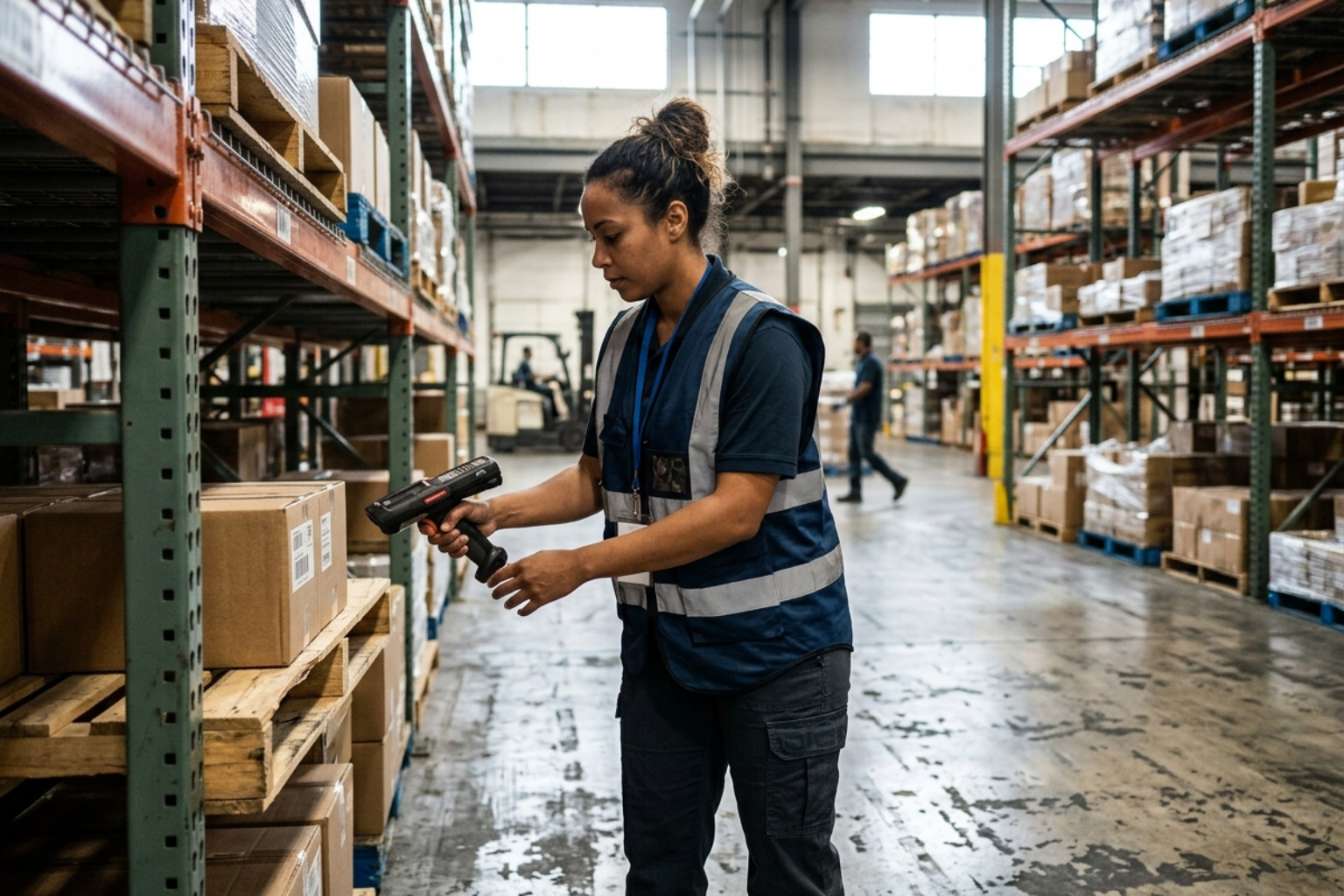
To understand how a 3PL adds value, you have to look at the operational workflow. It starts with receiving. This is not just about unloading a truck. It is a meticulous process of scanning UPCs, reconciling counts against purchase orders, and inspecting for damage. Once the inventory is cleared, it moves into a managed storage system where its location is tracked digitally.
Inventory management is the heartbeat of the operation. We use sophisticated logic to ensure that high-velocity items are stored in easily accessible “prime” locations, while slower-moving stock is tucked away. When an order drops from your online store or ERP system, the fulfillment process begins. This involves picking the items, packing them securely, and generating shipping labels. Finally, the 3PL handles the outbound shipping and the often-overlooked area of reverse logistics. Processing returns quickly is vital for maintaining customer trust. You can learn more about these internal movements in our guide on How They Work Understanding The Operations Of A Logistics Center.
Streamline specialized fulfillment operations
Standard fulfillment is just the baseline. A high-performing 3pl warehousing and distribution partner offers “pick and pack” services tailored to your specific order profiles. Whether you are shipping individual items to consumers via parcel carriers or sending full pallets to retail distribution centers, the process must be error-free. By using barcode scanning at every step, we eliminate the manual mistakes that lead to costly “mispicks” and unhappy customers.
Scale with specialized 3PL warehousing and distribution
Many businesses require more than just “box in, box out” services. This is where value-added services come into play. Kitting allows you to combine multiple individual items into a single SKU, such as a subscription box or a promotional bundle. Assembly involves putting together components before they ship to the end user. We also provide cross-docking, a strategy where inbound goods are moved directly to outbound trucks with little to no storage time. This is ideal for high-velocity retail products that need to stay in motion. Explore how these services fit into a broader strategy on our Fulfillment Distribution page.
Choose the right warehouse model for your inventory needs
Not every warehouse is built the same way. Depending on your product type and volume, you might need a specific legal or physical environment.
| Model | Best For | Key Characteristics |
|---|---|---|
| Public Warehousing | Startups and seasonal brands | Short-term, pay-as-you-go space with shared labor |
| Contract Warehousing | Established enterprises | Dedicated facility or space with customized equipment and fixed terms |
| Shared Warehousing | Growing mid-sized brands | Shared costs with other clients but with more stability than public storage |
| Fulfillment Centers | Ecommerce and B2C | Designed for high-frequency, small-parcel picking and packing |
| Cold Storage | Food and Life Sciences | Temperature-controlled environments for perishables or medicine |
Manage high stakes inventory in specialized facilities
For industries like automotive and life sciences, standard storage is not enough. Pharmaceutical products often require strict temperature monitoring to maintain efficacy. In the automotive sector, parts must be stored and handled with precision to avoid damage to sensitive finishes or mechanical components. Industrial products often require heavy-duty racking and specialized material handling equipment. If your products are sensitive to the environment, you should look specifically into Cold Storage solutions that offer climate-controlled reliability.
Define the scope of 3PL services
There is a major difference between a “mom and pop” warehouse and a full-scale 3pl warehousing and distribution provider. A basic warehouse just gives you four walls and a roof. A 3PL provides supply chain orchestration. This includes carrier negotiation, real-time data integration, and proactive problem-solving. When deciding between managing your own facility or outsourcing, consider the hidden costs of the DIY route. These include property taxes, insurance, equipment leases, and the constant headache of warehouse staffing. For a deeper dive into this comparison, check out Logistics 101 Outsourcing To A 3Pl Vs Managing Your Own Warehouse.
Measure success through precision and performance metrics

In logistics, if you can’t measure it, you can’t manage it. We use Key Performance Indicators (KPIs) to ensure the warehouse is running at peak performance. These metrics are the only way to hold a 3PL accountable. Standard industry benchmarks include the following metrics.
- On-Time Shipments. The target should be 95.00% to 100%.
- Order Picking Accuracy. A high-performing facility hits 99.00% to 100%.
- Inventory Count Accuracy. This should never dip below 99.50%.
- Warehouse Capacity Used. Ideally between 80% and 95% to ensure efficiency without overcrowding.
You can find more details on identifying these high-level operators in our article on What Sets A High Performing 3Pl Apart From The Rest.
Reduce overhead with shared labor and infrastructure
One of the biggest financial “secrets” of 3pl warehousing and distribution is the shared labor model. In a private warehouse, you pay for staff even when things are slow. In a shared 3PL environment, the provider can move workers between different client accounts based on daily volume. This flexibility protects you from the high costs of idle labor. Furthermore, because a 3PL ships millions of packages, they can pass along significant volume discounts from carriers like UPS, FedEx, and LTL providers. Read more about these financial advantages in Driving Business Success Exploring The Benefits Of Outsourcing Warehouse Operations.
Use technology to maintain total inventory visibility
You should never have to call your warehouse to ask how much stock you have left. A modern Warehouse Management System (WMS) provides a real-time window into the facility. This technology handles everything from barcode scanning and EDI (Electronic Data Interchange) integration to automated reorder alerts. By integrating your sales channels directly with the WMS, orders flow seamlessly from the customer’s click to the picker’s handheld device. To understand the tech stack behind the scenes, see The 3Pl Warehouse Management System What Is It And How It Can Streamline Your Operations.
Vet your logistics partner to avoid supply chain bottlenecks
Choosing a partner based solely on a sales presentation is a mistake. You need to see the operation in person. A site visit reveals the true culture of a 3PL. Is the floor clean? Are the racks organized? Are the workers focused? A “pro tip” we often share is to check the bathrooms; if a provider cannot maintain their own facility’s basic cleanliness, they likely won’t treat your inventory with the respect it deserves. Red flags include outdated technology, high employee turnover, and a lack of clear communication during the vetting process. For a step-by-step guide on the selection process, read How To Choose A 3Pl Provider Finding The Perfect Logistics Partner.
Evaluate automation and future trends in the warehouse
The 3PL industry is changing rapidly. Automation is no longer a luxury; it is a necessity for staying competitive. We are seeing a rise in “robot-agnostic” approaches, where automation is tailored to specific SKU profiles rather than a one-size-fits-all machine. Inventory drones are also becoming more common, allowing for cycle counts that are faster and more accurate than manual checks. Sustainability is another major trend, with warehouses moving toward LED lighting, electric material handling equipment, and reduced packaging waste to meet the ESG goals of modern brands.
Define responsibilities and liability in your contract
The contract is the foundation of the relationship. It must clearly define who is responsible for what. Most 3PL contracts include a Service Level Agreement (SLA) that outlines the expected performance metrics. It is also vital to understand liability. Generally, a 3PL is responsible for “reasonable care” of your goods, but they are not an insurance company. You should maintain your own cargo insurance to protect against catastrophic loss. Make sure the contract covers how errors, such as mispicks or shipping delays, will be handled. You can learn more about these partnerships in Strategic Partnerships Who Uses Third Party Logistics 3Pl And Why.
Frequently Asked Questions about 3PL Warehousing
What defines a 3PL’s core services
A 3PL’s core services include inbound receiving, inventory storage, order picking, packing, and outbound shipping. Most also offer reverse logistics (returns) and some level of inventory reporting through a digital platform. Beyond these basics, many provide kitting, assembly, and transportation management.
When is the right time to hire a 3PL provider
The “magic number” is often around 100 orders per month, but the real trigger is when logistics starts to interfere with your ability to grow. If you are spending your weekends packing boxes instead of marketing your brand, or if you are losing sales because you cannot offer fast enough shipping, it is time to outsource.
How does a 3PL handle product returns
When a return arrives, the 3PL inspects the item based on your specific criteria. If it is in “like-new” condition, they restock it and update the inventory levels. If it is damaged, they can dispose of it, set it aside for your review, or ship it back to you. This process, known as reverse logistics, is critical for maintaining high customer satisfaction scores.
Secure your brand reputation with a strategic Indianapolis partner
At Hanzo Logistics, we understand that we are not just moving boxes; we are protecting your brand. Based in the Indianapolis logistics hub, we occupy a strategic position that allows us to reach a massive portion of the U.S. population within a day or two by ground. We specialize in high-stakes industries where precision is non-negotiable, including Automotive, Life Sciences, and Industrial Products.
With 2 million square feet of specialized infrastructure and a custom-tailored fulfillment engine, we provide the visibility and proactive problem-solving that scaling brands need. We replace the “black box” of traditional warehousing with real-time data and 24/7 availability. Whether you are a pharmaceutical leader facing a regulatory audit or an ecommerce brand navigating a seasonal peak, we ensure your operations never break under the pressure.
Ready to see how we can streamline your supply chain?
- Explore our Services
- Learn about Fulfillment Distribution
- Contact us for a consultation