
Why the Right Distribution Services Are Essential for Your Business
Distribution services are the backbone of how products move from a manufacturer or supplier to the end customer. Whether you are shipping B2B wholesale orders to a big-box retailer or fulfilling direct-to-consumer e-commerce orders, the provider you choose directly affects your delivery speed, order accuracy, and customer satisfaction.
Here is a quick breakdown of what distribution services typically include
- Receiving and storage – accepting inbound inventory and managing it in a warehouse facility
- Order picking and packing – pulling individual items and preparing them for shipment
- Kitting and assembly – bundling products into sets or custom configurations
- Cross-docking – moving goods directly from inbound to outbound with minimal storage
- Returns management – processing and restocking returned items
- Transportation coordination – managing carriers to get orders to their final destination on time
The stakes are real. According to industry data, a strategically placed two-warehouse network can reach 96% of U.S. households in two days via ground shipping. Providers with rigorous processes hit inventory accuracy rates as high as 99.99%. These numbers matter when a single mispick or late shipment can trigger a chargeback from a retail partner or earn you a one-star review.
This guide cuts through the noise and gives you a clear picture of what separates a strong distribution partner from a frustrating one.
I am Cole Russell, and I grew up around the logistics industry before spending the last five years helping brands protect their reputations through smarter distribution services. At Hanzo Logistics, I treat every partnership the way I would want my own business handled with full transparency and zero excuses when something goes wrong. Let us walk through exactly what to look for.
Distribution services resources
- 3PL distribution warehouse Indiana
- 3PL transportation management Indiana
- 3PL warehousing and distribution
Modern logistics networks move goods from production to the final customer
Efficiency in the supply chain is not about how fast a truck moves. It is about how smoothly data and physical goods move through a logistics center. In the U.S. market, distribution services connect manufacturing, import flows, wholesale channels, and end customers. If that handoff breaks down, orders get delayed, inventory goes out of sync, and service levels slip.
Whether you are shipping pallet quantities to retail partners or unit-level orders to online shoppers, the goal is the same. Get product where it needs to go with fewer delays and fewer errors. For B2B logistics, that often means managing inbound freight from ports and suppliers, breaking down bulk loads, and feeding regional inventory points efficiently. More info about logistics centers shows how a well-run facility helps stabilize inventory flow when transit schedules get disrupted. For a neutral overview of the broader field, supply chain management is a useful reference.
Strong distribution services support omnichannel growth
The modern customer expects to buy through multiple channels and return through the path that works for them. That puts real pressure on inventory management. If your distribution services cannot support both e-commerce and retail distribution at the same time, growth gets harder fast. Retail compliance is one of the biggest friction points. Large retailers enforce strict rules on labeling, routing, and pallet setup. Miss one detail and the problem impacts your operational efficiency. We focus on processes that help brands manage those requirements cleanly so they can expand into new channels with less operational drag. Stay informed about logistics updates to see how omnichannel distribution keeps changing.
Specialized distribution services support heavy and bulky goods
Not every provider is set up for industrial products or automotive parts. These shipments may require heavy-duty storage, careful handling, and freight-friendly workflows. A small parcel operation is very different from an operation handling larger, heavier items. The right partner needs the equipment, processes, and safety discipline to handle that work reliably. More info about industrial logistics explains why precision matters when products are large, high-value, or operationally sensitive.
Strategic facility placement cuts shipping zones and transit times
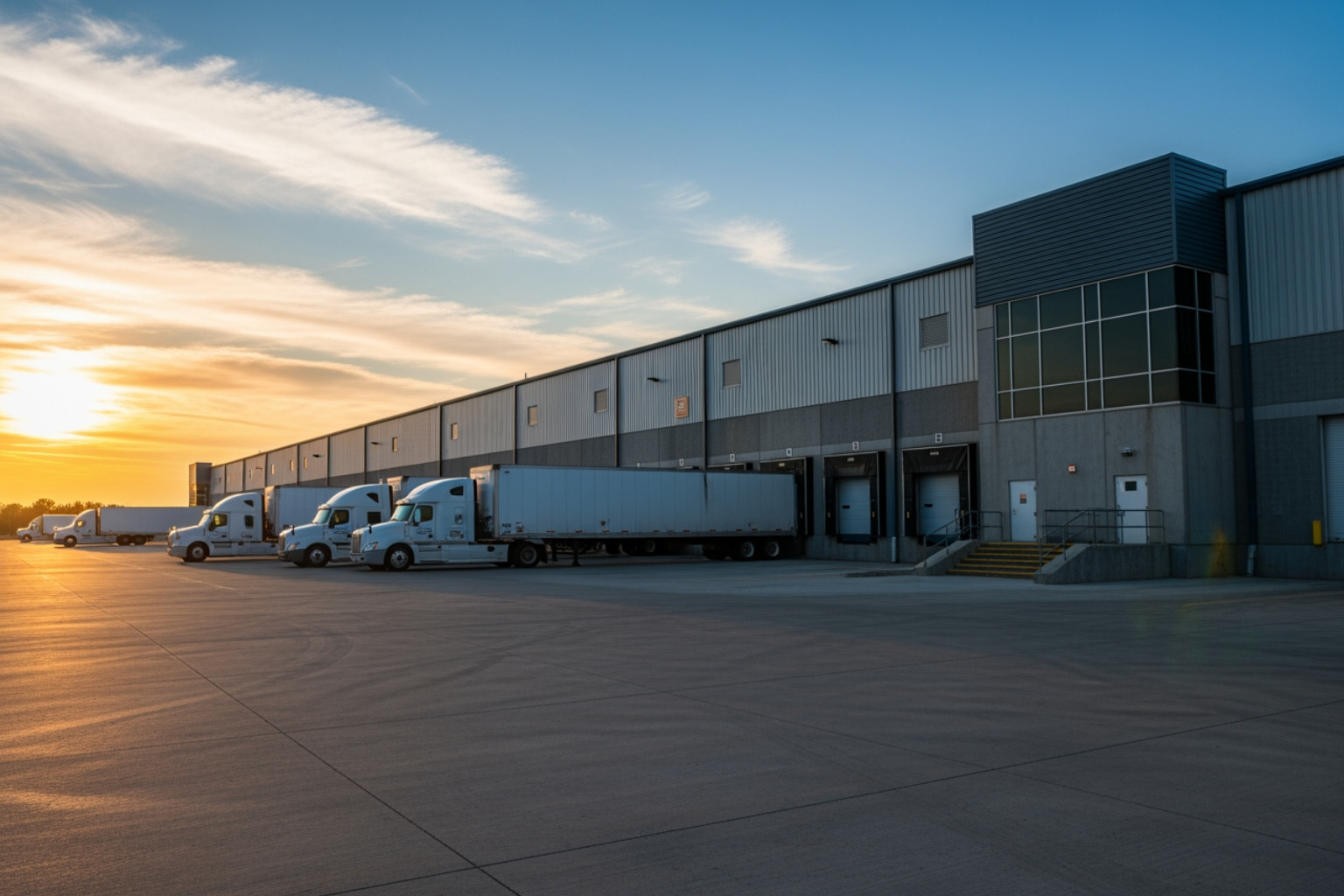
Where your inventory sits is just as important as how it is managed. In the U.S. market, shipping is determined by “zones.” The further a package has to travel from the warehouse to the customer, the higher the zone number. By using an Indianapolis hub, we can take advantage of a central geographic location that hits a massive portion of the U.S. population within a 2-day ground shipping window.
Strategic placement allows for “zone skipping,” where bulk shipments are moved closer to the final destination before being handed off to a local carrier. This significantly reduces transit times and improves delivery efficiency. Indiana distribution centers support faster delivery because they sit at the intersection of major interstate highways, making them ideal for both inbound port logistics and outbound regional distribution.
| Facility Type | Primary Function | Inventory Turnover |
|---|---|---|
| General Warehouse | Long-term storage of bulk goods | Low |
| Distribution Center | Breaking down bulk for regional restocking | Medium |
| Fulfillment Center | Picking and packing individual consumer orders | High |
High-performance operations improve accuracy and speed
When customers expect perfection, a 1% error rate creates significant friction. If you ship 100,000 items a month, a 1% error rate means 1,000 unhappy customers and 1,000 costly returns. High-performance distribution services aim for much higher standards, often achieving 99.99% inventory accuracy and 99.99% fulfillment accuracy. This level of precision is only possible through rigorous technology integration, such as RF-scanning at every touchpoint.
When a shipment arrives at the dock, the “dock-to-stock” time is a critical metric. This is the window between the truck arriving and the items being available for sale in your system. A 2-day dock-to-stock guarantee ensures that your cash flow isn’t tied up in “received but not yet sellable” inventory. How modern warehouse operations work involves a delicate balance of human expertise and automated workflows to maintain this velocity without sacrificing accuracy.
Value-added services simplify complex supply chains
Sometimes, simply moving a box from A to B isn’t enough. Many businesses need value-added services to prepare products for the final market. Kitting and assembly involve taking separate components and bundling them into a single SKU. This is common in the automotive and electronics industries, where parts are combined into repair kits or promotional bundles.
Custom packaging and retail labeling are also vital for brands that want to maintain a specific look or meet the compliance standards of different retailers. Furthermore, a robust returns management (reverse logistics) system is essential. When a customer sends a product back, it needs to be inspected, refurbished if necessary, and either restocked or disposed of properly. More info about kitting and assembly explains how these services allow you to keep less finished-good inventory on hand, as you can assemble products “on-demand” based on actual sales.
Careful technical vetting helps you choose the right distribution partner
Choosing a 3PL is a high-stakes decision. You are essentially handing over your brand’s reputation to a third party. When vetting a partner, look for their ability to handle inbound logistics, especially if you are importing goods through major ports. Port-to-dock coordination involves managing drayage, customs, and transloading to get containers emptied and inventory onto shelves quickly.
Scalability is another major factor. Can the provider handle your seasonal peaks? If your volume triples during the holidays, you need a partner with the square footage and the labor force to absorb that surge without slowing down. More info about fulfillment and distribution suggests that the best partners are those who provide real-time visibility through a unified data platform, allowing you to see exactly where your inventory is at any given second.
Common questions about logistics and supply chain management
How do distribution centers improve flow compared to warehouses?
A common point of confusion is the difference between a warehouse and a distribution center. While both store goods, their goals are different. A warehouse is often used for long-term storage where goods might sit for months. A distribution center is focused on supply chain velocity. Its job is to break down bulk shipments and move them out to other locations as quickly as possible. Why 3PL warehousing helps companies scale is because it allows you to use these facilities as strategic hubs rather than just “parking lots” for your products.
How do shipping zones affect delivery speed?
As mentioned earlier, the U.S. is divided into shipping zones based on the distance from the point of origin. Carriers like UPS and FedEx categorize shipments based on distance. By splitting your inventory across regional hubs, you can ensure that the majority of your orders are shipped within lower zones. This ensures that ground shipping can compete with expensive air shipping in terms of speed.
Which 3PL metrics show whether execution is reliable?
When you review a contract with a distribution services provider, look for specific performance metrics. Order accuracy and shipping speed are the basics, but you should also look at “shrinkage guarantees.” Shrinkage is the industry term for lost or damaged inventory. Many 3PLs have a “shrinkage allowance” where they aren’t liable for a certain percentage of loss. We believe in high accountability, where every item is accounted for and the provider takes responsibility for errors. Real-time visibility into these metrics allows you to hold your partner accountable.
The right U.S. distribution partner gives your network room to grow
At Hanzo Logistics, we understand that we aren’t just a vendor; we are an extension of your team. Based in the Indianapolis logistics hub, we manage 2 million square feet of specialized infrastructure designed for industries where there is no room for error. Whether you are navigating the complex regulatory audits of life sciences or the high-volume surges of automotive logistics, our fulfillment engine is built to protect your brand.
We replace the old-fashioned “black box” of warehousing with real-time data and proactive problem-solving. We provide the strategic expertise and 24/7 availability that allows scaling e-commerce brands and industrial leaders to grow without their operations breaking under the pressure. If you are ready for a partner who takes your business as seriously as you do, let us talk about how our Fulfillment & Distribution services can streamline your supply chain.