

The Kitting Process Explained for Warehouse and Fulfillment Operations
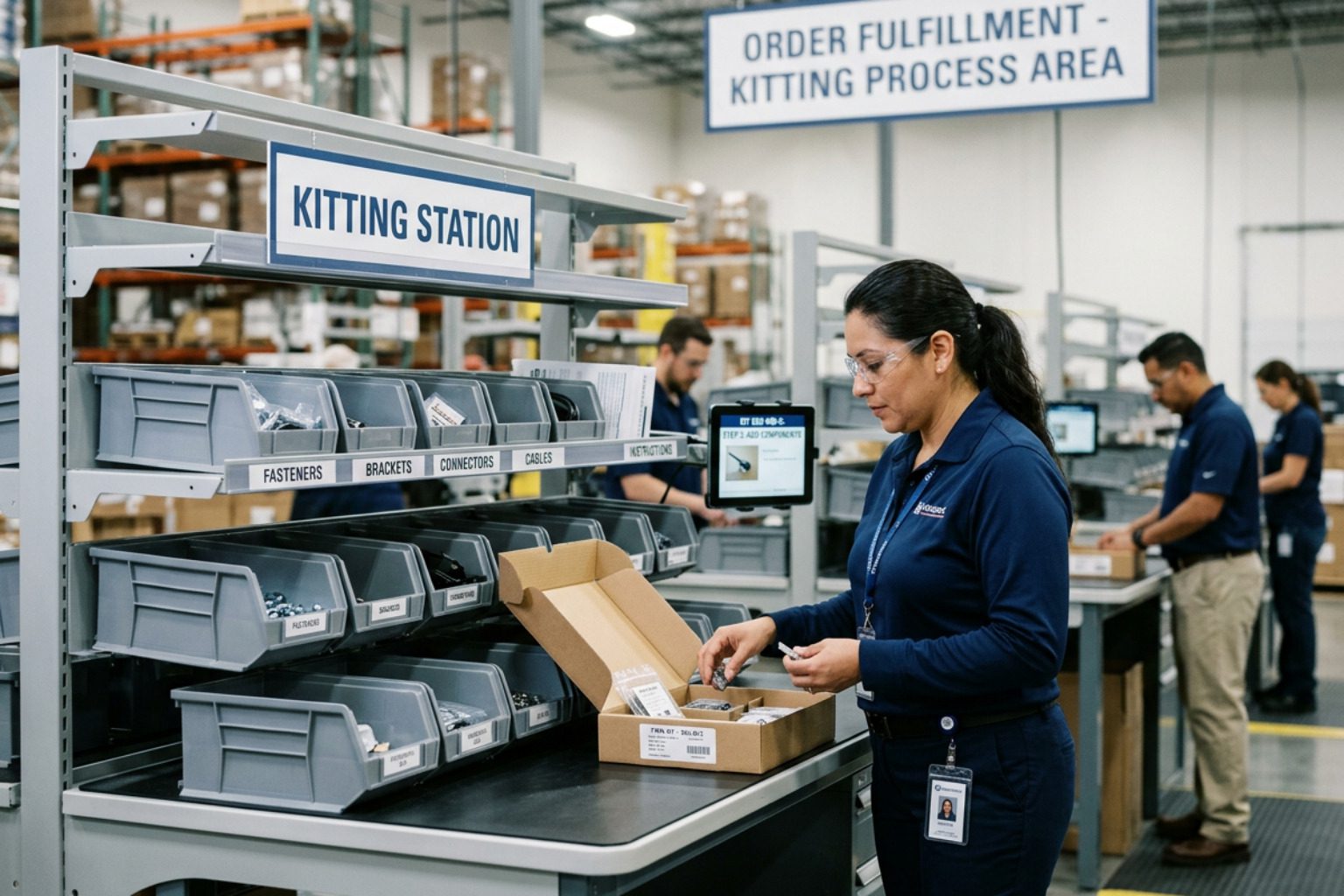
The kitting process is how warehouses group individual items into a single, ready-to-ship unit with its own unique SKU. Here is a quick overview of how it works:
- Identify components. Determine which individual items will be grouped into a kit based on order patterns or production needs.
- Assign a new SKU. The kit becomes its own trackable inventory unit, separate from its individual components.
- Pick and assemble. Components are pulled from storage and combined at a dedicated kitting station.
- Quality check. Each kit is verified for accuracy before being labeled and stored.
- Ship as one unit. The finished kit moves through fulfillment as a single package.
Kitting is used across manufacturing, ecommerce, and distribution. It reduces the number of warehouse touches per order, cuts picking errors, and simplifies inventory tracking. For brands shipping product bundles, subscription boxes, or custom configurations, it is one of the most practical ways to speed up fulfillment without adding headcount.
It is also a tool for moving slow inventory. Pairing a slower-moving product with a popular one inside a kit is a straightforward way to clear dead stock while adding real value for the customer.
My name is Cole Russell, and I grew up around the logistics industry before spending the last five years applying that experience to help businesses build tighter, more reliable fulfillment operations, including the kitting process. In this guide, I’ll walk you through exactly how kitting works, where it fits in your operation, and how to implement it without creating more problems than you solve.
Kitting transforms individual components into high-value units
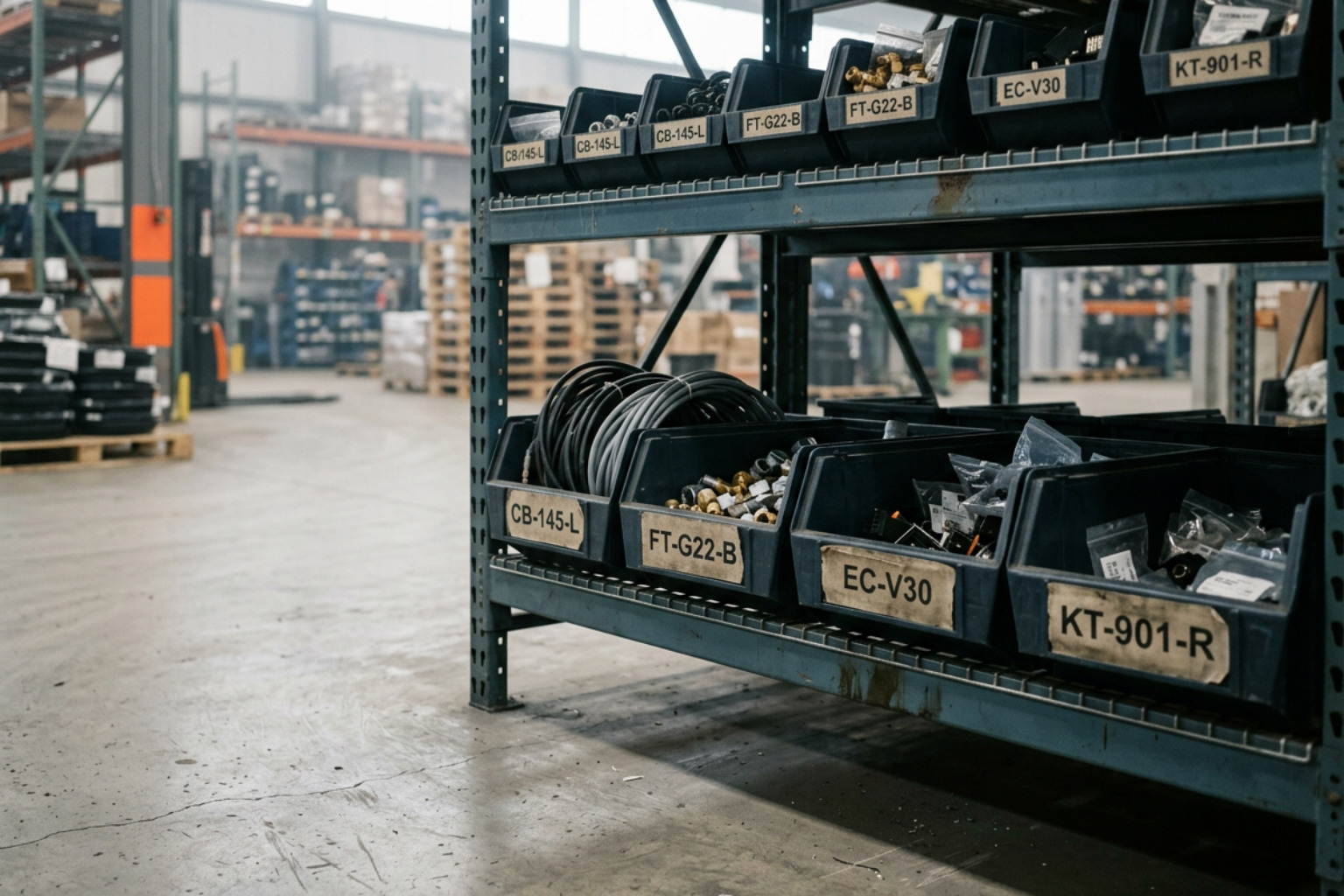
At its core, kitting is an inventory management strategy that turns a collection of parts into a single, cohesive product. Instead of a picker running across the warehouse to find five different items for one order, they pick one pre-assembled kit. This simple shift in workflow has a massive impact on supply chain flow. By grouping components ahead of time, we move the labor away from the high-pressure shipping window and into a controlled kitting and assembly environment.
This is a value-added service because it does more than just move boxes. It creates a new product offering. Whether it is a skincare trio, a computer with its specific cables and manuals, or a maintenance kit for an industrial pump, the kitting process ensures that the customer receives everything they need in one professional package. This level of organization protects brand reputations, especially in industries like life sciences or automotive, where a single missing component can halt a production line or delay a critical medical procedure.
Define the kitting process for manufacturing and ecommerce
While the basic mechanics are similar, the kitting process serves different masters in manufacturing versus ecommerce. In manufacturing, kitting is often about production staging. We gather all the raw materials, fasteners, and tools needed for a specific assembly task and deliver them to a workstation. This prevents highly skilled technicians from wasting time hunting for a specific bolt or bracket. It is about keeping the line moving.
In ecommerce, kitting is often the engine behind subscription boxes and promotional bundles. Here, the focus is on the unboxing experience and shipping efficiency. We take finished goods from different manufacturers and combine them into a complete product that didn’t exist before. Whether it is upstream kitting at the point of manufacture or downstream kitting at our Indianapolis facility, the goal is to have the kit ready for the moment the customer clicks buy.
Distinguish between kitting and simple product bundling
It is easy to use the terms kitting, bundling, and assembly interchangeably, but they represent different operational realities. Understanding the nuance helps you choose the right strategy for your inventory.
| Feature | Kitting | Bundling | Assembly |
|---|---|---|---|
| Primary Goal | Operational efficiency and SKU consolidation | Sales strategy and marketing | Physical assembly of a product |
| SKU Status | Creates a permanent new SKU | Often temporary or virtual SKU | Results in a finished good SKU |
| Physical Labor | Pre-packaging items together | Can be done at the time of shipping | Involves putting parts together |
| Inventory Impact | Decrements component stock immediately | Decrements stock when sold | Transforms raw materials into WIP |
Bundling is primarily a sales strategy. You might offer a “Buy One Get One” deal or a discount when two items are purchased together. Research on consumer behavior shows that shoppers are highly motivated by these deals, even when they only need one of the items. However, in a warehouse, a bundle might still be picked as individual items. Kitting takes that bundle and physically marries the items into one unit before they hit the shelf. Assembly goes a step further by physically joining parts together, like screws into a bracket, rather than just placing them in the same box.
Follow a structured kitting process to eliminate fulfillment errors
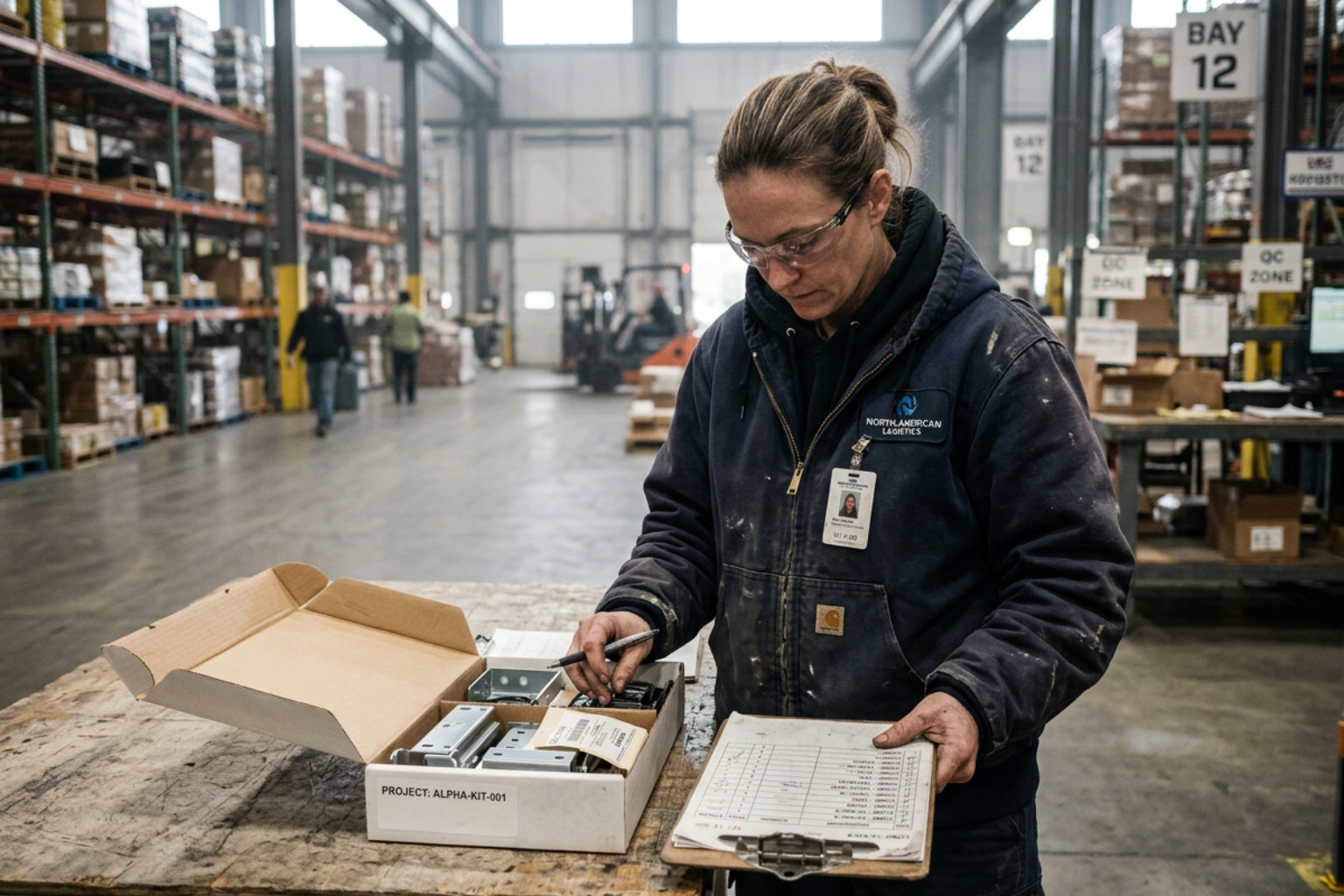
Errors in fulfillment are expensive. Between the cost of return shipping, the loss of the original labor, and the damage to customer trust, a single mistake can impact the profitability of multiple orders. A structured kitting process acts as a filter for these errors. By moving the “picking” of individual items to a dedicated kitting station, we create a specialized environment where accuracy is the only priority.
The workflow starts with a clear Bill of Materials (BOM). This is the recipe for the kit. Our teams use this to pull the correct quantities of each item. By using batch processing, where we assemble hundreds of kits at once, we achieve hidden efficiency gains that are impossible with one-off picking. We verify every kit at a quality control checkpoint before the final seal is applied. This ensures that the contents are accurate before they ever reach the shipping dock.
Optimize the kitting process with real-time data
To run a successful kitting program, you have to move beyond guesswork. We look at specific key performance indicators (KPIs) to measure the health of the operation. For maintenance and industrial kitting, the goal is to ensure that the vast majority of day-to-day work and shutdown items are kitted. This level of preparation drastically reduces downtime.
In the warehouse, we track picking accuracy and throughput. If a manual process is slow, we look at the layout of the kitting station. Can we reduce the reach distance for the worker? Can we use visual aids to ensure the right part goes in the right slot? Data shows that kitting can significantly cut picking errors and improve accuracy when visual aids and barcode scanning are integrated into the workflow.
Strategic kitting reduces overhead and maximizes warehouse floor space
Floor space is one of the highest costs in logistics. With warehouse space in the United States costing up to $8 per square foot, every inch of concrete must be used effectively. Kitting helps by consolidating inventory. Instead of five separate picking faces for five different items, you have one picking face for the kit. This high-density storage approach allows us to fit more inventory into a smaller footprint.
Kitting also attacks the problem of dimensional weight (DIM). Carriers charge based on the size of the box as much as the weight. When items are kitted together, we can optimize the packaging to fit the components perfectly. This reduces the “air” in the box and lowers shipping costs. Furthermore, kitting is an excellent way to manage dead stock. By including a slow-moving item as a “free gift” or part of a discounted bundle, you can clear out shelf space for higher-turning products without taking a total loss on the inventory.
Modern technology and robotics drive kitting accuracy
The future of the kitting process is digital and automated. According to the 2024 MHI Annual Industry Report, over 74% of supply chain leaders are investing in robotics and automation to improve picking accuracy. In our facilities, this means using technology to remove the “human element” from the most repetitive and error-prone parts of the job.
Automated vertical lift modules (VLMs) can significantly reduce the warehouse space needed for kitting by utilizing the full height of the building. These systems deliver the correct bin directly to the operator, eliminating the time spent walking through aisles. Digital traceability, powered by barcode scanning and RFID, ensures that every component in a kit is tracked from the moment it enters our doors until it reaches the customer. This level of precision is non-negotiable for our partners in the pharmaceutical and automotive sectors, where lot tracking and serial number visibility are regulatory requirements.
Frequently Asked Questions about kitting
What is the difference between kitting and assembly
Kitting is the act of gathering related items and placing them together in a single package. Assembly is the physical process of joining those parts together to create a finished product. If you put a desk, a bag of screws, and an Allen wrench in a box, that is kitting. If you use those screws to put the desk together, that is assembly.
When should a business outsource kitting to a 3PL
You should consider outsourcing when your in-house team is overwhelmed by seasonal peaks or when your error rates start to climb. If you find that your warehouse is full of “work in progress” kits that aren’t getting finished, or if you lack the specialized equipment to package items professionally, a 3PL can provide the scalability you need. Outsourcing to a provider in a hub like Indianapolis also places your finished kits closer to major shipping lanes, reducing transit times.
What metrics measure the success of a kitting program
The most important metrics are kit accuracy, labor cost per kit, and throughput. You should also monitor your “kit-to-order” cycle time. If it takes too long to assemble kits after an order is placed, you may need to move toward a “pre-build” strategy where kits are assembled in bulk based on demand forecasting.
Scale your operations with a strategic logistics partner
At Hanzo Logistics, we don’t just move boxes; we develop the systems that protect your brand. Based in the Indianapolis logistics hub, we provide the specialized infrastructure and 2 million square feet of space needed to handle the most complex kitting requirements. Whether you are dealing with the precision of automotive parts or the strict compliance of life sciences, our team is prepared to handle the pressure.
We replace the traditional lack of visibility with real-time data and a proactive approach to problem-solving. If you are ready to stop worrying about fulfillment errors and start focusing on growth, we are ready to help. Partner with an expert kitting and assembly provider and see how a professional kitting process can transform your bottom line.