
Precision in the Supply Chain Starts with a Proactive Mindset
Quality assurance logistics is the practice of building systems, processes, and checks into your supply chain before errors happen, not after.
Here is a quick breakdown of what it covers:
| What It Is | What It Does | Why It Matters |
|---|---|---|
| A proactive, process-driven system | Designs workflows to prevent errors | Stops mistakes before they reach customers |
| Includes SOPs, staff training, audits | Ensures consistent handling at every stage | Reduces damage claims and shipping errors |
| Covers warehousing, transport, inventory | Monitors quality from receiving to delivery | Protects your brand and your bottom line |
| Supported by certifications like ISO 9001 | Sets a measurable standard for operations | Builds trust with retailers, partners, and buyers |
When a pallet arrives at the warehouse with split commitments to a retailer and an ecommerce customer, one missed step can cascade into a deduction notice, a negative review, and a damaged vendor relationship. That is not a hypothetical. It happens every day to brands that treat quality as an afterthought rather than a built-in process.
The good news is that most shipping mistakes are preventable. They are not random. They follow patterns, and those patterns can be identified and fixed with the right systems in place.
My name is Cole Russell, and I grew up around the logistics industry before spending the last five years applying that experience to help clients protect their reputations through better quality assurance logistics practices. In the sections ahead, I will walk you through exactly how to build those systems in a practical, no-fluff way.
Quality assurance logistics prevents errors before they reach the customer
At its core, quality assurance logistics is about preventing defects through a structured, process-oriented strategy. We don’t just wait for a box to show up crushed at a customer’s doorstep to realize there is a problem. Instead, we design the workflow so that the box is never crushed in the first place.
This proactive approach is how we protect your brand reputation. In the high stakes world of logistics, especially in the Indianapolis hub where speed is a requirement, quality assurance acts as the guardrail. It involves everything from how we vet carriers to how we design the layout of a picking line. By focusing on the “how” of the operation, we ensure the “what” (your product) arrives in perfect condition.
Quality assurance builds prevention, quality control finds defects
Many people use the terms Quality Assurance (QA) and Quality Control (QC) as if they are the same thing. They aren’t. While they both aim for excellence, their timing and methods are completely different.
Think of QA as the operational framework and QC as the final verification. QA is the system that ensures the workflow is designed correctly from the start; QC is the step that checks for any deviations before the product moves forward.
| Feature | Quality Assurance (QA) | Quality Control (QC) |
|---|---|---|
| Focus | Process-oriented | Product-oriented |
| Timing | Proactive (during the process) | Reactive (after the process) |
| Goal | Prevent defects from happening | Identify and reject defects |
| Examples | Staff training, SOP design, audits | Final inspections, barcode scans |
In our operations, we use a two-pronged approach. We use QA to build a reliable environment and QC to provide the final layer of safety. This combination ensures that one slip up in a warehouse step like picking or packing doesn’t snowball into a lost customer or a massive shipping error.
Standardized processes build a foundation for zero defect operations
Consistency is the enemy of mistakes. If every person in a warehouse handles a product differently, you will eventually have a failure. That is why we rely heavily on Standard Operating Procedures (SOPs). These aren’t just dusty manuals on a shelf; they are the living instructions for how every task is performed.
From the way a pallet is wrapped to the specific angle a barcode is applied, the small details in quality assurance make a massive difference. When we standardize these steps, we remove the guesswork for our team. This leads to higher accuracy and allows us to scale quickly during seasonal peaks without losing our grip on quality.
First article inspection secures new product launches
Launching a new product or changing a SKU is a high risk moment in any supply chain. A small error in packaging or a slight change in dimensions can cause havoc in automated sorting systems or retail shelves.
To solve this, we use First Article Inspection (FAI). This is a formal process where we quarantine and inspect the very first unit of a new production run or a new SKU arrival. We check it against technical drawings and client specifications to ensure everything from the labeling to the functional components is exactly right. By catching a discrepancy on the first item, we prevent thousands of subsequent items from being processed incorrectly.
Real-time data sharpens quality assurance
Modern quality assurance logistics isn’t just about checklists; it is about data. Manual systems often fail in complex logistics because there are too many points of contact. Using real-time tracking and analytics transforms QA from a reactive task into a proactive shield.
When we have end to end visibility, we can see trends before they become disasters. For example, if data shows that a specific carrier’s damage rates are creeping up, we can address it immediately. This level of insight allows us to move inventory with precision, ensuring that “On-Time In Full” (OTIF) isn’t just a goal, but a daily reality.
Advanced monitoring protects high stakes inventory
For industries like life sciences and food distribution, quality assurance isn’t just about avoiding a dented box; it is about safety and compliance. When you are moving pharmaceutical products or perishable goods, the environment they live in is just as important as the route they take.
We use IoT sensors and advanced monitoring to keep a constant eye on our specialized infrastructure. These sensors track temperature, humidity, and even light exposure in real time. This level of ensuring high quality is what allows us to protect the potency of medicine and the freshness of products.
Strict compliance for sensitive goods
The stakes are incredibly high in the perishables sector. Statistics show that supply chains are responsible for around 40% of food waste in the United States. Much of that waste is caused by improper handling or temperature excursions during transport and storage.
By maintaining strict temperature logs and adhering to FDA regulations, we mitigate these risks. Our QA systems ensure that every batch of inventory is handled according to its specific requirements. This prevents spoilage and ensures that the final consumer receives a safe, effective product. Whether it is a pharmaceutical batch that requires climate control or a food shipment with a tight shelf life, our proactive monitoring keeps the supply chain moving without loss.
Corrective and preventive actions drive continuous improvement
No system is perfect, but a great system learns from its mistakes. This is where Corrective and Preventive Action (CAPA) comes into play. CAPA is a formal methodology we use to reduce business risks by getting to the root of a problem.
If a shipping error occurs, we don’t just fix the immediate shipment and move on. We perform a root cause analysis. Was it a training issue? A software glitch? An unclear SOP? Once we find the “why,” we implement a preventive action to make sure it never happens again. This cycle of constant refinement is what builds a culture of continuous improvement.
Key performance indicators measure quality success
You cannot manage what you do not measure. To ensure our quality assurance logistics systems are working, we track several Key Performance Indicators (KPIs) with religious consistency.
- OTIF (On-Time In Full) This is the gold standard for delivery success.
- Inventory Accuracy This ensures what is on the screen matches what is on the shelf.
- Damage Rates This measures the physical integrity of goods during handling.
- Shipping Error Rate This tracks how often the wrong item or quantity is sent.
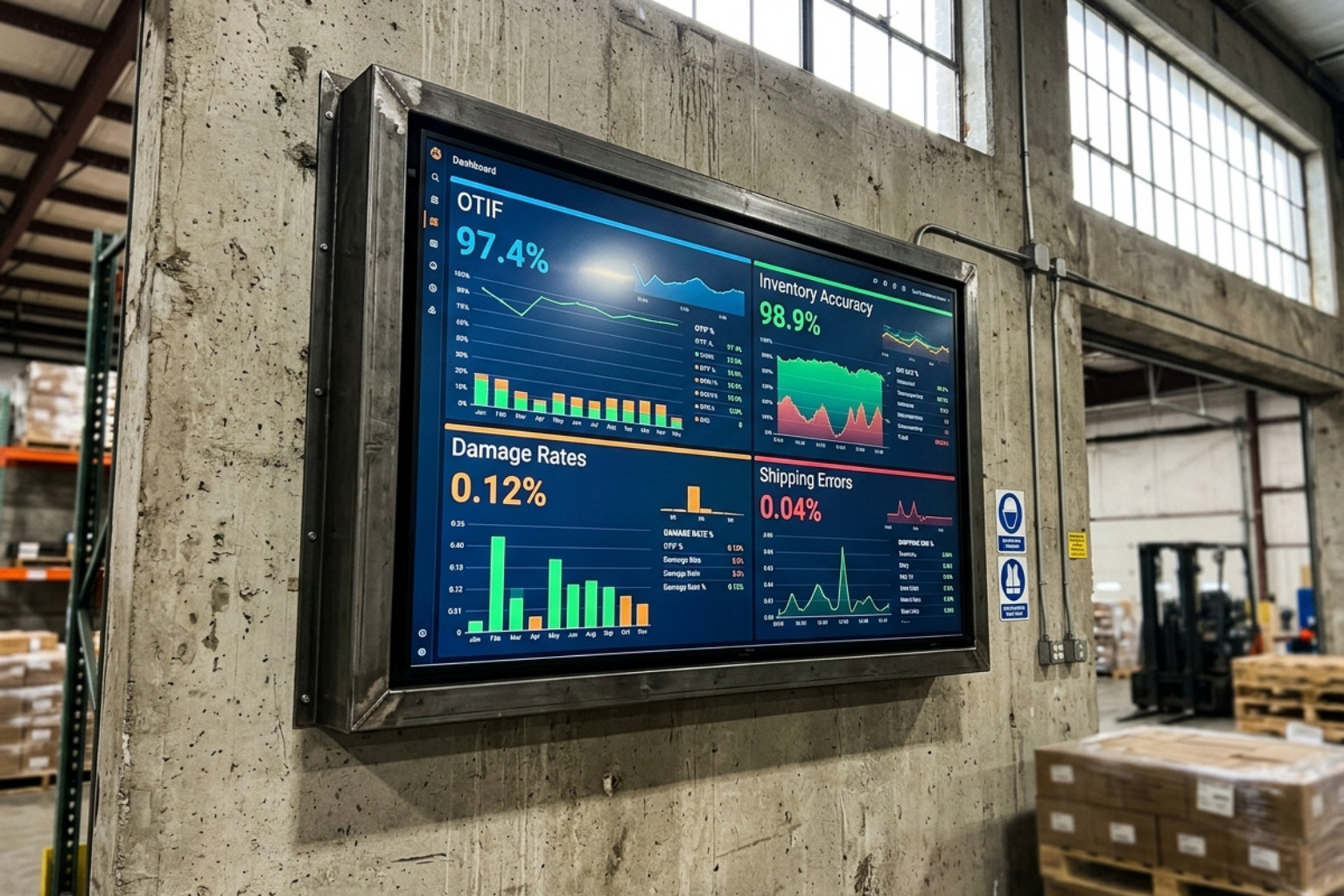
By reviewing these metrics on digital dashboards, we can spot deviations instantly. If our picking accuracy dips even a fraction of a percent, we can dive into the data, identify the bottleneck, and correct it before it impacts our clients’ operations.
Understanding logistics quality standards
In 3PL providers, certifications are more than just badges for the website. They are proof that a company has the discipline to follow international standards for quality and safety.
Essential certifications for 3PL providers
When you are looking for a logistics partner, certifications like ISO 9001 are non-negotiable. This standard focuses on quality management systems that ensure consistent performance and customer satisfaction. Other important standards include ISO 14001 for environmental management and ISO 45001 for occupational health and safety. These frameworks provide a structured way to measure, maintain, and improve quality across the entire supply chain.
Quality assurance cuts food supply chain waste
As mentioned earlier, the 40% food waste statistic in the U.S. is a major challenge for the industry. Quality assurance is the primary tool for fighting this waste. By implementing rigorous inspection protocols, standardized handling, and real-time condition monitoring, we can significantly extend the shelf life of products and ensure they reach the consumer in peak condition. This reliability is vital for wholesalers and retailers who need to maintain high trust and consistent service levels.
Standard operating procedures ensure compliance
SOPs are the backbone of regulatory compliance. Whether we are dealing with international shipping regulations or specific OSHA requirements for dangerous goods, documentation is key. An audit trail that shows exactly who handled a product, when it was inspected, and what the conditions were provides peace of mind during regulatory audits. This level of risk mitigation is essential for brands in the automotive, life sciences, and industrial sectors where precision is a requirement.
Partner with experts to secure your supply chain
At Hanzo Logistics, we understand that we aren’t just moving boxes; we are protecting your brand. Based in the Indianapolis logistics hub, we provide the strategic expertise and specialized infrastructure needed to handle high stakes supply chain challenges.
Our approach replaces the traditional lack of visibility with real-time data and proactive problem solving. With 2 million square feet of space and a team dedicated to quality assurance logistics, we help scaling ecommerce brands and pharmaceutical leaders grow without their operations breaking under the pressure.
If you are ready to stop shipping mistakes and start building a more resilient supply chain, we are here to help. Learn more about our quality assurance services and see how we can help you protect your reputation at every stage of the journey.